Nursing Fundamentals Module 11 NCLEX
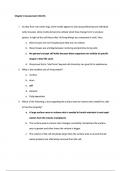
Nursing Fundamentals Module 11 NCLEX Questions Fall 2020 1.Which atrioventricular heart block is also referred to as Mobitz II A. Third-degree atrioventricular heart block B. Second-degree atrioventricular heart block C. First-degree atrioventricular heart block D. Complete heart block 2. Which preventive measure can be employed to decrease the risk of compartment syndrome? A. The administration of a potassium sparing diuretic for heart failure B. A bivalve cast for a skeletal fracture C. A cerebral diuretic to decease intracranial pressure after a head injury D. A chest tube to restore normal intrathoracic pressure after a pneumothorax 3. Which patient is at greatest risk for papilledema? A. An elderly patient with cataracts and macular degeneration B. A male patient with hypothyroidism C. A male patient with hyperthyroidism D. An adolescent with a closed head injury 4. Your patient has been diagnosed with orchititis. What information about this disorder should you inform the patient about? A. This disorder often occurs as the result of a streptococcus. B. This disorder can be symptomatically treated with ice. C. This disorder can be symptomatically treated with heat. D. This disorder is typically treated with surgery. 5. Which of the following healthcare providers can legally have access to all, or part, of a patient’s medical record because they have a “need to know”? Select all that apply. A. Student nurses caring for a particular patient B. Registered nurses when they are not caring for a particular patient C. The Vice President for Nursing who is investigating a patient fall D. Licensed practical nurses caring for a particular patient E. A quality assurance nurse collecting data for a performance improvement activity 6. Which cardiac arrhythmia can be either acquired or congenital and can spontaneously disappear on its own or lead to ventricular fibrillation? A. Wenckebach B. Premature arterial contractions C. Torsades de pointes D. Premature ventricular contractions 7. Which quality assurance or performance improvement technique is used to identify underlying process flaws? A. Small group process B. Root cause analysis C. People at fault process D. Cause and effect 8. Which legal document will most likely contain the patient’s decision to not get cardiopulmonary resuscitation? A. Healthcare surrogacy B. Healthcare proxy C. Advance directives D. Durable power of attorney 9. Select the stage of a pressure ulcer that is accurately pair with its characteristics. A. Stage I: Only slight blanching when pressure is applied to the skin. B. Stage II: The epidermis and part of the dermis is damaged or lost. C. Stage III: The wound has slough and eschar. D. Stage IV: The loss of skin usually exposes some fat. 10. You have been assigned to care for a neonate who has been diagnosed with the Tetralogy of Fallot. The mother asks you what the Tetralogy of Fallot is. How should you respond to this mother? A. “The Tetralogy of Fallot is a congenital gastrointestinal disorder” B. “The Tetralogy of Fallot is a congenital cardiac disorder” C. “The Tetralogy of Fallot will affect the baby’s reflexes” D. “The Tetralogy of Fallot will affect the baby’s ability to breastfeed” 11. The protrusion of an internal organ through a wound or surgical incision is referred to as: A. Serosanguineous. B. Dehiscence. C. Evisceration. D. Exuded. 12. Which pain assessment scale is used exclusively for infants and neonates from 32 weeks of gestation to six months of age? A. The PEPPS pain scale B. The FLACC pain scale C. The Faces pain scale D. The CRIES pain scale 13. Which of the following is a hazard of immobility? A. Loss of bone calcium B. Increased vital capacity C. Venous vasoconstriction D. A positive nitrogen balance 14. How many daily feedings are considered normal for a newborn: A. 8 to 10 B. 10 to 12 C. 6 to 8 D. 12 to 14 15. The hormone produces mother’s milk is: A. Progesterone B. Estrogen. C. Prolactin. D. Colostrum.
Escuela, estudio y materia
- Institución
- Keiser University
- Grado
- NCLEX
Información del documento
- Subido en
- 25 de junio de 2022
- Número de páginas
- 17
- Escrito en
- 2020/2021
- Tipo
- Examen
- Contiene
- Preguntas y respuestas
Temas
-
which patie
-
nursing fundamentals module 11 nclex
-
which atrioventricular heart block is also referred to as mobitz
-
which preventive measure can be employed to decrease the risk of compartment syndrome