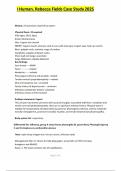
Summary NUR 2502 MDC EXAM
NUR 2502 Exam 3 Focused Review (Chapters 34, 35, 36, 38, 39, 40) ● Heart failure o causes ▪ A common chronic health problem with acute episodes often causing hospitalization. Acute coronary disease and other structural or functional problems of the heart can lead to acute HF. ▪ Caused by systemic HTN in most cases ▪ Common causes and Risk factors for HF: ● HTN, coronary artery disease, cardiomyopathy, substance abuse, valvular disease, congenital defects, cardiac infections and inflammations, dysrhythmias, DM, smoking/tobacco use, family history, obesity, severe lung disease, sleep apnea, hyperkinetic conditions (hyperthyroidism) o left vs right ▪ Left sided heart (ventricular) failure includes HTN, coronary artery disease, and valvular disease. Decreased tissue perfusion from poor cardiac output and pulmonary congestion from increased pressure in the pulmonary vessels indicate left ventricular failure ● Formerly referred to as congestive HF; not all cases of LVF involve fluid accumulation ● May be acute or chronic and mild to severe. ● Two types: o Systolic: heart cannot contract forcefully enough during systole to eject adequate amounts of blood into the circulation o Diastolic: left ventricle cannot relax adequately during diastole- ventricle can not fill with sufficient blood to ensure an adequate cardiac output ▪ Right sided heart (ventricular) failure may be caused by left ventricular failure, right ventricular MI, or pulmonary HTN (cor pulmonale). The right ventricle cannot empty completely. Increased volume and pressure develop in the venous system and peripheral edema results. o diagnosis ▪ Labs: ● Electrolytes - may occur from complications or diuretics ● Hgb and HCT - identify HF resulting from anemia ● BNP - used when dyspnea to r/o HF ● U/A - proteinuria/high specific gravity ● ABGs- respiratory acidosis ▪ B-type natriuretic peptide (BNP) ● is used for diagnosing HF (in particular, diastolic HF), in patients with acute dyspnea ▪ Microalbuminuria ● An early indicator of decreased compliance of the heart and occurs before the BNP rises ▪ CXR ● “early warning detector” that lets HCP know that the heart is experiencing early signs of decreased compliance long before symptoms occur ● Helpful in diagnosing left ventricular failure because the heart is enlarged, representing hypertrophy or dilation ▪ Echocardiography ● Best tool in diagnosing HF- ejection fraction between 50-70% ● Cardiac valvular changes, pericardial effusion, chamber enlargement, and ventricular hypertrophy can be diagnosed with this noninvasive technique ● Can also be used to determine ejection fraction ▪ Hemodynamic Monitoring ● PA catheter allows for assessment of cardiac function and fluid volume ● PAP (positive airway pressure) /PAWP (pulmonary artery wedge pressure) elevated with L sided HF because volumes and pressures are increased in the left ventricle o s/s ● ▪ Left HF: ● Decreased cardiac output: o Fatigue, weakness, oliguria during the day (nocturia at night), angina, confusion, restlessness, dizziness, tachycardia, palpitations, pallor, weak peripheral pulses, cool extremities o Priority problems: ▪ Impaired gas exchange r/t ventilation/perfusion imbalance ▪ Decreased cardiac output r/t altered contractility, preload, and afterload ▪ Fatigue/weakness r/t hypoxemia ▪ Potential for pulmonary edema r/t L sided HF ● Pulmonary congestion: o Hacking cough, worse at night, dyspnea/breathlessness, crackles or wheezes in lungs, frothy, pink-tinged sputum, tachypnea, s3 s4 summation gallop ▪ Right HF: ● jugular neck vein distention, enlarged liver and spleen, anorexia and nausea, dependent edema (legs and sacrum), distended abdomen, swollen hands and fingers, polyuria at night, weight gain, increased BP from excess volume or decreased BP from failure o treatment ▪ Drugs: ● ACE inhibitors: increase stroke volume (can cause hyperkalemia) ● ARBs: block aldosterone decreased fluid overload (can cause hyperkalemia) ● Human BNP: increases sodium loss in renal tubules ● Diuretics: reducing sodium and water retention to decrease the workload of the heart o Loop and thiazide ● Venous vasodilators - nitrates: nitrate free periods to reduce tolerance ● Digoxin: o Increased contractility, decreased HR, slowing of conduction through AV node, inhibition of sympathetic activity o Possibility of toxicity ● Beta-adrenergic blockers: o Improve morbidity, mortality, and QOL for patients o Helps to increase activity tolerance o Improvement in symptoms ● Morphine sulfate: o Reduce anxiety, decrease preload and afterload, slow respirations, and reduce pain associated with MI ▪ Nutrition therapy: ● Sodium and fluid restrictions ▪ CPAP: improve cardiac output and ejection fraction by decreased afterload and preload, BP, and dysrhythmias ▪ CRT-biventricular pacing: ● Synchronous ventricular contractions to improve EF, CO, and mean arterial pressure (EF less than 35%) ▪ Gene therapy: ● End-stage HF ● Replaces damaged genes with modified genes to improve regrown of cardiac cells ▪ Heart transplant ▪ VADs- ventricular assist devices o nursing interventions ▪ Promoting oxygenation and gas exchange: ● Ventilation assistance ● Monitor RR q 1-4 hr ● Auscultate breath sounds q 4-8hr ● Position in high Fowler’s if patient dyspneic ● Maintain oxygen sat of 90% o education ▪ Activity schedule, indications of worsening or recurrent HF, drug therapy, nutrition therapy, advanced directives, energy management ▪ MAWDS (medications, activity, weight, diet, symptoms) ▪ Indications of worsening or recurrent HF ● Rapid weight gain (3lbs in a week or 1-2 lbs overnight) ● Decrease in exercise tolerance ● Cold symptoms lasting more than 3-5 days ● Excessive awakening at night to urinate ● Development of dyspnea/angina at rest ● Increased edema in feet, ankles, and hands
Escuela, estudio y materia
- Institución
- Rasmussen College
- Grado
- NUR 2502
Información del documento
- Subido en
- 17 de junio de 2022
- Número de páginas
- 48
- Escrito en
- 2021/2022
- Tipo
- RESUMEN
Temas
-
nur 2502 exam 3
-
● heart failure o causes ▪ a common chronic health problem with acute episodes often causing hospitalization acute coronary disease and other structural or functional problems of the