

Microbiology
Lecture 1: Microbial diversity ½
Microbiology subjects:
- Microbial diversity
- Morphology and structure of microorganisms
- The interaction between microorganisms and other organisms
- Contamination, infection and spread (pathogenesis)
- Infectious diseases
- Antimicrobial agents to combat infections
- Resistance to antimicrobial agents
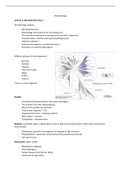
Different groups of microorganisms:
- Bacteria
- Archaea
- Eukarya
Yeast and molds
Algae
Protist
- Viruses*
*Virus is not an organism
Protists
- Unicellular Eukaryotes (other than yeast and algae)
- The protists are a very diverse group
- Many of the protists are parasitic
Trichomonis vaginalis – STD
Trypanosoma brucei – sleeping sickness
Plasmodium – malaria
Toxoplasma – toxoplasmosis
Diatoms; unicellular algae, making them a type of plant-like protist found in fresh water and marine
environment.
- Phototropic; growth of an organism in respond to light stimulus
- Phytoplankton; autotropic components of the planktoncommunity
- Cell wall of silica
Oomycetes; water molds
- Phytophtora infestans
- Plant pathogens
- Potato disease (Irish famine 1845)
- Important for agriculture
,Amoebozoa
- Pseudopodia
Slime molds; eukaryotic organisms that can live freely as single cells
- Dictyostelium discoideum
- Aggregation, migration, fruiting body formation
Fungi
- Yeasts and molds
- Yeasts are unicellular, grow by cell division
- Molds are multicellular, grow filamentous
- Eukaryotic micro-organisms with cell wall
Yeast
- Unicellular
- Cell division → asexual reproduction
- Spores → sexual cycle
- Saccharomyces cerevisiae
Candida albicans (pathogenic)
Filamentous fungi
- Mycelium; network of fungal filaments = hyphae
- Aerial hyphae
- Production of spores (asexual)
- Septation filaments
Septum (green arrow)in the filaments
, Hyphae
- Apical growth = fungal tip growth
- Spitzenkörper (11); Structure found in fungal hyphae and it’s
the organizing centre for hyphae growth and morphogenesis.
- Formation of septa (2)
- Continuous cytosol (coenocytic)
Fungal cell wall
Immunology; PAMPS recognized by PRRs (innate
imune system)
- 80-90% polysaccharide
- Chitin; polymer of N-acetylglucosamine
- Beta-glucans, mannan, galactosam, cellulose
Groups within Fungi
Ascomycetes
- Saccaromyces; food production, industrial use
- Also produces penicillin
- Ascospores (sexual spores) in ascus
Basidiomycetes
- Agaricus bisporus
- Amanita muscaria
- Basidiospores (sexual spores)
Basidium
Basidiocarp = mushroom
Lecture 1: Microbial diversity ½
Microbiology subjects:
- Microbial diversity
- Morphology and structure of microorganisms
- The interaction between microorganisms and other organisms
- Contamination, infection and spread (pathogenesis)
- Infectious diseases
- Antimicrobial agents to combat infections
- Resistance to antimicrobial agents
Different groups of microorganisms:
- Bacteria
- Archaea
- Eukarya
Yeast and molds
Algae
Protist
- Viruses*
*Virus is not an organism
Protists
- Unicellular Eukaryotes (other than yeast and algae)
- The protists are a very diverse group
- Many of the protists are parasitic
Trichomonis vaginalis – STD
Trypanosoma brucei – sleeping sickness
Plasmodium – malaria
Toxoplasma – toxoplasmosis
Diatoms; unicellular algae, making them a type of plant-like protist found in fresh water and marine
environment.
- Phototropic; growth of an organism in respond to light stimulus
- Phytoplankton; autotropic components of the planktoncommunity
- Cell wall of silica
Oomycetes; water molds
- Phytophtora infestans
- Plant pathogens
- Potato disease (Irish famine 1845)
- Important for agriculture
,Amoebozoa
- Pseudopodia
Slime molds; eukaryotic organisms that can live freely as single cells
- Dictyostelium discoideum
- Aggregation, migration, fruiting body formation
Fungi
- Yeasts and molds
- Yeasts are unicellular, grow by cell division
- Molds are multicellular, grow filamentous
- Eukaryotic micro-organisms with cell wall
Yeast
- Unicellular
- Cell division → asexual reproduction
- Spores → sexual cycle
- Saccharomyces cerevisiae
Candida albicans (pathogenic)
Filamentous fungi
- Mycelium; network of fungal filaments = hyphae
- Aerial hyphae
- Production of spores (asexual)
- Septation filaments
Septum (green arrow)in the filaments
, Hyphae
- Apical growth = fungal tip growth
- Spitzenkörper (11); Structure found in fungal hyphae and it’s
the organizing centre for hyphae growth and morphogenesis.
- Formation of septa (2)
- Continuous cytosol (coenocytic)
Fungal cell wall
Immunology; PAMPS recognized by PRRs (innate
imune system)
- 80-90% polysaccharide
- Chitin; polymer of N-acetylglucosamine
- Beta-glucans, mannan, galactosam, cellulose
Groups within Fungi
Ascomycetes
- Saccaromyces; food production, industrial use
- Also produces penicillin
- Ascospores (sexual spores) in ascus
Basidiomycetes
- Agaricus bisporus
- Amanita muscaria
- Basidiospores (sexual spores)
Basidium
Basidiocarp = mushroom

