

Worksheet 2 NR283 Worksheet 2.
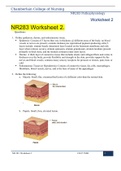
Worksheet 2 NR283 Worksheet 2. Questions: 1. Define epidermis, dermis, and subcutaneous tissue. • Epidermis: Consists of 5 layers that vary in thickness @ different areas of the body; no blood vessels or nerves are present; contains melanocytes (specialized pigment-producing cells);5 layers include: stratum basale (innermost layer located on the basement membrane and only layer where mitosis occurs), stratum spinosum, stratum granulosum, stratum lucidum (present primarily in thick skin), and the stratum corneum (outer most layer). • Dermis: A thick layer of connective tissue that includes elastic and collagen fibers and varies in thickness over the body; provide flexibility and strength in the skin; provides support for the nerves and blood vessels; contains many sensory receptors for pressure or texture, pain, heat, or cold • Subcutaneous Tissue (or Hypodermis): Consists of connective tissue, fat, cells, macrophages, fibroblasts, blood vessels, nerves, and is the base of many of the appendages 2. Define the following; a. Macule: Small, flat, circumscribed lesion of a different color than the normal skin. b. Papule: Small, firm, elevated lesion. Worksheet 2 NR283 Worksheet 2. Questions: 1. Define epidermis, dermis, and subcutaneous tissue. • Epidermis: Consists of 5 layers that vary in thickness @ different areas of the body; no blood vessels or nerves are present; contains melanocytes (specialized pigment-producing cells);5 layers include: stratum basale (innermost layer located on the basement membrane and only layer where mitosis occurs), stratum spinosum, stratum granulosum, stratum lucidum (present primarily in thick skin), and the stratum corneum (outer most layer). • Dermis: A thick layer of connective tissue that includes elastic and collagen fibers and varies in thickness over the body; provide flexibility and strength in the skin; provides support for the nerves and blood vessels; contains many sensory receptors for pressure or texture, pain, heat, or cold • Subcutaneous Tissue (or Hypodermis): Consists of connective tissue, fat, cells, macrophages, fibroblasts, blood vessels, nerves, and is the base of many of the appendages 2. Define the following; a. Macule: Small, flat, circumscribed lesion of a different color than the normal skin. b. Papule: Small, firm, elevated lesion.
Información del documento
- Subido en
- 2 de junio de 2022
- Número de páginas
- 16
- Escrito en
- 2020/2021
- Tipo
- Examen
- Contiene
- Preguntas y respuestas

