

Chapter 8: Skin Disorders
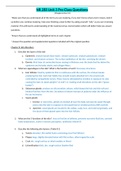
(Chapters 8 & 13) *Make sure that you understand all of the terms you are studying, if you don’t know what a term means, look it up before you continue studying. Take your thinking a step further by asking yourself “why” as you are reviewing material. This will lead to understanding of the material versus memorization which will better help you answer questions. *Ensure that you understand all highlighted terms in each chapter * Answer the question and supplemental questions included with the original question Chapter 8: Skin Disorders 1. Describe the layers of the skin a. Epidermis: stratum basale (base layer), stratum spinosum, stratum granulosum, stratum lucidium, and stratum corneum. The surface epithelium of the skin, overlying the dermis. b. Dermis: thick layer of connective tissue varying in thickness over the body that lies below the epidermis and includes elastic and collagen fibers. 2. What are appendages in the skin? What is the function of each? Accessory structures. a. Hair follicles: lined by epidermis that is continuous with the surface, the stratum basale producing the hair. Each hair follicle has smooth muscle attached to it, the arrector pili, controlled by sympathetic nerves. These may be stimulated by emotion or exposure to cold, causing the hairs to stand upright (“on end”) or creating small elevations on the skin (“goose bumps”). b. Sebaceous glands: produce an oily secretion, sebum, which keeps the hair and skin soft and hinders fluid loss from the skin. Secretions of sebum increase at puberty under the influence of the sex hormones. c. Sweat glands: i. Eccrine: or merocrine, glands are located all over the body and secrete sweat through pores onto the skin in response to increased heat or emotional stress (SNS control). ii. Apocrine: sweat glands are located in the axillae, scalp, face, and external genitalia, and the ducts of these glands open into the hair follicles. 3. What are the 5 functions of the skin? Acts as first line of defense, prevents excessive fluid loss, controls body temperature, active in sensory perception, synthesize vitamin D. 4. Describe the following skin lesions: (Table 8-1) a. Vesicle elevated, thin walled lesion containing clear fluid (blister) b. Plaque large, slightly elevated lesion with flat surface, often topped by scale c. Crust dry, rough surface or dried exudate or blood d. Lichenification thick, dry, rough surface (leather like)
Información del documento
- Subido en
- 31 de mayo de 2022
- Número de páginas
- 12
- Escrito en
- 2020/2021
- Tipo
- Examen
- Contiene
- Preguntas y respuestas

