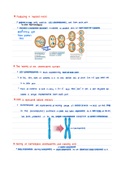
Producing 4 haploid nuclei
sperm 4 egg only contain 23 Chromosomes onefromeachpair
non homologous
meiosis reductiondivision needed to produce cells w half num Ot chromo
genetically diff
from parent
cells
homologous
pair of
chromo
The halving of the chromosome number
23 Chromosomes eachrepresenting half of one pair
in fig abv num of chromo is 4 in the parent cell at start 12h 4 boosthereare
2 in each pair
NUM ofchromo in end isonly 2 n 2 boos eachpair is not a pairanymore but
rather a single representative fromeachpair
DNA is replicated before meiosis
chromosomes are represented ofhaving shape of letter X or H boos at thisstage
in the chromosome's existence DNA hasbeenreplicated so a full copyoftheOri
hasbeen produced so the single chromosome comprises 2 sister chromatids
centromere
pairing of homologous chromosomes andcrossing over
sisterchromatid
DNAreplicationduring interphase eachchromatid hv an identicalcopyattached to it
, g
to produce 4 cells parentcell divide twice homologous
forchromosome
In prophase I there is an exchange of genetic material between non sister
or
as synapsis
chromatids crossing over trading of segments of genes sections of 2
homologous chromatids break at some point twist aroundeachotherthenconnects
to the other's initial position
CO allowsDNAfrom a person's maternal chromosomes
to mix w DNAfrom paternal chromo the
reco binant
chromatids thtendupin spermlegg r a mosaic
of the 2 parent cells Ori chromatids
nogenetic variationin gametes
helps t variety of offspring fromsame 2 parents b f chances of survival of some
whenthereis a change in environmentalcondi
offspring if one combination ofalleles is morefavourable forsurvivalthanothers
same genes are exchanged bcos the chromosomes
re
break andattach at some locus 1position
mumof spots wherethey crossover random
recombination ofgeneticmaterial reason why
gametes r all diff
chiasma D location on chromo where crossing overoccurs
Random orientation
In metaphase 1 chromosomes line up in the middle of the cellwhile still in their
homologous pairs the way that they line up is completely random another
factors that F variation in gametes
result a male will only v rarely produce 2sperm cells tht r identical female itis
highlylikely tht she will never produce same egg twice in her lifetime so a couple
sperm 4 egg only contain 23 Chromosomes onefromeachpair
non homologous
meiosis reductiondivision needed to produce cells w half num Ot chromo
genetically diff
from parent
cells
homologous
pair of
chromo
The halving of the chromosome number
23 Chromosomes eachrepresenting half of one pair
in fig abv num of chromo is 4 in the parent cell at start 12h 4 boosthereare
2 in each pair
NUM ofchromo in end isonly 2 n 2 boos eachpair is not a pairanymore but
rather a single representative fromeachpair
DNA is replicated before meiosis
chromosomes are represented ofhaving shape of letter X or H boos at thisstage
in the chromosome's existence DNA hasbeenreplicated so a full copyoftheOri
hasbeen produced so the single chromosome comprises 2 sister chromatids
centromere
pairing of homologous chromosomes andcrossing over
sisterchromatid
DNAreplicationduring interphase eachchromatid hv an identicalcopyattached to it
, g
to produce 4 cells parentcell divide twice homologous
forchromosome
In prophase I there is an exchange of genetic material between non sister
or
as synapsis
chromatids crossing over trading of segments of genes sections of 2
homologous chromatids break at some point twist aroundeachotherthenconnects
to the other's initial position
CO allowsDNAfrom a person's maternal chromosomes
to mix w DNAfrom paternal chromo the
reco binant
chromatids thtendupin spermlegg r a mosaic
of the 2 parent cells Ori chromatids
nogenetic variationin gametes
helps t variety of offspring fromsame 2 parents b f chances of survival of some
whenthereis a change in environmentalcondi
offspring if one combination ofalleles is morefavourable forsurvivalthanothers
same genes are exchanged bcos the chromosomes
re
break andattach at some locus 1position
mumof spots wherethey crossover random
recombination ofgeneticmaterial reason why
gametes r all diff
chiasma D location on chromo where crossing overoccurs
Random orientation
In metaphase 1 chromosomes line up in the middle of the cellwhile still in their
homologous pairs the way that they line up is completely random another
factors that F variation in gametes
result a male will only v rarely produce 2sperm cells tht r identical female itis
highlylikely tht she will never produce same egg twice in her lifetime so a couple