Rnsg 1251Ob Exam 1 Notes Ch 4 Reproductive System Concerns
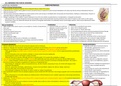
MENSTRUAL DISORDERS ENDOMETRIOSIS Definition/Etiology/Pathophysiology: Characterized by the presence & growth of the endometrial tissue outside of the uterus. Endometrial tissue contains uterine glands & stroma (connective tissue) & responds to cyclic hormone stimulation in the same way that the uterine endometrium does but often out of phase w/ it. The tissue grows during the proliferative & secretory phases of the cycle. During or immediately after menstruation the tissue bleeds, resulting in an inflammatory response w/ subsequent fibrosis & adhesions to adjacent organs. Etiology & pathology of this condition is poorly understood. One of the most widely accepted theories is transplantation or retrograde menstruation. – Endometrial tissue is refluxed through the uterine tubes/fallopian tubes during menstruation into the peritoneal cavity, where it implants on the ovaries & other organs. – Recent theory: there is an interaction between the amount of retrograde menstruation & an individual woman's immunologic response, which may be influenced by ethnic & genetic variability Signs & Symptoms: Wide variation of Sx; extent of pain is not correlated w/ severity of endometriosis Pelvic pain Dysmenorrhea Dyspareunia (painful intercourse) Chronic noncyclic pelvic pain Pelvic heaviness Pain radiating into thighs Bowel symptoms: diarrhea, pain w/ defecation, & constipation Abnormal bleeding (hypermenorrhea, menorrhagia, premenstrual staining) Pain during exercise because of adhesions Complications Impaired fertility may result from adhesions around the uterus that pull the uterus into a fixed, retroverted position. Adhesions around the uterine tubes may block the fimbriated ends or prevent the spontaneous movement that carries the ovum to the uterus. Risk Factors 5% to 15% in reproductive-age women 30% to 45% in infertile women 33% in women w/ chronic pelvic pain 5% of postmenopausal women receiving menopausal hormone therapy 50% of teens w/ pelvic pain are found to have endometriosis Recurs in approximately 40% of women Usually develops in the 3rd or 4th decade of life; has been found in adolescents w/ disabling pelvic pain or abnormal vaginal bleeding. Endometriosis may worsen w/ repeated cycles, or it may remain asymptomatic & undiagnosed, eventually disappearing after menopause. Therapeutic Management Women without pain who do not want to become pregnant need no treatment. Women w/ mild pain who may desire a future pregnancy, treatment may be limited to use of NSAIDs during menstruation. Suppression of endogenous estrogen production is cornerstone of management: GnRH agonists & androgen derivatives – GnRH agonist therapy (leuprolide [Lupron], nafarelin acetate [Synarel], goserelin acetate [Zoladex]) acts by suppressing pituitary gonadotropin secretion. – FSH & LH stimulation of the ovary declines markedly, & ovarian function decreases significantly. – Hypoestrogenism results in hot flashes in almost all women – Trabecular bone loss is common, although most loss is reversible within 12-24 months after medication is stopped. Leuprolide (3.75 mg IM INJ given once a month), Nafarelin (200 mg BID daily nasal spray, goserelin (3.6 mg every 28 days SUBQ implant) Danazol, a mildly androgenic synthetic steroid, suppresses FSH & LH secretion produces anovulation & hypogonadotropism. This results in decreased secretion of estrogen & progesterone & regression of endometrial tissue. – Masculinizing S/E: weight gain, edema, decreased breast size, oily skin, hirsutism, deepening of voice), all of which will disappear when treatment is discontinued. – Other S/E: amenorrhea, hot flashes, vaginal dryness, insomnia, decreased libido, migraine HA, dizziness, fatigue, depression – Adversely affect lipids: decrease HDL & increased LDL – Contraindicated in pregnancy, liver disease, & used w/ caution w/ cardiac & renal disease Early symptomatic disease & who can postpone pregnancy may be treated with OCPs that have a low estrogen-progestin ratio to shrink endometrial tissue. – Taken continuously for 6-12 months without any withdrawal time of the OCP (leads to more complete suppression decreasing endometriosis; breakthrough bleeding) Adolescents 16 y/o combined hormone therapy (OCPs, estrogen/progestin patch, estrogen/progestin vaginal ring) for menstrual suppression & administration of NSAIDs – GnRH agonist therapy for severe symptoms may have possible adverse effects on bone mineralization in adolescents, & bone mineral density should be carefully monitored. Severe, acute, or incapacitating Sx surgical intervention. Nursing Considerations: Regardless of the type of treatment (short of TAH with BSO), endometriosis recurs in approximately 40% of women. Counseling & education are critical components of nursing care. Women need an honest discussion of treatment options, with review of the potential risks & benefits of each option. Because pelvic pain is a subjective, personal experience that can be frightening, support is important. Sexual dysfunction resulting from dyspareunia is common & may necessitate referral for
Información del documento
- Subido en
- 1 de marzo de 2022
- Número de páginas
- 95
- Escrito en
- 2021/2022
- Tipo
- Notas de lectura
- Profesor(es)
- Unkwown
- Contiene
- 1 4