
Revision notes for Evidence – Basic Principles
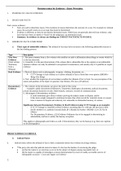
Revision notes for Evidence – Basic Principles 1. PURPOSE OF LAW OF EVIDENCE 2. ISSUES AND FACTS Facts versus evidence: Facts are used to determine issues. The resolution of issues determines the outcome of a case. For example in criminal cases, the accused’s mens rea is an issue that must be determined. Evidence is different, as they do not directly determine issues. While facts are generally derived from evidence, only facts that have been accepted or “found” by the judge/jury can determine issues. Summary: In evidence we always are finding our TARGET FACTS/FACTS IN ISSUE. 3. WHERE DO FACTS COME FROM a) Three types of admissible evidence: The tribunal of fact may have recourse to the following admissible sources in the fact-finding process: PROOF WITHOUT EVIDENCE b) Judicial Notice i. Judicial notice allows the tribunal of fact to find a commonly known fact without receiving evidence. “The party who asks that judicial notice be taken of a fact has the burden of convincing the judge: (a) that the matter is so notorious as not to be the subject of dispute among reasonable men, or (b) the matter is capable of immediate accurate demonstration by resort to readily accessible sources of indisputable accuracy”. Cross and Tapper on Evidence 1 Type Description Viva Voce Evidence (Oral/ written Testimony from a Witness) i. The most common form; a live witness who testifies on oath or affirmation about things or events which he or she has observed. ii. Generally it is the past observations of the witness that is admissible His or her opinion is not admissible. Opinion evidence can only be admitted in exceptional circumstances, and usually only if it qualifies as expert evidence. Real Evidence i. Physical objects such as photographs, weapons, clothing, documents, etc… CCTV footage is real evidence as it allows tribunal of fact to form their own opinion (HKSAR v Wong Cho Shing) ii. Test: whether the inspection of real evidence enables the tribunal of fact to form ‘its own perception of the nature and qualities of the object in question’ (Ian Dennis, The Law of Evidence) Documentary Evidence i. The contents of the documents can prove the truth of the events - examples: public documents (Ordinances, Treatments, Bankruptcy documents), judicial documents, private documents (business records, letters/emails, contracts, records of communication) ii. Advantages of documentary evidence: - It could sometimes give direct evidence proving the subject matter in dispute; and/or - It has more weight compared to testimony because they often record the material events at a nearer time to matters in dispute and relatively not vulnerable to diminished memory of witness Significance between Documentary Evidence & Real Evidence (using CCTV footage as an example): - If CCTV footage is classified as Real Evidence, assuming that it is relevant, the jury has to then decide whether it is authentic beyond doubt (R v Murphy & Another; HKSAR v Lee Chi Fai & Others) - For Documentary Evidence, s22A Evidence Ordinance has to be engaged in determining its admissibility and has to satisfy the hearsay exception. This applies to photographs and videos as well- if documentary, they can be hearsay (e.g. there are captions on the photographs)
Información del documento
- Subido en
- 19 de diciembre de 2021
- Número de páginas
- 16
- Escrito en
- 2021/2022
- Tipo
- Examen
- Contiene
- Preguntas y respuestas

