Peds Nr 328 Exam 2 Study Guide
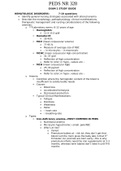
HEMATOLOGIC DISORDERS: 7-10 questions Identify general nursing strategies associated with altered anemia Describe the morphology, pathophysiology, clinical manifestations, therapeutic management and nursing considerations of the following anemias: o ***Laboratory norms: 6-12 years of age Hemoglobin: 11.5-15.5 g/dl Hematocrit: 35-45% MCV (mean corpuscular volume) 77-95 fL Measure of average size of RBC ↓ in microcytic; ↑ in macrocytic MCHC (mean corpuscular Hgb concentration) 31–37 g/dl Reflection of Hgb concentration Refer to color; in hypo-, values are ↓ MCH (mean corpuscular Hgb) 25–33 pg/cell Reflection of Hgb concentration Refer to color; in hypo-, values are ↓ o Anemia Condition where the hemoglobin content of the blood is insufficient to satisfy bodily needs Causes: Blood loss Accelerated hemolysis Decreased production Typical Clinical Manifestations: Fatigue Dizziness Weakness Pallor ↑ heart rate ↑ breathing rate o Types: Iron-deficiency anemia—MOST COMMON IN PEDS Nutritional anemia Microcytic-hypochromic—small, pale RBC Who’s at risk? o Varied o Premature babies at ↑ risk b/c they don’t get that blood rush the mom gives the baby late in that 3rd trimester, b/c premies are born early—this is why premature infants need the iron supplements at 2-3 months, whereas term babies don’t need it until 4-6 months PEDS NR 328 o Multiples and twins at ↑ because only finite amount of blood available in that last rush of blood; so not all the babies get enough iron o Breast-fed exclusively babies at ↑ risk—breast milk doesn’t have same iron content as fortified iron formula o Kiddos with chronic blood loss—GI bleeders, hemophiliacs o Kiddos with poor dietary intake; whole milk doesn’t have same iron concentration as iron fortified formula Pathophysiology: o Body stores iron that is used for erythropoiesis o Iron necessary mineral for erythropoiesis to occur o Not enough iron to transport to the bone marrow to make RBCs o Bone marrow still makes RBCs but they are very small and have a lower hemoglobin concentration Clinical Manifestations: o Typical signs of anemia plus: Irritability—due to tissue hypoxia/O2 craving Pica (especially ice, dirt, chalk, powder or pure starch)—eating of substances that are not typical of kiddos to eat; however this could be hard to distinguish from this occurring normally in toddlerhood Poor muscle tone Growth retardation Headache Nail bed deformities called?? Spoon nail Tachycardic; possible murmurs Lab Values: o Everything is ↓↓↓↓ b/c its microcytic-hypochromic Implementations: o EDUCATION*** Prevention* High iron foods* Foods that a toddler would eat; eggs, breads Whole milk takes up room in belly!!! So kiddo may not intake enough ironrich food b/c they’re not hungry; remember whole milk does not have same iron concentration like fortified formula so if kiddo is drinking equal amounts of whole milk as he/she used to drink the formula he/she is not getting enough iron Iron supplements Best on an empty stomach Best with Vitamin C Don’t give with milk If taking efficiently they will have black/green tarry stools Lab values best indicator Use a straw to prevent staining of teeth Monitor for constipation & treat Beta-Thallasemia Hemolytic anemia; bone marrow issue is the underlying patho—blood cells are extremely unstable, RBCs lyse very easily Not producing correct beta chains of hgb—alpha and gamma attempt to take over and produce RBCs that are fragile and prone to lysing ***kiddos BM is not making right hemoglobin chains—they break down very quickly and easily Microcytic-hypochromic Defective synthesis of the protein component of hemoglobin Who’s at Risk o Mediterranean descent—Italians and Greeks Pathophysiology: o Hemoglobin synthesis is impaired o Fragile RBC w/short life o Severe anemia Types: o Major Most severe Occurs in infancy If kiddo doesn’t receive freq. transfusions and treatments they rarely survive childhood Without treatment they die before age 7 o Intermediate Develop normally into adulthood Need to be treated Delayed puberty o Minor Carry the trait, don’t have it Have normal life-span Clinical Manifestations: * occurring b/c of BM involvement o Frequent epistaxis* o Osteoporosis* o Pathologic fractures* o Chronic CHF o Myocardia fibrosis o Murmurs
Información del documento
- Subido en
- 28 de noviembre de 2021
- Número de páginas
- 55
- Escrito en
- 2021/2022
- Tipo
- Examen
- Contiene
- Preguntas y respuestas