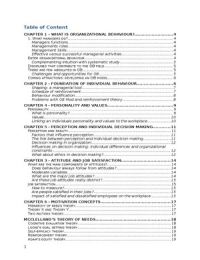
Table of Content
CHAPTER 1 - WHAT IS ORGANIZATIONAL BEHAVIOUR?...........................4
1. WHAT MANAGERS DO?......................................................................................... 4
Managers functions......................................................................................... 4
Managements roles......................................................................................... 4
Management Skills.......................................................................................... 4
Effective versus successful managerial activities...........................................4
ENTER ORGANIZATIONAL BEHAVIOUR...........................................................................4
Complementing intuition with systematic study.............................................5
DISCIPLINES THAT CONTRIBUTE TO THE OB FIELD..........................................................5
THERE ARE FEW ABSOLUTES IN OB.............................................................................5
Challenges and opportunities for OB...............................................................5
COMING ATTRACTIONS: DEVELOPING AN OB MODEL........................................................6
CHAPTER 2 - FOUNDATION OF INDIVIDUAL BEHAVIOUR.........................6
Shaping: a managerial tool............................................................................. 7
Schedule of reinforcement.............................................................................. 7
Behaviour modification................................................................................... 8
Problems with OB Mod and reinforcement theory...........................................8
CHAPTER 4 - PERSONALITY AND VALUES..............................................9
PERSONALITY.......................................................................................................... 9
What is personality?........................................................................................ 9
Values........................................................................................................... 10
Linking an individuals personality and values to the workplace....................10
CHAPTER 5 - PERCEPTION AND INDIVIDUAL DECISION MAKING............11
PERCEPTION AND REALITY........................................................................................ 11
Factors that influence perception.................................................................11
The link between perception and individual decision making.......................11
Decision making in organization...................................................................12
Influences on decision making: individual differences and organizational
constraints.................................................................................................... 12
What about ethics in decision making?.........................................................12
CHAPTER 3 - ATTITUDE AND JOB SATISFACTION...................................14
WHAT ARE THE MAIN COMPONENTS OF ATTITUDES?......................................................14
Does behaviour always follow from attitudes?..............................................14
Moderate variables....................................................................................... 14
What are the major job attitudes?.................................................................14
Are these job attitudes really distinct?..........................................................15
JOB SATISFACTION.................................................................................................. 15
How to measure?.......................................................................................... 15
Are people satisfied in their jobs?.................................................................15
Impact of satisfied and dissatisfied employees on the workplace.................15
CHAPTER 6 - MOTIVATION CONCEPTS.................................................17
HIERARCHY OF NEEDS THEORY................................................................................. 17
THEORY X AND THEORY Y....................................................................................... 17
TWO FACTORS THEORY........................................................................................... 17
MCCLELLAND’S THEORY OF NEEDS.....................................................18
COGNITIVE EVALUATION THEORY............................................................................... 18
LOCKE'S GOAL SETTING THEORY...............................................................................18
SELF-EFFICACY THEORY........................................................................................... 19
REINFORCEMENT THEORY........................................................................................ 19
ADAM'S EQUITY THEORY.......................................................................................... 19
1
, REACTIONS TO INEQUITY......................................................................................... 20
JUSTICE AND EQUITY THEORY................................................................................... 20
VROOM'S EXPECTANCY THEORY................................................................................ 21
INTEGRATING CONTEMPORARY THEORIES OF MOTIVATION................................................21
GLOBAL IMPLICATIONS............................................................................................ 21
SUMMARIES.......................................................................................................... 22
CHAPTER 7 - MOTIVATION: FROM CONCEPTS TO APPLICATIONS............23
JOB CHARACTERISTICS MODEL (JCM)........................................................................23
MOTIVATING POTENTIAL SCORE.................................................................................23
HOW CAN JOBS BE REDESIGNED?..............................................................................23
ALTERNATIVE WORK ARRANGEMENTS.........................................................................24
Ability and opportunity.................................................................................. 25
EMPLOYEE INVOLVEMENT......................................................................................... 25
Linkage motivation theory to employee involvement programs...................25
1. What to pay - Pay structure......................................................................25
2. How to pay - variable pay programs.........................................................26
3. What benefits to offer - flexible benefits...................................................27
4. How to build a recognition programs........................................................27
GLOBAL IMPLICATIONS............................................................................................ 27
CHAPTER 9 - FOUNDATION OF GROUP BEHAVIOUR..............................28
Five stages of group development model.....................................................28
Critique to five model-stage model...............................................................29
AN ALTERNATIVE MODEL.......................................................................................... 29
GROUP PROPERTY 1............................................................................................... 29
Zimbardo's prison experiment......................................................................29
GROUP PROPERTY 2 - NORM....................................................................................29
Deviant workplace behaviour........................................................................30
GROUP PROPERTY 3 - STATUS.................................................................................. 30
GROUP PROPERTY 3: SIZE....................................................................................... 31
GROUP PROPERTY 5: COHESIVENESS.........................................................................31
Group discussion techniques........................................................................32
Evaluating Group Effectiveness....................................................................33
SUMMARIES.......................................................................................................... 33
CHAPTER 10 - UNDERSTANDING WORKING TEAMS...............................34
TEAM EFFECTIVENESS - CONTEXT.............................................................................35
TEAM EFFECTIVENESS - COMPOSITION........................................................................35
TEAM EFFECTIVENESS - WORK DESIGN.......................................................................35
TEAM EFFECTIVENESS - PROCESS.............................................................................. 36
TURNING INDIVIDUALS INTO TEAM PLAYERS.................................................................36
SUMMARY AND MANAGERIAL IMPLICATIONS EFFECTIVE TEAMS HAVE COMMON
CHARACTERISTICS:................................................................................................. 36
CHAPTER 12 - BASIC APPROACHES TO LEADERSHIP.............................37
BEHAVIOUR STUDIES.............................................................................................. 37
CONTINGENCY THEORIES:........................................................................................ 38
Fielder’s Model.............................................................................................. 38
Cognitive resource theory............................................................................. 39
HERSEY AND BLANCHARD’S SITUATIONAL LEADERSHIP THEORY......................................39
PATH-GOAL THEORY.............................................................................................. 39
LEADER-MEMBER EXCHANGE THEORY.........................................................................40
YROOM AND YETTONS LEADERSHIP PARTICIPATION MODEL..............................................40
GLOBAL IMPLICATIONS............................................................................................ 41
SUMMARIES.......................................................................................................... 41
CHAPTER 13 - CONTEMPORARY ISSUES IN LEADERSHIP.................................................42
Level 5 leaders.............................................................................................. 42
Transactional & Transformational Leadership...............................................43
2
, AUTHENTIC LEADERSHIP.......................................................................................... 44
Five Key Dimensions of Trust........................................................................44
Three Types of Trust...................................................................................... 44
Basic principles of Trust................................................................................ 44
Substitutes and Neutralizers for Leadership.................................................46
FINDING AND CREATING EFFECTIVE LEADERS...............................................................46
GLOBAL IMPLICATION.............................................................................................. 46
SUMMARIES.......................................................................................................... 46
CHAPTER 14 - POWER AND POLITICS..................................................47
A DEFINITION OF POWER......................................................................................... 47
CONTRASTING LEADERSHIP AND POWER.....................................................................47
BASES OF POWER.................................................................................................. 47
Formal Power................................................................................................ 47
Personal power............................................................................................. 47
DEPENDENCY: THE KEY TO POWER............................................................................47
Power tactics................................................................................................. 47
POLITICS: POWER IN ACTION.................................................................................... 48
The reality of politics..................................................................................... 48
SEXUAL HARASSMENT............................................................................................ 48
How do people respond to organizational politics?.......................................49
Impression management.............................................................................. 50
ETHICS................................................................................................................ 50
GLOBAL IMPLICATIONS............................................................................................ 50
SUMMARY............................................................................................................ 50
3
, Chapter 1 - What is organizational behaviour?
Soft skills are important.
Knowing people means knowing their preferences, which can be
used for creating better working place to keep people and get better
results.
1. What managers do?
Managers get things done through people
Organization - consciously coordinated social unit, composed of two or
more people, to achieve a common goal.
Managers functions
Planning - defining organizations goals, establishing a strategy,
developing plans for integrations and coordination’s activities.
Organizing - what are tasks are to be done, from who, how and who
reports who.
Leading - motivate employees, directs activities, select most effective
communication’s channel
Controlling - ensure things are going as they should, monitoring the
performance and correcting.
Managements roles
Interpersonal roles - performing duties ceremonial and symbolic in
nature. (Figurehead, leader, liaison
Informational roles - collect info form outside, monitor role (reading
magazines, e.g.) as conduit, disseminator role, spokesperson -
representing the organization.
Decisional roles - entrepreneur role initiate and oversee new projects.
Disturbance handlers - taking corrective actions. Resource allocators -
human, physical monetary resources. Negotiator role - discussing issues
and bargaining with other units.
Management Skills
Technical skills - ability to apply specialised knowledge or expertise.
(Professional skills)
Human skills - ability to work with, understand and motivate other people.
Conceptual skills - ability to analyse and diagnose complex situations.
Rationally process and interpreting information.
Effective versus successful managerial activities
Traditional management - decision-making, planning and controlling
Communications - exchanging routine information and processing
paperwork
Human resource management - motivating, disciplining, managing
conflict, staffing and training
Networking - socialising, politicking and interacting with outsiders
Very important is networking and communicating
4
CHAPTER 1 - WHAT IS ORGANIZATIONAL BEHAVIOUR?...........................4
1. WHAT MANAGERS DO?......................................................................................... 4
Managers functions......................................................................................... 4
Managements roles......................................................................................... 4
Management Skills.......................................................................................... 4
Effective versus successful managerial activities...........................................4
ENTER ORGANIZATIONAL BEHAVIOUR...........................................................................4
Complementing intuition with systematic study.............................................5
DISCIPLINES THAT CONTRIBUTE TO THE OB FIELD..........................................................5
THERE ARE FEW ABSOLUTES IN OB.............................................................................5
Challenges and opportunities for OB...............................................................5
COMING ATTRACTIONS: DEVELOPING AN OB MODEL........................................................6
CHAPTER 2 - FOUNDATION OF INDIVIDUAL BEHAVIOUR.........................6
Shaping: a managerial tool............................................................................. 7
Schedule of reinforcement.............................................................................. 7
Behaviour modification................................................................................... 8
Problems with OB Mod and reinforcement theory...........................................8
CHAPTER 4 - PERSONALITY AND VALUES..............................................9
PERSONALITY.......................................................................................................... 9
What is personality?........................................................................................ 9
Values........................................................................................................... 10
Linking an individuals personality and values to the workplace....................10
CHAPTER 5 - PERCEPTION AND INDIVIDUAL DECISION MAKING............11
PERCEPTION AND REALITY........................................................................................ 11
Factors that influence perception.................................................................11
The link between perception and individual decision making.......................11
Decision making in organization...................................................................12
Influences on decision making: individual differences and organizational
constraints.................................................................................................... 12
What about ethics in decision making?.........................................................12
CHAPTER 3 - ATTITUDE AND JOB SATISFACTION...................................14
WHAT ARE THE MAIN COMPONENTS OF ATTITUDES?......................................................14
Does behaviour always follow from attitudes?..............................................14
Moderate variables....................................................................................... 14
What are the major job attitudes?.................................................................14
Are these job attitudes really distinct?..........................................................15
JOB SATISFACTION.................................................................................................. 15
How to measure?.......................................................................................... 15
Are people satisfied in their jobs?.................................................................15
Impact of satisfied and dissatisfied employees on the workplace.................15
CHAPTER 6 - MOTIVATION CONCEPTS.................................................17
HIERARCHY OF NEEDS THEORY................................................................................. 17
THEORY X AND THEORY Y....................................................................................... 17
TWO FACTORS THEORY........................................................................................... 17
MCCLELLAND’S THEORY OF NEEDS.....................................................18
COGNITIVE EVALUATION THEORY............................................................................... 18
LOCKE'S GOAL SETTING THEORY...............................................................................18
SELF-EFFICACY THEORY........................................................................................... 19
REINFORCEMENT THEORY........................................................................................ 19
ADAM'S EQUITY THEORY.......................................................................................... 19
1
, REACTIONS TO INEQUITY......................................................................................... 20
JUSTICE AND EQUITY THEORY................................................................................... 20
VROOM'S EXPECTANCY THEORY................................................................................ 21
INTEGRATING CONTEMPORARY THEORIES OF MOTIVATION................................................21
GLOBAL IMPLICATIONS............................................................................................ 21
SUMMARIES.......................................................................................................... 22
CHAPTER 7 - MOTIVATION: FROM CONCEPTS TO APPLICATIONS............23
JOB CHARACTERISTICS MODEL (JCM)........................................................................23
MOTIVATING POTENTIAL SCORE.................................................................................23
HOW CAN JOBS BE REDESIGNED?..............................................................................23
ALTERNATIVE WORK ARRANGEMENTS.........................................................................24
Ability and opportunity.................................................................................. 25
EMPLOYEE INVOLVEMENT......................................................................................... 25
Linkage motivation theory to employee involvement programs...................25
1. What to pay - Pay structure......................................................................25
2. How to pay - variable pay programs.........................................................26
3. What benefits to offer - flexible benefits...................................................27
4. How to build a recognition programs........................................................27
GLOBAL IMPLICATIONS............................................................................................ 27
CHAPTER 9 - FOUNDATION OF GROUP BEHAVIOUR..............................28
Five stages of group development model.....................................................28
Critique to five model-stage model...............................................................29
AN ALTERNATIVE MODEL.......................................................................................... 29
GROUP PROPERTY 1............................................................................................... 29
Zimbardo's prison experiment......................................................................29
GROUP PROPERTY 2 - NORM....................................................................................29
Deviant workplace behaviour........................................................................30
GROUP PROPERTY 3 - STATUS.................................................................................. 30
GROUP PROPERTY 3: SIZE....................................................................................... 31
GROUP PROPERTY 5: COHESIVENESS.........................................................................31
Group discussion techniques........................................................................32
Evaluating Group Effectiveness....................................................................33
SUMMARIES.......................................................................................................... 33
CHAPTER 10 - UNDERSTANDING WORKING TEAMS...............................34
TEAM EFFECTIVENESS - CONTEXT.............................................................................35
TEAM EFFECTIVENESS - COMPOSITION........................................................................35
TEAM EFFECTIVENESS - WORK DESIGN.......................................................................35
TEAM EFFECTIVENESS - PROCESS.............................................................................. 36
TURNING INDIVIDUALS INTO TEAM PLAYERS.................................................................36
SUMMARY AND MANAGERIAL IMPLICATIONS EFFECTIVE TEAMS HAVE COMMON
CHARACTERISTICS:................................................................................................. 36
CHAPTER 12 - BASIC APPROACHES TO LEADERSHIP.............................37
BEHAVIOUR STUDIES.............................................................................................. 37
CONTINGENCY THEORIES:........................................................................................ 38
Fielder’s Model.............................................................................................. 38
Cognitive resource theory............................................................................. 39
HERSEY AND BLANCHARD’S SITUATIONAL LEADERSHIP THEORY......................................39
PATH-GOAL THEORY.............................................................................................. 39
LEADER-MEMBER EXCHANGE THEORY.........................................................................40
YROOM AND YETTONS LEADERSHIP PARTICIPATION MODEL..............................................40
GLOBAL IMPLICATIONS............................................................................................ 41
SUMMARIES.......................................................................................................... 41
CHAPTER 13 - CONTEMPORARY ISSUES IN LEADERSHIP.................................................42
Level 5 leaders.............................................................................................. 42
Transactional & Transformational Leadership...............................................43
2
, AUTHENTIC LEADERSHIP.......................................................................................... 44
Five Key Dimensions of Trust........................................................................44
Three Types of Trust...................................................................................... 44
Basic principles of Trust................................................................................ 44
Substitutes and Neutralizers for Leadership.................................................46
FINDING AND CREATING EFFECTIVE LEADERS...............................................................46
GLOBAL IMPLICATION.............................................................................................. 46
SUMMARIES.......................................................................................................... 46
CHAPTER 14 - POWER AND POLITICS..................................................47
A DEFINITION OF POWER......................................................................................... 47
CONTRASTING LEADERSHIP AND POWER.....................................................................47
BASES OF POWER.................................................................................................. 47
Formal Power................................................................................................ 47
Personal power............................................................................................. 47
DEPENDENCY: THE KEY TO POWER............................................................................47
Power tactics................................................................................................. 47
POLITICS: POWER IN ACTION.................................................................................... 48
The reality of politics..................................................................................... 48
SEXUAL HARASSMENT............................................................................................ 48
How do people respond to organizational politics?.......................................49
Impression management.............................................................................. 50
ETHICS................................................................................................................ 50
GLOBAL IMPLICATIONS............................................................................................ 50
SUMMARY............................................................................................................ 50
3
, Chapter 1 - What is organizational behaviour?
Soft skills are important.
Knowing people means knowing their preferences, which can be
used for creating better working place to keep people and get better
results.
1. What managers do?
Managers get things done through people
Organization - consciously coordinated social unit, composed of two or
more people, to achieve a common goal.
Managers functions
Planning - defining organizations goals, establishing a strategy,
developing plans for integrations and coordination’s activities.
Organizing - what are tasks are to be done, from who, how and who
reports who.
Leading - motivate employees, directs activities, select most effective
communication’s channel
Controlling - ensure things are going as they should, monitoring the
performance and correcting.
Managements roles
Interpersonal roles - performing duties ceremonial and symbolic in
nature. (Figurehead, leader, liaison
Informational roles - collect info form outside, monitor role (reading
magazines, e.g.) as conduit, disseminator role, spokesperson -
representing the organization.
Decisional roles - entrepreneur role initiate and oversee new projects.
Disturbance handlers - taking corrective actions. Resource allocators -
human, physical monetary resources. Negotiator role - discussing issues
and bargaining with other units.
Management Skills
Technical skills - ability to apply specialised knowledge or expertise.
(Professional skills)
Human skills - ability to work with, understand and motivate other people.
Conceptual skills - ability to analyse and diagnose complex situations.
Rationally process and interpreting information.
Effective versus successful managerial activities
Traditional management - decision-making, planning and controlling
Communications - exchanging routine information and processing
paperwork
Human resource management - motivating, disciplining, managing
conflict, staffing and training
Networking - socialising, politicking and interacting with outsiders
Very important is networking and communicating
4