

Communist and Fascist dictatorships between 1917 and 1941
The Holocaust
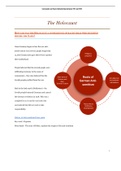
HOW FAR WAS THE HOLOCAUST A CONSEQUENCE OF RACIST IDEAS WHICH EXISTED
BEFORE THE NAZIS?
Once Germany began to lose the war anti-
jewish retoric was revived, people forgot that
Religious
12,000 German jews gave their lives to protect prejudice
their motherland.
People believed that the Jewish people were
infiltrating Germany in the name of
communism - they also believed that the
Jews were un- Roots of Anti-Marxism
German and
Jewish people profited from the war.
alien. German Anti- and extreme
nationalism
German Culture
superiority semitism
Stab in the back myth (Dolchstoss) - the
Jewish people betrayed Germany and caused
the German revolution in 1918. This was a
complete lie as it was the war lords who
Racist theory
surrendered but did not want to take
(Gobineau,
Chamberlain)
responsibility.
History of Anti-semitism Power point
Key word : Pogroms
Mien Kamf - The story of Hitler, explains the origins of his anti-semitism
1
,THE INTENTIONALIST VS STRUCTURALIST DEBATE?
Intentionalists debate
They argue that the regime was ultimately Hitler's intention therefore arguing that he is a strong dictator.
Emphasis on key individuals. The forgien and domestic policies made by Hitler all aimed to purify and strengthen the
German race - the mission from the start was to exterminate the Jewish people - there is no direct order from Hitler
to suggest this.
Structuralist debate
They argue that it was the event and structure of the Nazis which led to the Holocaust therefore supporting the
argument that Hitler was a weak dictator. Emphasis on social forces and structure of the regime.
○ 1970-80s was an emergence of structuralist historians who challenged the intentionalist view. They
argue that the state fell into chaos due to Hitler's unwillingness to regulate or create an ordered
system of government and because of a lack of clear planning and direction from Hitler
Examples of intentionalist vs Structuralist debates
● Intentionalists:
○ Dawidowicz stresses the role of significant individual such as Hitler and or top Nazi officials. He
argues that Hitler planned the extermination of the Jews prior to his leadership.
○ Eberhard Jackel: supported the idea off the omnipotence of Hitler. Jackel suggested that the
Nazi state could be a Alleinherrschaft (sole rule) - all essential decisions were made by Hitler
therefore arguing it is monocratic state. Intentionalist illustrates this chaos as a result of Hitler's
deliberate policy of divide and rule.
■ 'Hitler deliberately destroyed the state's ability to function in favor of his personal
omnipotence' - Sebastian Haffner
● Structuralist:
○ Broszat and Mommsen stressed it was the other factors and not Hitler which drove the decision
making process. There was a process with stages rather than a single intended decision.
Historiography is the debates and arguments of historians. You need to use contemporary sources (historians) to
make your point.
2
,THE PERSECUTION OF THE JEWISH PEOPLE
THE PERSECUTION OF THE JEWS HAPPENED IN STAGES
https://www.bbc.co.uk/bitesize/guides/zkfk7ty/revision/1
Stage 1
• On 1 April 1933 the Nazis boycotted all Jewish shops – they drew the
Star of David on their shop windows to keep shoppers away
• The Jewish boycott was led by the SA - SA men would stand outside
Jewish shops telling people not to shop there
• At this stage many people defied the Nazis – some people even forced
their way into the shops
• Nazi Terror was not yet strong enough to make all Germans afraid
Stage 2
• From March 1933 Jewish professionals began to be sacked and German
children began to be taught Eugenics in School
• In March 1933 Jewish judges were told to retire
• By April Jewish teachers and professors were sacked. Jewish
journalists and lawyers were prevented from working
• No Jews could work in theatre, film or music
• No Jews could work in the Civil Service
• In 1935 the Nazis made the Nuremberg laws which made it illegal for Germans and Jews to marry
Stage 3
• The Nuremberg laws deprived Jews of their German citizenship – this made them lose all their rights
• Jews could no longer “vote”
• Jews would effectively become foreigners in their own country
• In 1938 the Nazis unleashed violent attacks on Jewish shops and Synagogues – the was called Kristallnacht
(Night of broken glass). After this Jews were sent to Concentration Camps
Stage 4
• In 1942 top Nazis met at a house just outside Berlin. This Wannsee Conference decided to kill all Jews in
Extermination camps using Gas Chambers. They came up with the Final Solution here
3
, 1933-1939 ~Timeline of persecution~
1933 Hitler's 'brownshirts' stood outside Jewish shops and persuaded Germans to boycott them.
Summer 'Jews not wanted here' posters began to go up around Germany.
1935
September The Nuremberg Laws deprived Jewish people of their civil rights. They were forbidden to vote and
1935 they were not allowed to marry Germans. Other laws were passed forbidding them to go out at night
or own a bicycle, among other things.
9 November Kristallnacht was when Jewish businesses, synagogues and homes were destroyed. Many Jewish
1938 men were killed or put in concentration camps.
January Hitler accused the Jewish people of stirring up other countries against Germany. He threatened them
1939 with annihilation if a war broke out.
4
The Holocaust
HOW FAR WAS THE HOLOCAUST A CONSEQUENCE OF RACIST IDEAS WHICH EXISTED
BEFORE THE NAZIS?
Once Germany began to lose the war anti-
jewish retoric was revived, people forgot that
Religious
12,000 German jews gave their lives to protect prejudice
their motherland.
People believed that the Jewish people were
infiltrating Germany in the name of
communism - they also believed that the
Jews were un- Roots of Anti-Marxism
German and
Jewish people profited from the war.
alien. German Anti- and extreme
nationalism
German Culture
superiority semitism
Stab in the back myth (Dolchstoss) - the
Jewish people betrayed Germany and caused
the German revolution in 1918. This was a
complete lie as it was the war lords who
Racist theory
surrendered but did not want to take
(Gobineau,
Chamberlain)
responsibility.
History of Anti-semitism Power point
Key word : Pogroms
Mien Kamf - The story of Hitler, explains the origins of his anti-semitism
1
,THE INTENTIONALIST VS STRUCTURALIST DEBATE?
Intentionalists debate
They argue that the regime was ultimately Hitler's intention therefore arguing that he is a strong dictator.
Emphasis on key individuals. The forgien and domestic policies made by Hitler all aimed to purify and strengthen the
German race - the mission from the start was to exterminate the Jewish people - there is no direct order from Hitler
to suggest this.
Structuralist debate
They argue that it was the event and structure of the Nazis which led to the Holocaust therefore supporting the
argument that Hitler was a weak dictator. Emphasis on social forces and structure of the regime.
○ 1970-80s was an emergence of structuralist historians who challenged the intentionalist view. They
argue that the state fell into chaos due to Hitler's unwillingness to regulate or create an ordered
system of government and because of a lack of clear planning and direction from Hitler
Examples of intentionalist vs Structuralist debates
● Intentionalists:
○ Dawidowicz stresses the role of significant individual such as Hitler and or top Nazi officials. He
argues that Hitler planned the extermination of the Jews prior to his leadership.
○ Eberhard Jackel: supported the idea off the omnipotence of Hitler. Jackel suggested that the
Nazi state could be a Alleinherrschaft (sole rule) - all essential decisions were made by Hitler
therefore arguing it is monocratic state. Intentionalist illustrates this chaos as a result of Hitler's
deliberate policy of divide and rule.
■ 'Hitler deliberately destroyed the state's ability to function in favor of his personal
omnipotence' - Sebastian Haffner
● Structuralist:
○ Broszat and Mommsen stressed it was the other factors and not Hitler which drove the decision
making process. There was a process with stages rather than a single intended decision.
Historiography is the debates and arguments of historians. You need to use contemporary sources (historians) to
make your point.
2
,THE PERSECUTION OF THE JEWISH PEOPLE
THE PERSECUTION OF THE JEWS HAPPENED IN STAGES
https://www.bbc.co.uk/bitesize/guides/zkfk7ty/revision/1
Stage 1
• On 1 April 1933 the Nazis boycotted all Jewish shops – they drew the
Star of David on their shop windows to keep shoppers away
• The Jewish boycott was led by the SA - SA men would stand outside
Jewish shops telling people not to shop there
• At this stage many people defied the Nazis – some people even forced
their way into the shops
• Nazi Terror was not yet strong enough to make all Germans afraid
Stage 2
• From March 1933 Jewish professionals began to be sacked and German
children began to be taught Eugenics in School
• In March 1933 Jewish judges were told to retire
• By April Jewish teachers and professors were sacked. Jewish
journalists and lawyers were prevented from working
• No Jews could work in theatre, film or music
• No Jews could work in the Civil Service
• In 1935 the Nazis made the Nuremberg laws which made it illegal for Germans and Jews to marry
Stage 3
• The Nuremberg laws deprived Jews of their German citizenship – this made them lose all their rights
• Jews could no longer “vote”
• Jews would effectively become foreigners in their own country
• In 1938 the Nazis unleashed violent attacks on Jewish shops and Synagogues – the was called Kristallnacht
(Night of broken glass). After this Jews were sent to Concentration Camps
Stage 4
• In 1942 top Nazis met at a house just outside Berlin. This Wannsee Conference decided to kill all Jews in
Extermination camps using Gas Chambers. They came up with the Final Solution here
3
, 1933-1939 ~Timeline of persecution~
1933 Hitler's 'brownshirts' stood outside Jewish shops and persuaded Germans to boycott them.
Summer 'Jews not wanted here' posters began to go up around Germany.
1935
September The Nuremberg Laws deprived Jewish people of their civil rights. They were forbidden to vote and
1935 they were not allowed to marry Germans. Other laws were passed forbidding them to go out at night
or own a bicycle, among other things.
9 November Kristallnacht was when Jewish businesses, synagogues and homes were destroyed. Many Jewish
1938 men were killed or put in concentration camps.
January Hitler accused the Jewish people of stirring up other countries against Germany. He threatened them
1939 with annihilation if a war broke out.
4

