
Starguard Lifeguard Exam Study Guide 2026 - Practice-Ready Answer Guide
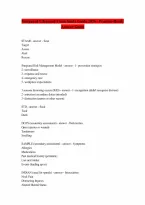
Starguard Lifeguard Exam Study Guide 2026 - Practice-Ready Answer Guide STAAR - answer - Scan Target Assess Alert Rescue Starguard Risk Management Model - answer - 1- prevention strategies 2- surveillance 3- response and rescue 4- emergency care 5- workplace expectations 3 reasons drowning occurs (RID) - answer - 1- recognition (didn't recognize distress) 2- intrusion (secondary duties intruded) 3- distraction (patron or other reason) STD - answer - Suck Tuck Duck DOTS (secondary assessment) - answer - Deformities Open injuries or wounds Tenderness Swelling SAMPLE (secondary assessment) - answer - Symptoms Allergies Medications Past medical history (pertinent) Last oral intake Events (leading up to) INDIAN (used for spinals) - answer - Intoxication Neck Pain Distracting Injuries Altered Mental Status Numbness/weakness FAST - answer - Face drop Arm drift Speech difficulty Time to activate EMS Primary Assessment - answer - 1: Check to make sure scene is safe (5 seconds or less) 2: "Are you okay?" 3:Assess victim (breathing and pulse) 4:Activate EAP 5: Begin emergency care Implied consent - answer - Victim is unresponsive and cannot be asked for consent to help, it's implied Consent - answer - Must ask to help victim before beginning emergency care if responsive, implied consent if parent or guardian isn't around RWI - answer - Recreational Water Illness Person in distress - answer - Head bobbing, mouth and nose above water Person drowning - answer - Airway compromised, head below water and cannot be lifted or brought to the surface, swallows large amounts of water 10 seconds after submersion - answer - Distress begins 20 seconds after submersion - answer - Drowning begins 1 minute after submersion - answer - Person becomes unresponsive 3 minutes after submersion - answer - Heart stops beating How does water hide victims? - answer - • Sun or window reflects off water • Water movement and ripples 5 D's of drowning - answer - 1- Dereliction 2- Denial 3- Delay 4- Distraction 5- Disguise 4 minutes after submersion - answer - Brain damage begins, survival with impairment likely 6 minutes after submersion - answer - Organs shut down, death likely Zone - answer - Area for which you are responsible for scanning 10/20 rule - answer - Scan from point A to B to A in your zone in 10 seconds and get to the farthest part of your zone in 20 seconds How do you project a professional image? - answer - • Wear your uniform (whistle, guard tube, fanny pack, assigned clothes, etc.) • Look alert • Sit up straight • No whistle twirling Rate of compressions per minute - answer - 100-120 Rate of compressions to breathes - answer - 30/2 Or 15/2 (with two rescuers on child) Infant CPR - answer - Two fingers between nipple line, press down 1/3 of chest diameter and let fully recoil. Hold free hand on fourhead to keep airway open. Do 30 compression and then 2 rescue breaths (puffs of air) Layers of protection - answer - 1- Design 2- Warnings (can help reduce injury) 3- Rules 4- Policies and procedures 5- Verification and inspections Hypoxic training drills - answer - breath holding contests that can result in shallow water blackouts Sandwich approach - answer - Used when correcting a patron's rule or policy infraction. Start with saying something positive, state what you want the patron to do, and then say something positive again. PPE - answer - Personal Protective Equipment Types of PPE's - answer - Gloves Goggles Barrier mask Apron Footwear How deep is too deep? - answer - It varies, shallow water is relative to a person's height How do you interrupt the drowning process? - answer - Open the airway immediately after bringing victim to the surface and give 5 initial rescue breaths. Continue regular rescue breathing until reaching the backboard or wall 3-D Triage - answer - Scanning your zone from the bottom then middle then top Duty to Act - answer - A lifeguard on duty that is expected to
Información del documento
- Subido en
- 1 de noviembre de 2026
- Número de páginas
- 12
- Escrito en
- 2026/2027
- Tipo
- Examen
- Contiene
- Preguntas y respuestas

