
Spanish Year 1
SECCIÓN
SECTION
1
3
(SECTION)
PRESENTARSE
A GEOGRAPHICAL
AND HISTORICAL
SKETCH OF AFRICA
1
, Year 1 SECCIÓN3
SALUDOS Y PRESENTACIONES
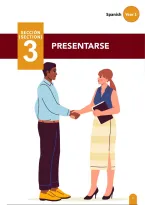
PRESENTARSE
INTRODUCCIÓN
Después de esta sección, debes saber cómo presentarte a tus compañeros(as), a las personas
mayores y a los(as) desconocidos(as). Además, vas a aprender cómo pedirles a otros sus
datos personales y cómo decir cuántos años tienes. En la vida cotidiana, conocemos a
gente e intercambiamos datos personales para conocernos mejor. Aprender cómo decir tu
nombre, apellido y edad te ayudará a empezar y entender conversaciones en español.
After this section, you should be able to introduce yourself to your peers, older people, and
strangers. You will also know how to get the same information from them and say how old
you are. As part of everyday life, we meet people and exchange personal information to
get to know them better. Learning how to say your name (nombre), surname(apellido) and
age(edad) will help you start tounderstand Spanish conversations.
At the end of this section, you should be able to (Al final de esta sección,
deberías ser capaz de):
Presentarte a un compañero/una compañera/gente mayor o extranjero/ extranjera indicando
tu nombre y apellido y pidiéndole su identidad. (Expresión oral)
Key Ideas
For basic introduction, one can use me llamo…,(I am called), soy…(I am..) or mi nombre es…
(my name is…). In Spanish, you can ask for someone’s age formally or informally. ¿Cómo
se llama usted? for formal and ¿Cómo te llamas? for informal, both meaning “What’s your
name?
With regards to saying one’s age the verb “tener” which means to have is used in Spanish
instead of the verb “to be”
PRESENTARSE (self introduction)
Hay expresiones comunes para presentarse:
(common expressions used to introduce yourself)
a) Me llamo Anita Darko (I am called Anita Darko)
b) Soy Kofi (I am Kofi)
c) Mi nombre es Selinam (My name is Selinam)
2

