@)(@)(*#@(#*@#&*$^&)(*@)$*$(&(Y&*&%Y&*(@)&$(&%*&%*&(&%@&*($#(*&98oBIOL
tuvia.com/user/????????????????????"OP@)(@)(*#@(#*@#&*$^&)(*@)$*$(&(Y&*&%Y&*(@)&$(&%*&%*&(&%@&*($#(*&98oBIOL
Page 1 of 610/20/2026https://www.stuvia.com/user/????????????????????"OP@)(@)(*#@(#*@#&*$^&)(*@)$*$(&(Y&*&%Y&*(@)&$(&%*&%*&(&%@&*($#(*&98
2460 - chapter 17 - PARKS - MICROBIOLOGY.pdf10/20/2026,
2460 - chapter 17 4:09:33
- PARKS AM
- MICROB
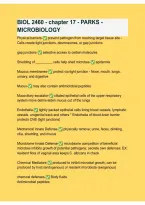
BIOL 2460 - chapter 17 - PARKS -
MICROBIOLOGY
Physical barriers- ✅
prevent pathogen from reaching target tissue site -
Cells create tight junctions, desmosomes, or gap junctions
selective access to certain molecules
gap junctions-
Shedding of _________ cells help shed microbes- epidermis
Mucous membranes- protect via tight junction - Nose, mouth, lungs,
urinary, and digestive
Mucus- may also contain antimicrobial peptides
Mucociliary escalator- ciliated epithelial cells of the upper respiratory
system move debris-laden mucus out of the lungs
Endothelia-
tightly packed epithelial cells lining blood vessels, lymphatic
vessels, urogenital track and others * Endothelia of blood-brain barrier
protects CNS (tight junctions)
Mechanical Innate Defense- physically remove; urine, feces, blinking,
cilia, shedding, and mucus
Microbiome Innate Defense-
microbiome competition of beneficial
microbes inhibits growth of potential pathogens; secrete own defenses; EX:
resident flora of vaginal area keeps C. albicans in check
Chemical Mediators-
produced to inhibit microbial growth; can be
produced by host (endogenous) or resident microbiota (exogenous)
chemical defenses-
Body fluids
Antimicrobial peptides
@)(@)(*#@(#*@#&*$^&)(*@)$*$(&(Y&*&%Y&*(@)&$(&%*&%*&(&%@&*($#(*&98oBIOL
ttps://www.stuvia.com/user/????????????????????"OP@)(@)(*#@(#*@#&*$^&)(*@)$*$(&(Y&*&%Y&*(@)&$(&%*&%*&(&%@&*($#(*&98oBIOL
Page 1 of 610/20/2026https://www.stuvia.com/user/????????????????????"OP@)(@)(*#@(#*@#&*$^&)(*@)$*$(&(Y&*&%Y&*(@)&$(&%*&%*&(&%@&*($#(*&98
2460 - chapter 17 - PARKS - MICROBIOLOGY.pdf10/20/2026,
2460 -4:09:33
chapterAM
17 - PARKS
,@)(@)(*#@(#*@#&*$^&)(*@)$*$(&(Y&*&%Y&*(@)&$(&%*&%*&(&%@&*($#(*&98oBIOL
tuvia.com/user/????????????????????"OP@)(@)(*#@(#*@#&*$^&)(*@)$*$(&(Y&*&%Y&*(@)&$(&%*&%*&(&%@&*($#(*&98oBIOL
Page 2 of 610/20/2026https://www.stuvia.com/user/????????????????????"OP@)(@)(*#@(#*@#&*$^&)(*@)$*$(&(Y&*&%Y&*(@)&$(&%*&%*&(&%@&*($#(*&98
2460 - chapter 17 - PARKS - MICROBIOLOGY.pdf10/20/2026,
2460 - chapter 17 4:09:33
- PARKS AM
- MICROB
Plasma protein mediators
Cytokines
Inflammation eliciting mediators
endogenous examples- ✅ sebum oil produced by sebaceous gland to seal
off pores
saliva produced in oral cavity
In the digestive system stomach acid, pancreatic and intestinal enzymes,
cryptins, liver bile, Paneth cells eliminate most pathogens
tear production
exogenous examples- Propionibacterium acnes digest sebum to
produce oleic acid (olay) and lower skin pH
Lactobacilli in the vagina ferment glycogen to produce lactate, lowering pH
Antimicrobial peptides (AMPs)- cell-derived mediators with
broad-spectrum antimicrobial properties; AMPs can damage membranes,
destroy DNA/RNA, or cell wall synthesis; Some are specific to Gram (+) or
Gram (-); others broad-range (bacteria fungi, protozoa, viruses)
EX: Bacteriocins and Defensins
Plasma Mediators- Acute phase proteins (liver -> blood) Complement
proteins (lectin, alt, classical, opsonization (phagocytized later), MAC)
Cytokines (chem messengers for long distance, interleukins, chemokines,
interferons)
Mannose-binding lectin- activates complete cascade
Precursor proteins float in blood until _________ ________.-
complement activation
Classical- antibody-antigen complex C1
Lectin- Acute-Phase Proteins (APPs); inflammatory response;
mannose-binding lectin C4-->Carbohydrates
@)(@)(*#@(#*@#&*$^&)(*@)$*$(&(Y&*&%Y&*(@)&$(&%*&%*&(&%@&*($#(*&98oBIOL
ttps://www.stuvia.com/user/????????????????????"OP@)(@)(*#@(#*@#&*$^&)(*@)$*$(&(Y&*&%Y&*(@)&$(&%*&%*&(&%@&*($#(*&98oBIOL
Page 2 of 610/20/2026https://www.stuvia.com/user/????????????????????"OP@)(@)(*#@(#*@#&*$^&)(*@)$*$(&(Y&*&%Y&*(@)&$(&%*&%*&(&%@&*($#(*&98
2460 - chapter 17 - PARKS - MICROBIOLOGY.pdf10/20/2026,
2460 -4:09:33
chapterAM
17 - PARKS
tuvia.com/user/????????????????????"OP@)(@)(*#@(#*@#&*$^&)(*@)$*$(&(Y&*&%Y&*(@)&$(&%*&%*&(&%@&*($#(*&98oBIOL
Page 1 of 610/20/2026https://www.stuvia.com/user/????????????????????"OP@)(@)(*#@(#*@#&*$^&)(*@)$*$(&(Y&*&%Y&*(@)&$(&%*&%*&(&%@&*($#(*&98
2460 - chapter 17 - PARKS - MICROBIOLOGY.pdf10/20/2026,
2460 - chapter 17 4:09:33
- PARKS AM
- MICROB
BIOL 2460 - chapter 17 - PARKS -
MICROBIOLOGY
Physical barriers- ✅
prevent pathogen from reaching target tissue site -
Cells create tight junctions, desmosomes, or gap junctions
selective access to certain molecules
gap junctions-
Shedding of _________ cells help shed microbes- epidermis
Mucous membranes- protect via tight junction - Nose, mouth, lungs,
urinary, and digestive
Mucus- may also contain antimicrobial peptides
Mucociliary escalator- ciliated epithelial cells of the upper respiratory
system move debris-laden mucus out of the lungs
Endothelia-
tightly packed epithelial cells lining blood vessels, lymphatic
vessels, urogenital track and others * Endothelia of blood-brain barrier
protects CNS (tight junctions)
Mechanical Innate Defense- physically remove; urine, feces, blinking,
cilia, shedding, and mucus
Microbiome Innate Defense-
microbiome competition of beneficial
microbes inhibits growth of potential pathogens; secrete own defenses; EX:
resident flora of vaginal area keeps C. albicans in check
Chemical Mediators-
produced to inhibit microbial growth; can be
produced by host (endogenous) or resident microbiota (exogenous)
chemical defenses-
Body fluids
Antimicrobial peptides
@)(@)(*#@(#*@#&*$^&)(*@)$*$(&(Y&*&%Y&*(@)&$(&%*&%*&(&%@&*($#(*&98oBIOL
ttps://www.stuvia.com/user/????????????????????"OP@)(@)(*#@(#*@#&*$^&)(*@)$*$(&(Y&*&%Y&*(@)&$(&%*&%*&(&%@&*($#(*&98oBIOL
Page 1 of 610/20/2026https://www.stuvia.com/user/????????????????????"OP@)(@)(*#@(#*@#&*$^&)(*@)$*$(&(Y&*&%Y&*(@)&$(&%*&%*&(&%@&*($#(*&98
2460 - chapter 17 - PARKS - MICROBIOLOGY.pdf10/20/2026,
2460 -4:09:33
chapterAM
17 - PARKS
,@)(@)(*#@(#*@#&*$^&)(*@)$*$(&(Y&*&%Y&*(@)&$(&%*&%*&(&%@&*($#(*&98oBIOL
tuvia.com/user/????????????????????"OP@)(@)(*#@(#*@#&*$^&)(*@)$*$(&(Y&*&%Y&*(@)&$(&%*&%*&(&%@&*($#(*&98oBIOL
Page 2 of 610/20/2026https://www.stuvia.com/user/????????????????????"OP@)(@)(*#@(#*@#&*$^&)(*@)$*$(&(Y&*&%Y&*(@)&$(&%*&%*&(&%@&*($#(*&98
2460 - chapter 17 - PARKS - MICROBIOLOGY.pdf10/20/2026,
2460 - chapter 17 4:09:33
- PARKS AM
- MICROB
Plasma protein mediators
Cytokines
Inflammation eliciting mediators
endogenous examples- ✅ sebum oil produced by sebaceous gland to seal
off pores
saliva produced in oral cavity
In the digestive system stomach acid, pancreatic and intestinal enzymes,
cryptins, liver bile, Paneth cells eliminate most pathogens
tear production
exogenous examples- Propionibacterium acnes digest sebum to
produce oleic acid (olay) and lower skin pH
Lactobacilli in the vagina ferment glycogen to produce lactate, lowering pH
Antimicrobial peptides (AMPs)- cell-derived mediators with
broad-spectrum antimicrobial properties; AMPs can damage membranes,
destroy DNA/RNA, or cell wall synthesis; Some are specific to Gram (+) or
Gram (-); others broad-range (bacteria fungi, protozoa, viruses)
EX: Bacteriocins and Defensins
Plasma Mediators- Acute phase proteins (liver -> blood) Complement
proteins (lectin, alt, classical, opsonization (phagocytized later), MAC)
Cytokines (chem messengers for long distance, interleukins, chemokines,
interferons)
Mannose-binding lectin- activates complete cascade
Precursor proteins float in blood until _________ ________.-
complement activation
Classical- antibody-antigen complex C1
Lectin- Acute-Phase Proteins (APPs); inflammatory response;
mannose-binding lectin C4-->Carbohydrates
@)(@)(*#@(#*@#&*$^&)(*@)$*$(&(Y&*&%Y&*(@)&$(&%*&%*&(&%@&*($#(*&98oBIOL
ttps://www.stuvia.com/user/????????????????????"OP@)(@)(*#@(#*@#&*$^&)(*@)$*$(&(Y&*&%Y&*(@)&$(&%*&%*&(&%@&*($#(*&98oBIOL
Page 2 of 610/20/2026https://www.stuvia.com/user/????????????????????"OP@)(@)(*#@(#*@#&*$^&)(*@)$*$(&(Y&*&%Y&*(@)&$(&%*&%*&(&%@&*($#(*&98
2460 - chapter 17 - PARKS - MICROBIOLOGY.pdf10/20/2026,
2460 -4:09:33
chapterAM
17 - PARKS