
[STUDY GUIDE] • HIGH-YIELD PRACTICE & REVIEW EDITION
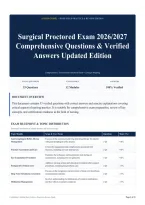
Surgical Proctored Exam 2026/2027
Comprehensive Questions & Verified
Answers Updated Edition
Comprehensive Examination Question Bank • Concept Mapping
TOTAL QUESTIONS EXAM TOPICS ANSWERS
53 Questions 12 Modules 100% Verified
DOCUMENT OVERVIEW
This document contains 53 verified questions with correct answers and concise explanations covering
critical aspects of nursing practice. It is suitable for comprehensive exam preparation, review of key
concepts, and certification readiness in the field of nursing.
EXAM BLUEPRINT & TOPIC DISTRIBUTION
Systematic breakdown of subject domains and exam coverage.
Topic Module Scope & Core Focus Questions Share (%)
Gastroesophageal Reflux Disease Focuses on the assessment and long-term drug therapy for patients
Management with gastroesophageal reflux disease. 5 Qs 9.4%
Covers the management and complications associated with
Fracture Assessment and Care fractures, including cast care and traction. 5 Qs 9.4%
Examines the techniques and assessments used during eye
Eye Examination Procedures examinations, including tests for glaucoma. 5 Qs 9.4%
Addresses nursing actions and education for patients after surgical
Postoperative Patient Care procedures, including hip prosthesis care. 4 Qs 7.5%
Focuses on the recognition and prevention of deep vein thrombosis
Deep Vein Thrombosis Awareness in postoperative patients. 4 Qs 7.5%
Involves understanding the implications of common medications
Medication Management and their effects on patient conditions. 4 Qs 7.5%
Confidential • Student Study Edition • Practice & Review Guide Page 1 of 21
,STUDENT STUDY & MASTERY EDITION PRACTICE & REVIEW GUIDE
Nutritional Considerations in Explores dietary recommendations and restrictions for patients with
Health specific health conditions. 4 Qs 7.5%
Complications of Surgery and Investigates potential complications arising from surgical
Disease procedures and underlying diseases. 4 Qs 7.5%
Covers interventions and teaching related to managing nausea and
Nausea and Vomiting Management vomiting in patients. 4 Qs 7.5%
Addresses the importance of patient education and safety measures
Patient Education and Safety in nursing practice. 4 Qs 7.5%
Focuses on recognizing clinical manifestations associated with
Signs and Symptoms Assessment various medical conditions. 5 Qs 9.4%
Examines the rationale and considerations behind common surgical
Understanding Surgical Procedures interventions. 5 Qs 9.4%
Total Exam Coverage 12 Integrated Topic Modules 53 Qs 100.0%
TOPIC 1: GASTROESOPHAGEAL REFLUX DISEASE MANAGEMENT
5 Questions • 9.4% of Exam • Focuses on the assessment and long-term drug therapy for patients with gastroesophageal reflux disease.
QUESTION 1
The nurse is assessing a patient with gastroesophageal reflux disease (GERD) who is experiencing
increasing discomfort. Which patient statement indicates that additional patient education about
GERD is needed?
a. "I quit smoking several years ago, but I still chew a lot of gum."
b. "I take antacids between meals and at bedtime each night."
c. "I eat small meals throughout the day and have a bedtime snack."
d. "I sleep with the head of the bed elevated on 4-inch blocks."
Answer: The correct answer is: "I eat small meals throughout the day and have a bedtime snack.".
Confidential • Student Study Edition • Practice & Review Guide Page 2 of 21
, STUDENT STUDY & MASTERY EDITION PRACTICE & REVIEW GUIDE
QUESTION 2
Long-term drug therapy for the patient with gastroesophageal reflux disease includes
proton-pump inhibitors such a
a. Diazepam (Valium)
b. Omeprazole (Prilosec)
c. Bethanechol (Urecholine)
d. Metoclopramide (Reglan)
Answer: The correct answer is: Omeprazole (Prilosec)
QUESTION 3
Discharge teaching for the patient with esophageal reflux disease includes instructing the patient
to:
a. Decrease protein intake
b. Elevate the foot of the bed with 6-inch blocks
c. Eat a high-carbohydrate snack before bed
d. Reduce caffeine intake and smoking
Answer: The correct answer is: Reduce caffeine intake and smoking.
QUESTION 4
An appropriate goal for the patient with gastroesophageal reflux is to:
a. Reduce estrogen levels
b. Reduce the rate of gastric emptying
c. Reduce acid production in the stomach
d. Relax the lower esophageal sphincter
Answer: The correct answer is: Reduce acid production in the stomach.
Confidential • Student Study Edition • Practice & Review Guide Page 3 of 21
Surgical Proctored Exam 2026/2027
Comprehensive Questions & Verified
Answers Updated Edition
Comprehensive Examination Question Bank • Concept Mapping
TOTAL QUESTIONS EXAM TOPICS ANSWERS
53 Questions 12 Modules 100% Verified
DOCUMENT OVERVIEW
This document contains 53 verified questions with correct answers and concise explanations covering
critical aspects of nursing practice. It is suitable for comprehensive exam preparation, review of key
concepts, and certification readiness in the field of nursing.
EXAM BLUEPRINT & TOPIC DISTRIBUTION
Systematic breakdown of subject domains and exam coverage.
Topic Module Scope & Core Focus Questions Share (%)
Gastroesophageal Reflux Disease Focuses on the assessment and long-term drug therapy for patients
Management with gastroesophageal reflux disease. 5 Qs 9.4%
Covers the management and complications associated with
Fracture Assessment and Care fractures, including cast care and traction. 5 Qs 9.4%
Examines the techniques and assessments used during eye
Eye Examination Procedures examinations, including tests for glaucoma. 5 Qs 9.4%
Addresses nursing actions and education for patients after surgical
Postoperative Patient Care procedures, including hip prosthesis care. 4 Qs 7.5%
Focuses on the recognition and prevention of deep vein thrombosis
Deep Vein Thrombosis Awareness in postoperative patients. 4 Qs 7.5%
Involves understanding the implications of common medications
Medication Management and their effects on patient conditions. 4 Qs 7.5%
Confidential • Student Study Edition • Practice & Review Guide Page 1 of 21
,STUDENT STUDY & MASTERY EDITION PRACTICE & REVIEW GUIDE
Nutritional Considerations in Explores dietary recommendations and restrictions for patients with
Health specific health conditions. 4 Qs 7.5%
Complications of Surgery and Investigates potential complications arising from surgical
Disease procedures and underlying diseases. 4 Qs 7.5%
Covers interventions and teaching related to managing nausea and
Nausea and Vomiting Management vomiting in patients. 4 Qs 7.5%
Addresses the importance of patient education and safety measures
Patient Education and Safety in nursing practice. 4 Qs 7.5%
Focuses on recognizing clinical manifestations associated with
Signs and Symptoms Assessment various medical conditions. 5 Qs 9.4%
Examines the rationale and considerations behind common surgical
Understanding Surgical Procedures interventions. 5 Qs 9.4%
Total Exam Coverage 12 Integrated Topic Modules 53 Qs 100.0%
TOPIC 1: GASTROESOPHAGEAL REFLUX DISEASE MANAGEMENT
5 Questions • 9.4% of Exam • Focuses on the assessment and long-term drug therapy for patients with gastroesophageal reflux disease.
QUESTION 1
The nurse is assessing a patient with gastroesophageal reflux disease (GERD) who is experiencing
increasing discomfort. Which patient statement indicates that additional patient education about
GERD is needed?
a. "I quit smoking several years ago, but I still chew a lot of gum."
b. "I take antacids between meals and at bedtime each night."
c. "I eat small meals throughout the day and have a bedtime snack."
d. "I sleep with the head of the bed elevated on 4-inch blocks."
Answer: The correct answer is: "I eat small meals throughout the day and have a bedtime snack.".
Confidential • Student Study Edition • Practice & Review Guide Page 2 of 21
, STUDENT STUDY & MASTERY EDITION PRACTICE & REVIEW GUIDE
QUESTION 2
Long-term drug therapy for the patient with gastroesophageal reflux disease includes
proton-pump inhibitors such a
a. Diazepam (Valium)
b. Omeprazole (Prilosec)
c. Bethanechol (Urecholine)
d. Metoclopramide (Reglan)
Answer: The correct answer is: Omeprazole (Prilosec)
QUESTION 3
Discharge teaching for the patient with esophageal reflux disease includes instructing the patient
to:
a. Decrease protein intake
b. Elevate the foot of the bed with 6-inch blocks
c. Eat a high-carbohydrate snack before bed
d. Reduce caffeine intake and smoking
Answer: The correct answer is: Reduce caffeine intake and smoking.
QUESTION 4
An appropriate goal for the patient with gastroesophageal reflux is to:
a. Reduce estrogen levels
b. Reduce the rate of gastric emptying
c. Reduce acid production in the stomach
d. Relax the lower esophageal sphincter
Answer: The correct answer is: Reduce acid production in the stomach.
Confidential • Student Study Edition • Practice & Review Guide Page 3 of 21

