
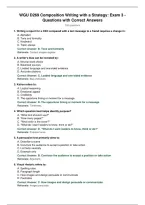
WGU D269 Composition Writing with a Strategy: Exam 3 -
Questions with Correct Answers
100 questions
1. Writing a report for a CEO compared with a text message to a friend requires a change in:
A. Alphabet
B. Tone and formality
C. Keyboard
D. Topic always
Correct Answer: B. Tone and formality
Rationale: Context shapes register.
2. A writer's bias can be revealed by:
A. Neutral word choice
B. Balanced sources
C. Loaded language and one-sided evidence
D. Accurate citations
Correct Answer: C. Loaded language and one-sided evidence
Rationale: Bias indicators.
3. Kairos refers to:
A. Logical reasoning
B. Emotional appeal
C. Credibility
D. The opportune timing or moment for a message
Correct Answer: D. The opportune timing or moment for a message
Rationale: Timeliness.
4. Which question best helps identify purpose?
A. "What font should I use?"
B. "How many pages?"
C. "What color is the cover?"
D. "What do I want readers to know, think or do?"
Correct Answer: D. "What do I want readers to know, think or do?"
Rationale: Purpose focus.
5. A persuasive text primarily aims to:
A. Describe a scene
B. Convince the audience to accept a position or take action
C. List facts neutrally
D. Entertain only
Correct Answer: B. Convince the audience to accept a position or take action
Rationale: Argument.
6. Visual rhetoric refers to:
A. Spelling rules
B. Paragraph length
C. How images and design persuade or communicate
D. Footnotes
Correct Answer: C. How images and design persuade or communicate
Rationale: Images persuade.
,7. A writer's choice to include statistics is likely aimed at:
A. Entertaining only
B. Avoiding evidence
C. Weakening credibility
D. Strengthening logical appeal
Correct Answer: D. Strengthening logical appeal
Rationale: Logos.
8. When writing for a general audience about a technical topic, the writer should:
A. Use jargon without explanation
B. Avoid examples
C. Use abbreviations only
D. Define specialized terms and use clear explanations
Correct Answer: D. Define specialized terms and use clear explanations
Rationale: Accessibility.
9. The writing process typically includes:
A. Only drafting
B. Publishing then planning
C. Prewriting, drafting, revising, editing and proofreading
D. Copying and pasting
Correct Answer: C. Prewriting, drafting, revising, editing and proofreading
Rationale: Recursive stages.
10. Revising for audience means:
A. Changing fonts
B. Adding page numbers
C. Shortening citations
D. Adjusting content, tone and explanations to fit readers
Correct Answer: D. Adjusting content, tone and explanations to fit readers
Rationale: Reader focus.
11. Collaborative writing requires:
A. One person doing everything secretly
B. Clear roles, communication and consistent style
C. No planning
D. No deadlines
Correct Answer: B. Clear roles, communication and consistent style
Rationale: Teamwork.
12. Generative AI tools in academic writing should be used:
A. To write entire submissions without disclosure
B. Only as permitted by the instructor or institution, with honest disclosure
C. Never to brainstorm under any policy
D. To fabricate sources
Correct Answer: B. Only as permitted by the instructor or institution, with honest disclosure
Rationale: Academic integrity.
, 13. Which question is best for revision?
A. "Does each paragraph support the thesis?"
B. "Did I use 12-point font?"
C. "Is my name spelled right?"
D. "How many commas did I use?"
Correct Answer: A. "Does each paragraph support the thesis?"
Rationale: Big picture.
14. Drafting the body before the introduction can help because:
A. Introductions are unnecessary
B. The writer better knows what to introduce
C. It is required
D. Conclusions come first always
Correct Answer: B. The writer better knows what to introduce
Rationale: Flexible order.
15. A working thesis is:
A. The final thesis that cannot change
B. A tentative thesis that may change as the writer drafts and researches
C. A citation
D. A title
Correct Answer: B. A tentative thesis that may change as the writer drafts and researches
Rationale: Flexible.
16. Editing for clarity might involve:
A. Breaking long sentences and replacing vague words
B. Adding jargon
C. Using more passive voice always
D. Lengthening sentences
Correct Answer: A. Breaking long sentences and replacing vague words
Rationale: Clear prose.
17. 'Although online learning offers flexibility, it requires strong self-discipline to succeed' is an
example of:
A. A fact
B. A question
C. A qualified thesis
D. An announcement
Correct Answer: C. A qualified thesis
Rationale: Concession plus claim.
18. A thesis with a 'map' or preview:
A. Lists citations
B. Describes the font
C. Previews the main points the essay will develop
D. Restates the title
Correct Answer: C. Previews the main points the essay will develop
Rationale: Forecasting.
Questions with Correct Answers
100 questions
1. Writing a report for a CEO compared with a text message to a friend requires a change in:
A. Alphabet
B. Tone and formality
C. Keyboard
D. Topic always
Correct Answer: B. Tone and formality
Rationale: Context shapes register.
2. A writer's bias can be revealed by:
A. Neutral word choice
B. Balanced sources
C. Loaded language and one-sided evidence
D. Accurate citations
Correct Answer: C. Loaded language and one-sided evidence
Rationale: Bias indicators.
3. Kairos refers to:
A. Logical reasoning
B. Emotional appeal
C. Credibility
D. The opportune timing or moment for a message
Correct Answer: D. The opportune timing or moment for a message
Rationale: Timeliness.
4. Which question best helps identify purpose?
A. "What font should I use?"
B. "How many pages?"
C. "What color is the cover?"
D. "What do I want readers to know, think or do?"
Correct Answer: D. "What do I want readers to know, think or do?"
Rationale: Purpose focus.
5. A persuasive text primarily aims to:
A. Describe a scene
B. Convince the audience to accept a position or take action
C. List facts neutrally
D. Entertain only
Correct Answer: B. Convince the audience to accept a position or take action
Rationale: Argument.
6. Visual rhetoric refers to:
A. Spelling rules
B. Paragraph length
C. How images and design persuade or communicate
D. Footnotes
Correct Answer: C. How images and design persuade or communicate
Rationale: Images persuade.
,7. A writer's choice to include statistics is likely aimed at:
A. Entertaining only
B. Avoiding evidence
C. Weakening credibility
D. Strengthening logical appeal
Correct Answer: D. Strengthening logical appeal
Rationale: Logos.
8. When writing for a general audience about a technical topic, the writer should:
A. Use jargon without explanation
B. Avoid examples
C. Use abbreviations only
D. Define specialized terms and use clear explanations
Correct Answer: D. Define specialized terms and use clear explanations
Rationale: Accessibility.
9. The writing process typically includes:
A. Only drafting
B. Publishing then planning
C. Prewriting, drafting, revising, editing and proofreading
D. Copying and pasting
Correct Answer: C. Prewriting, drafting, revising, editing and proofreading
Rationale: Recursive stages.
10. Revising for audience means:
A. Changing fonts
B. Adding page numbers
C. Shortening citations
D. Adjusting content, tone and explanations to fit readers
Correct Answer: D. Adjusting content, tone and explanations to fit readers
Rationale: Reader focus.
11. Collaborative writing requires:
A. One person doing everything secretly
B. Clear roles, communication and consistent style
C. No planning
D. No deadlines
Correct Answer: B. Clear roles, communication and consistent style
Rationale: Teamwork.
12. Generative AI tools in academic writing should be used:
A. To write entire submissions without disclosure
B. Only as permitted by the instructor or institution, with honest disclosure
C. Never to brainstorm under any policy
D. To fabricate sources
Correct Answer: B. Only as permitted by the instructor or institution, with honest disclosure
Rationale: Academic integrity.
, 13. Which question is best for revision?
A. "Does each paragraph support the thesis?"
B. "Did I use 12-point font?"
C. "Is my name spelled right?"
D. "How many commas did I use?"
Correct Answer: A. "Does each paragraph support the thesis?"
Rationale: Big picture.
14. Drafting the body before the introduction can help because:
A. Introductions are unnecessary
B. The writer better knows what to introduce
C. It is required
D. Conclusions come first always
Correct Answer: B. The writer better knows what to introduce
Rationale: Flexible order.
15. A working thesis is:
A. The final thesis that cannot change
B. A tentative thesis that may change as the writer drafts and researches
C. A citation
D. A title
Correct Answer: B. A tentative thesis that may change as the writer drafts and researches
Rationale: Flexible.
16. Editing for clarity might involve:
A. Breaking long sentences and replacing vague words
B. Adding jargon
C. Using more passive voice always
D. Lengthening sentences
Correct Answer: A. Breaking long sentences and replacing vague words
Rationale: Clear prose.
17. 'Although online learning offers flexibility, it requires strong self-discipline to succeed' is an
example of:
A. A fact
B. A question
C. A qualified thesis
D. An announcement
Correct Answer: C. A qualified thesis
Rationale: Concession plus claim.
18. A thesis with a 'map' or preview:
A. Lists citations
B. Describes the font
C. Previews the main points the essay will develop
D. Restates the title
Correct Answer: C. Previews the main points the essay will develop
Rationale: Forecasting.

