
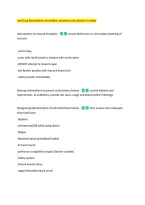
med Surg Remediation ati verified questions and solution A+ grade
Interventions for wound disruption - -wound dehiscence or evisceration (opening of
incision)
-call for help
-cover with sterile towel or moisten with sterile saline
-DO NOT attempt to reinsert organ
-low fowlers position with hips and knees bent
-notify provider immediately
Nursing interventions to prevent acute kidney disease - -control diabetes and
hypertension, all antibiotics, provide skin cares, cough and deep breathe if lethargic
Recognizing Manifestations of Left-sided Heart Failure - -Poor output and inadequate
tissue perfusion:
-dyspnea
-orthopenea(SOB while laying down)
-fatigue
-displaced apical pulse(hypertrophy)
-S1 heart sound
-pulmonary congestion (cough, bibasilar crackles)
-frothy sputum
-altered mental status
-organ failure(decreased urine)
,(Right is edema, vein and abdominal distention, ascites, polyuria, weight gain)
Teaching about foot care - --wash with mild soap and water
-no lotion in between toes
-mild food powder
-nail care only after baths/shower
-avoid open toe, plastic, barefeet,
-cotton socks
-NO hot water bottles or heating pads
-avoid long sitting, standing, crossing of legs
Manifestations of Peritonitis - -fever, purulent drainage, redness, swelling, cloudy or
discolored drained dialysate
Indications of glaucoma - -loss of peripheral vision
halo around lights
Manifestations of Hypervolemia - -tachycardia
bounding pulse
hypertension
tachypnea
weakness
headache/altered level of consciousness
ascites
crackles/cough/increased RR/dyspnea from fluids in lungs
peripheral edema
, weight gain
distended neck vein
increased urine
Planning care for acute pancreatitis - -No food until pain free
TPN if severe
provide insulin if needed
Iv fluids
antiemetic if needed
bland high protein diet small meals
using a Peak flow meter - -same time each day
-marker is on zero
-close lips and blow out hard and quick
-repeat 3 times, 30 sec in between (record highest number)
Assisting with placement of a central venous catheter - -mask and aseptic technique
-topical anesthetic
-non coring Huber Needle
-check for blood return prior to giving meds
-flush 5ml heparine after every use.. at least once per month
Identifying client at risk for metabolic alkalosis - --antaacids
blood transfusions, TPN,sodium bicarb
-loss of gastric secretions... like prolonged vomiting or nasogastric suction
-potassium depletion from thiazide diuretic or over laxative use, or cushings syndrome
Interventions for wound disruption - -wound dehiscence or evisceration (opening of
incision)
-call for help
-cover with sterile towel or moisten with sterile saline
-DO NOT attempt to reinsert organ
-low fowlers position with hips and knees bent
-notify provider immediately
Nursing interventions to prevent acute kidney disease - -control diabetes and
hypertension, all antibiotics, provide skin cares, cough and deep breathe if lethargic
Recognizing Manifestations of Left-sided Heart Failure - -Poor output and inadequate
tissue perfusion:
-dyspnea
-orthopenea(SOB while laying down)
-fatigue
-displaced apical pulse(hypertrophy)
-S1 heart sound
-pulmonary congestion (cough, bibasilar crackles)
-frothy sputum
-altered mental status
-organ failure(decreased urine)
,(Right is edema, vein and abdominal distention, ascites, polyuria, weight gain)
Teaching about foot care - --wash with mild soap and water
-no lotion in between toes
-mild food powder
-nail care only after baths/shower
-avoid open toe, plastic, barefeet,
-cotton socks
-NO hot water bottles or heating pads
-avoid long sitting, standing, crossing of legs
Manifestations of Peritonitis - -fever, purulent drainage, redness, swelling, cloudy or
discolored drained dialysate
Indications of glaucoma - -loss of peripheral vision
halo around lights
Manifestations of Hypervolemia - -tachycardia
bounding pulse
hypertension
tachypnea
weakness
headache/altered level of consciousness
ascites
crackles/cough/increased RR/dyspnea from fluids in lungs
peripheral edema
, weight gain
distended neck vein
increased urine
Planning care for acute pancreatitis - -No food until pain free
TPN if severe
provide insulin if needed
Iv fluids
antiemetic if needed
bland high protein diet small meals
using a Peak flow meter - -same time each day
-marker is on zero
-close lips and blow out hard and quick
-repeat 3 times, 30 sec in between (record highest number)
Assisting with placement of a central venous catheter - -mask and aseptic technique
-topical anesthetic
-non coring Huber Needle
-check for blood return prior to giving meds
-flush 5ml heparine after every use.. at least once per month
Identifying client at risk for metabolic alkalosis - --antaacids
blood transfusions, TPN,sodium bicarb
-loss of gastric secretions... like prolonged vomiting or nasogastric suction
-potassium depletion from thiazide diuretic or over laxative use, or cushings syndrome

