
[STUDY GUIDE] • HIGH-YIELD PRACTICE & REVIEW EDITION
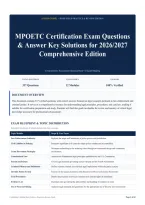
MPOETC Certification Exam Questions
& Answer Key Solutions for 2026/2027
Comprehensive Edition
Comprehensive Examination Question Bank • Concept Mapping
TOTAL QUESTIONS EXAM TOPICS ANSWERS
337 Questions 12 Modules 100% Verified
DOCUMENT OVERVIEW
This document contains 337 verified questions with correct answers focused on legal concepts pertinent to law enforcement and
criminal justice. It serves as a comprehensive resource for understanding legal principles, procedures, and case law, making it
suitable for certification preparation and study. Students will find this guide invaluable for review and mastery of critical legal
knowledge necessary for professional advancement.
EXAM BLUEPRINT & TOPIC DISTRIBUTION
Systematic breakdown of subject domains and exam coverage.
Topic Module Scope & Core Focus
Law Enforcement Authority Explores the scope and limitations of police powers and jurisdiction.
Civil Liability in Policing Examines significant civil cases that shape police conduct and accountability.
Discusses methodologies for reducing crime through environmental design and community
Crime Prevention Strategies involvement.
Constitutional Law Analyzes the foundational legal principles established by the U.S. Constitution.
Search and Seizure Covers legal standards governing search warrants and the Fourth Amendment.
Criminal Offenses and Definitions Defines various criminal acts and their legal implications within the justice system.
Juvenile Justice System Focuses on the unique procedures and objectives of the juvenile justice framework.
Trial Procedures Details the processes involved in criminal trials and the rights of defendants.
Evidence Law Examines rules governing the admissibility and handling of evidence in court.
Use of Force in Policing Analyzes legal standards and guidelines for the appropriate use of force by law enforcement.
Confidential • Student Study Edition • Practice & Review Guide Page 1 of 62
,STUDENT STUDY & MASTERY EDITION PRACTICE & REVIEW GUIDE
Criminal Investigation Techniques Covers procedures and best practices for conducting criminal investigations.
Ethics in Law Enforcement Explores ethical considerations and dilemmas faced by law enforcement professionals.
Total Exam Coverage 12 Integrated Topic Modules • 337 Examination Questions
HIGH-YIELD: QUESTIONS & VERIFIED ANSWERS
Complete Examination Questions • 337 Questions • Sequential Exam Layout
QUESTION 1
What did the municipal police jurisdiction act do?
Answer: Established law enforcement authority within primary jurisdiction and detailed when police may act outside of
primary jurisdiction.
QUESTION 2
What did Robert Peele do?
Answer: Established the London Metropolitan Police and created the first standard for professional policing.
QUESTION 3
What are the six pillars of policing?
Answer: 1. Building trust
2. Officer health and wellness
3. Policy and Oversight
4. Tech and Social Media
5. Community Policing
6. Training and Education.
QUESTION 4
What is the difference between between an act of commission and an act of omission and give an
example of both?
Answer: Act of commission - physically do something wrong like assaulting someone or stealing Act of Omission - doing
something wrong by failing to do something like violating policy or carrying unauthorized equipment.
Confidential • Student Study Edition • Practice & Review Guide Page 2 of 62
,STUDENT STUDY & MASTERY EDITION PRACTICE & REVIEW GUIDE
QUESTION 5
Which civil case involving police abuse of power had the greatest impact on law enforcement?
Answer: Rodney King.
QUESTION 6
What is community relations vs public relations?
Answer: Community relations is what police do to garner trust in communities Public relations is how the police present
community relations to the media.
QUESTION 7
What are the two components to community policing
Answer: Community partnership and problem solving.
QUESTION 8
Problem-oriented policing involves what?
Answer: Finding solutions to problems in a community, not putting band-aids on them.
QUESTION 9
What is CPTED?
Answer: Crime Prevention Through Environmental Design.
QUESTION 10
Who is the chief law enforcement officer in PA?
Answer: The attorney general.
Confidential • Student Study Edition • Practice & Review Guide Page 3 of 62
, STUDENT STUDY & MASTERY EDITION PRACTICE & REVIEW GUIDE
QUESTION 11
What is the highest level of court in PA
Answer: PA Supreme Court.
QUESTION 12
What is the purpose of a preliminary hearing?
Answer: To determine whether the prosecution has enough a prima facie case to justify further criminal proceedings
against the accused.
QUESTION 13
When writing a report, who should the police officer attempt to identify?
Answer: Victim
Offender
Potential witnesses.
QUESTION 14
What are the six building blocks of report writing
Answer: Who what when where why and how.
QUESTION 15
A woman being interviewed states that she was two blocks away from an accident when it
occurred, but says she saw everything happen. What should we be cautious of?
Answer: She may not provide an accurate recollection due to her relative location to the scene at the time of the incident.
QUESTION 16
In what order should reports be written?
Answer: Chronological.
Confidential • Student Study Edition • Practice & Review Guide Page 4 of 62
MPOETC Certification Exam Questions
& Answer Key Solutions for 2026/2027
Comprehensive Edition
Comprehensive Examination Question Bank • Concept Mapping
TOTAL QUESTIONS EXAM TOPICS ANSWERS
337 Questions 12 Modules 100% Verified
DOCUMENT OVERVIEW
This document contains 337 verified questions with correct answers focused on legal concepts pertinent to law enforcement and
criminal justice. It serves as a comprehensive resource for understanding legal principles, procedures, and case law, making it
suitable for certification preparation and study. Students will find this guide invaluable for review and mastery of critical legal
knowledge necessary for professional advancement.
EXAM BLUEPRINT & TOPIC DISTRIBUTION
Systematic breakdown of subject domains and exam coverage.
Topic Module Scope & Core Focus
Law Enforcement Authority Explores the scope and limitations of police powers and jurisdiction.
Civil Liability in Policing Examines significant civil cases that shape police conduct and accountability.
Discusses methodologies for reducing crime through environmental design and community
Crime Prevention Strategies involvement.
Constitutional Law Analyzes the foundational legal principles established by the U.S. Constitution.
Search and Seizure Covers legal standards governing search warrants and the Fourth Amendment.
Criminal Offenses and Definitions Defines various criminal acts and their legal implications within the justice system.
Juvenile Justice System Focuses on the unique procedures and objectives of the juvenile justice framework.
Trial Procedures Details the processes involved in criminal trials and the rights of defendants.
Evidence Law Examines rules governing the admissibility and handling of evidence in court.
Use of Force in Policing Analyzes legal standards and guidelines for the appropriate use of force by law enforcement.
Confidential • Student Study Edition • Practice & Review Guide Page 1 of 62
,STUDENT STUDY & MASTERY EDITION PRACTICE & REVIEW GUIDE
Criminal Investigation Techniques Covers procedures and best practices for conducting criminal investigations.
Ethics in Law Enforcement Explores ethical considerations and dilemmas faced by law enforcement professionals.
Total Exam Coverage 12 Integrated Topic Modules • 337 Examination Questions
HIGH-YIELD: QUESTIONS & VERIFIED ANSWERS
Complete Examination Questions • 337 Questions • Sequential Exam Layout
QUESTION 1
What did the municipal police jurisdiction act do?
Answer: Established law enforcement authority within primary jurisdiction and detailed when police may act outside of
primary jurisdiction.
QUESTION 2
What did Robert Peele do?
Answer: Established the London Metropolitan Police and created the first standard for professional policing.
QUESTION 3
What are the six pillars of policing?
Answer: 1. Building trust
2. Officer health and wellness
3. Policy and Oversight
4. Tech and Social Media
5. Community Policing
6. Training and Education.
QUESTION 4
What is the difference between between an act of commission and an act of omission and give an
example of both?
Answer: Act of commission - physically do something wrong like assaulting someone or stealing Act of Omission - doing
something wrong by failing to do something like violating policy or carrying unauthorized equipment.
Confidential • Student Study Edition • Practice & Review Guide Page 2 of 62
,STUDENT STUDY & MASTERY EDITION PRACTICE & REVIEW GUIDE
QUESTION 5
Which civil case involving police abuse of power had the greatest impact on law enforcement?
Answer: Rodney King.
QUESTION 6
What is community relations vs public relations?
Answer: Community relations is what police do to garner trust in communities Public relations is how the police present
community relations to the media.
QUESTION 7
What are the two components to community policing
Answer: Community partnership and problem solving.
QUESTION 8
Problem-oriented policing involves what?
Answer: Finding solutions to problems in a community, not putting band-aids on them.
QUESTION 9
What is CPTED?
Answer: Crime Prevention Through Environmental Design.
QUESTION 10
Who is the chief law enforcement officer in PA?
Answer: The attorney general.
Confidential • Student Study Edition • Practice & Review Guide Page 3 of 62
, STUDENT STUDY & MASTERY EDITION PRACTICE & REVIEW GUIDE
QUESTION 11
What is the highest level of court in PA
Answer: PA Supreme Court.
QUESTION 12
What is the purpose of a preliminary hearing?
Answer: To determine whether the prosecution has enough a prima facie case to justify further criminal proceedings
against the accused.
QUESTION 13
When writing a report, who should the police officer attempt to identify?
Answer: Victim
Offender
Potential witnesses.
QUESTION 14
What are the six building blocks of report writing
Answer: Who what when where why and how.
QUESTION 15
A woman being interviewed states that she was two blocks away from an accident when it
occurred, but says she saw everything happen. What should we be cautious of?
Answer: She may not provide an accurate recollection due to her relative location to the scene at the time of the incident.
QUESTION 16
In what order should reports be written?
Answer: Chronological.
Confidential • Student Study Edition • Practice & Review Guide Page 4 of 62

