
PN • OB & MED-SURG
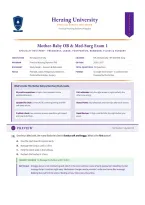
Herzing University
HERZING PRACTICAL NURSING EXAM REVIEW
Practical Nursing Diploma Program
EST. 1965
Mother-Baby OB & Med-Surg Exam 1
S P E C I A LT Y H E S I P R E P · P R E G N A N C Y, L A B O R , P O S T P A R T U M , N E W B O R N , F L U I D S & S U R G E R Y
INSTITUTION Herzing University COURSES NP 226 Specialty · NP 200 Med-Surg
PROGRAM Practical Nursing Diploma (PN) EDITION
DOCUMENT Study Guide — Answers & Rationales TOTAL QUESTIONS 50 Questions
FOCUS Prenatal, Labor, Postpartum, Newborn, FORMAT 50 single-best-answer · 6 content areas ·
Fluids & Electrolytes, Surgery Prepared by DoctorKen
What’s Inside This Mother-Baby & Med-Surg Study Guide.
50 practice questions: 6 topics, from prenatal care to Full rationales: why the right answer is right and why the
postoperative pain. others are wrong.
Updated for 2026: current ACOG screening timing and AAP Bonus Points: key takeaways and exam tips after each section.
safe sleep advice.
Problem check: two common reasons questions get missed, Rapid Review: 12 high-yield facts for the night before your
and how to fix them. exam.
PREVIEW From Section 3 · Question 18
18. One hour after birth, the nurse finds the client’s fundus soft and boggy. What is the first action?
A. Give the next dose of oxytocin early.
B. Massage the fundus until it is firm.
C. Help the client walk in the hallway.
D. Recheck the fundus in 1 hour.
CORRECT ANSWER B. Massage the fundus until it is firm.
RATIONALE A boggy uterus is not contracting well, which is the most common cause of early postpartum bleeding. Fundal
massage helps it contract right away. Medication changes need a provider’s order and come after massage.
Walking does not firm the uterus. Waiting an hour risks heavy blood loss.
,BEFORE YOU BEGIN
You Already Know This.
You already know more of this than you think. In class and clinical you have taken vital signs, collected data, and
reported findings that did not look right. That is the core of both exams.
These exams feel hard because they test what you notice and what you do first, often between two answers that both
sound correct. This guide gives you practice with those decisions. It covers common Med-Surg Exam 1 topics, so check
your syllabus for anything else.
W H E R E I S YO U R P R E PA R AT I O N B R E A K I N G D O W N ?
Many missed questions come from one of two problems. See which one sounds like you.
PROBLEM 1 PROBLEM 2
“Two Answers Both Look Right” “The Normal Values Blur Together”
W H AT ' S H A P P E N I N G W H AT ' S H A P P E N I N G
Both options are safe, but only one is the first action, and you pick the Ranges for potassium, sodium, fetal heart rate, and newborn vital
one that sounds more complete. signs mix up, so you miss which value is abnormal.
WORK ON THIS WORK ON THIS
Ask what keeps the client safe right now: airway, breathing, Learn the normal range first, then the one key sign of each abnormal
circulation, then bleeding. Check the mother and the fetus before value. The Rapid Review lists every range used in this guide.
teaching or documenting.
EXAMINATION INSTRUCTIONS
Each question has one best answer. Read the bolded words in each question carefully.
For timed practice, allow about 1 minute per question, and cover the green answer and blue rationale boxes.
Check your answers, then read the rationale for every question you missed and every lucky guess.
PREGNANCY & PRENATAL CARE Questions 1 – 8
1. A client’s last menstrual period began on March 10. Using Naegele’s rule, what is the estimated date of birth?
A. December 3
B. December 17
C. June 17
D. January 17
CORRECT ANSWER B. December 17
RATIONALE Subtract 3 months from March 10 (December 10), add 7 days (December 17), then add 1 year. December 3
subtracts 7 days instead of adding them. June 17 adds 3 months instead of subtracting them. January 17 is one
month too late.
, 2. A client is pregnant now. She delivered twins at 36 weeks, and both are living. She also had a miscarriage at 10
weeks. Which GTPAL is correct?
A. G3 T0 P2 A1 L2
B. G4 T0 P1 A1 L2
C. G3 T0 P1 A1 L2
D. G2 T1 P0 A1 L2
CORRECT ANSWER C. G3 T0 P1 A1 L2
RATIONALE Gravida counts every pregnancy, including the current one: 3. A twin pregnancy counts once for gravida and once
for preterm, because birth at 36 weeks is before term (37 weeks). Living children counts each child: 2. P2 counts
the twins as two births. G4 counts the twins as two pregnancies. G2 T1 leaves out the current pregnancy and calls
36 weeks term.
3. A client at 30 weeks asks when she will be tested for group B streptococcus. What should the nurse tell her?
A. Between 36 and 37 weeks of pregnancy
B. At the first prenatal visit
C. Between 24 and 28 weeks of pregnancy
D. Only if she develops a fever during labor
CORRECT ANSWER A. Between 36 and 37 weeks of pregnancy
RATIONALE Current ACOG guidance screens all pregnant clients for GBS at 36 0/7 to 37 6/7 weeks. That timing best predicts
GBS status at birth. The first prenatal visit is too early to predict status at birth. The 24 to 28 week window is for
gestational diabetes screening. Waiting for a fever would miss clients who need antibiotics during labor.
4. A client at 34 weeks calls the clinic. Which finding should the nurse report to the provider right away?
A. Sudden swelling of the face and hands with a headache
B. Mild ankle swelling at the end of the day that goes away overnight
C. Heartburn after large meals
D. Needing to urinate more often
CORRECT ANSWER A. Sudden swelling of the face and hands with a headache
RATIONALE Sudden facial and hand swelling with a headache can signal preeclampsia, which can quickly harm the mother
and fetus. Mild ankle swelling late in the day is common and improves with rest. Heartburn is a common
discomfort of late pregnancy. Urinary frequency is expected as the uterus presses on the bladder.
Herzing University
HERZING PRACTICAL NURSING EXAM REVIEW
Practical Nursing Diploma Program
EST. 1965
Mother-Baby OB & Med-Surg Exam 1
S P E C I A LT Y H E S I P R E P · P R E G N A N C Y, L A B O R , P O S T P A R T U M , N E W B O R N , F L U I D S & S U R G E R Y
INSTITUTION Herzing University COURSES NP 226 Specialty · NP 200 Med-Surg
PROGRAM Practical Nursing Diploma (PN) EDITION
DOCUMENT Study Guide — Answers & Rationales TOTAL QUESTIONS 50 Questions
FOCUS Prenatal, Labor, Postpartum, Newborn, FORMAT 50 single-best-answer · 6 content areas ·
Fluids & Electrolytes, Surgery Prepared by DoctorKen
What’s Inside This Mother-Baby & Med-Surg Study Guide.
50 practice questions: 6 topics, from prenatal care to Full rationales: why the right answer is right and why the
postoperative pain. others are wrong.
Updated for 2026: current ACOG screening timing and AAP Bonus Points: key takeaways and exam tips after each section.
safe sleep advice.
Problem check: two common reasons questions get missed, Rapid Review: 12 high-yield facts for the night before your
and how to fix them. exam.
PREVIEW From Section 3 · Question 18
18. One hour after birth, the nurse finds the client’s fundus soft and boggy. What is the first action?
A. Give the next dose of oxytocin early.
B. Massage the fundus until it is firm.
C. Help the client walk in the hallway.
D. Recheck the fundus in 1 hour.
CORRECT ANSWER B. Massage the fundus until it is firm.
RATIONALE A boggy uterus is not contracting well, which is the most common cause of early postpartum bleeding. Fundal
massage helps it contract right away. Medication changes need a provider’s order and come after massage.
Walking does not firm the uterus. Waiting an hour risks heavy blood loss.
,BEFORE YOU BEGIN
You Already Know This.
You already know more of this than you think. In class and clinical you have taken vital signs, collected data, and
reported findings that did not look right. That is the core of both exams.
These exams feel hard because they test what you notice and what you do first, often between two answers that both
sound correct. This guide gives you practice with those decisions. It covers common Med-Surg Exam 1 topics, so check
your syllabus for anything else.
W H E R E I S YO U R P R E PA R AT I O N B R E A K I N G D O W N ?
Many missed questions come from one of two problems. See which one sounds like you.
PROBLEM 1 PROBLEM 2
“Two Answers Both Look Right” “The Normal Values Blur Together”
W H AT ' S H A P P E N I N G W H AT ' S H A P P E N I N G
Both options are safe, but only one is the first action, and you pick the Ranges for potassium, sodium, fetal heart rate, and newborn vital
one that sounds more complete. signs mix up, so you miss which value is abnormal.
WORK ON THIS WORK ON THIS
Ask what keeps the client safe right now: airway, breathing, Learn the normal range first, then the one key sign of each abnormal
circulation, then bleeding. Check the mother and the fetus before value. The Rapid Review lists every range used in this guide.
teaching or documenting.
EXAMINATION INSTRUCTIONS
Each question has one best answer. Read the bolded words in each question carefully.
For timed practice, allow about 1 minute per question, and cover the green answer and blue rationale boxes.
Check your answers, then read the rationale for every question you missed and every lucky guess.
PREGNANCY & PRENATAL CARE Questions 1 – 8
1. A client’s last menstrual period began on March 10. Using Naegele’s rule, what is the estimated date of birth?
A. December 3
B. December 17
C. June 17
D. January 17
CORRECT ANSWER B. December 17
RATIONALE Subtract 3 months from March 10 (December 10), add 7 days (December 17), then add 1 year. December 3
subtracts 7 days instead of adding them. June 17 adds 3 months instead of subtracting them. January 17 is one
month too late.
, 2. A client is pregnant now. She delivered twins at 36 weeks, and both are living. She also had a miscarriage at 10
weeks. Which GTPAL is correct?
A. G3 T0 P2 A1 L2
B. G4 T0 P1 A1 L2
C. G3 T0 P1 A1 L2
D. G2 T1 P0 A1 L2
CORRECT ANSWER C. G3 T0 P1 A1 L2
RATIONALE Gravida counts every pregnancy, including the current one: 3. A twin pregnancy counts once for gravida and once
for preterm, because birth at 36 weeks is before term (37 weeks). Living children counts each child: 2. P2 counts
the twins as two births. G4 counts the twins as two pregnancies. G2 T1 leaves out the current pregnancy and calls
36 weeks term.
3. A client at 30 weeks asks when she will be tested for group B streptococcus. What should the nurse tell her?
A. Between 36 and 37 weeks of pregnancy
B. At the first prenatal visit
C. Between 24 and 28 weeks of pregnancy
D. Only if she develops a fever during labor
CORRECT ANSWER A. Between 36 and 37 weeks of pregnancy
RATIONALE Current ACOG guidance screens all pregnant clients for GBS at 36 0/7 to 37 6/7 weeks. That timing best predicts
GBS status at birth. The first prenatal visit is too early to predict status at birth. The 24 to 28 week window is for
gestational diabetes screening. Waiting for a fever would miss clients who need antibiotics during labor.
4. A client at 34 weeks calls the clinic. Which finding should the nurse report to the provider right away?
A. Sudden swelling of the face and hands with a headache
B. Mild ankle swelling at the end of the day that goes away overnight
C. Heartburn after large meals
D. Needing to urinate more often
CORRECT ANSWER A. Sudden swelling of the face and hands with a headache
RATIONALE Sudden facial and hand swelling with a headache can signal preeclampsia, which can quickly harm the mother
and fetus. Mild ankle swelling late in the day is common and improves with rest. Heartburn is a common
discomfort of late pregnancy. Urinary frequency is expected as the uterus presses on the bladder.

