
Accounting Principles | Financial Statements Overview
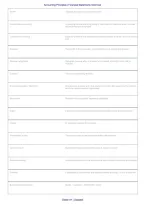
GAAP Generally Accepted Accounting Principles.
Accrual-basis accounting Accounting method where the timing of cash does not determine when revenues
and expenses are recognized.
Cash-basis accounting Accounting method that recognizes transactions based on when cash is received or
paid.
Revenue The benefit of doing business; recognized when it is earned and realized.
Revenue recognition Recognize revenue when it is earned and realized, not simply when cash is
received.
Expense The cost of generating revenue.
Expense recognition / Matching Recognize an expense when it is incurred and match the expense to the period in
which the related revenue is generated.
Net income Revenue minus expenses; represents profitability.
Asset A resource that helps generate revenue and provides future economic benefit.
Liability An obligation owed by the company.
Stockholders' equity The owners' claim on the company's assets after liabilities.
Common stock Stockholders' equity created when stock is issued to owners.
Retained earnings Accumulated earnings of the company that have not been distributed as dividends.
Dividend A distribution to stockholders that reduces retained earnings; it is not an expense.
Basic accounting equation Assets = Liabilities + Stockholders' Equity
Grade A+ | Updated
, Accounting Principles | Financial Statements Overview
Expanded accounting equation Assets = Liabilities + Common Stock + Retained Earnings
Net income formula Revenue - Expenses = Net Income
Ending retained earnings formula Beginning Retained Earnings + Net Income - Dividends = Ending Retained
Earnings
Depreciation expense formula (Cost - Salvage Value) / Useful Life
Balance sheet Reports assets, liabilities, and stockholders' equity at a point in time.
Income statement Reports revenues and expenses for a period of time.
Statement of stockholders' equity Shows changes in stockholders' equity during a period.
Statement of cash flows Reports cash inflows and cash outflows during a period.
Temporary accounts Revenue and expense accounts that are closed at the end of an accounting period.
Closing entries Move revenue and expense amounts into retained earnings and close temporary
accounts.
Accounting cycle Step 1 Record transactions.
Accounting cycle Step 2 At the end of the period, adjust accounts. This is accrual accounting.
Accounting cycle Step 3 Prepare financial statements.
Accounting cycle Step 4 Close temporary accounts by moving revenue and expenses into retained earnings.
Accrual Revenue or expense is recognized before the related cash is received or paid.
Grade A+ | Updated
GAAP Generally Accepted Accounting Principles.
Accrual-basis accounting Accounting method where the timing of cash does not determine when revenues
and expenses are recognized.
Cash-basis accounting Accounting method that recognizes transactions based on when cash is received or
paid.
Revenue The benefit of doing business; recognized when it is earned and realized.
Revenue recognition Recognize revenue when it is earned and realized, not simply when cash is
received.
Expense The cost of generating revenue.
Expense recognition / Matching Recognize an expense when it is incurred and match the expense to the period in
which the related revenue is generated.
Net income Revenue minus expenses; represents profitability.
Asset A resource that helps generate revenue and provides future economic benefit.
Liability An obligation owed by the company.
Stockholders' equity The owners' claim on the company's assets after liabilities.
Common stock Stockholders' equity created when stock is issued to owners.
Retained earnings Accumulated earnings of the company that have not been distributed as dividends.
Dividend A distribution to stockholders that reduces retained earnings; it is not an expense.
Basic accounting equation Assets = Liabilities + Stockholders' Equity
Grade A+ | Updated
, Accounting Principles | Financial Statements Overview
Expanded accounting equation Assets = Liabilities + Common Stock + Retained Earnings
Net income formula Revenue - Expenses = Net Income
Ending retained earnings formula Beginning Retained Earnings + Net Income - Dividends = Ending Retained
Earnings
Depreciation expense formula (Cost - Salvage Value) / Useful Life
Balance sheet Reports assets, liabilities, and stockholders' equity at a point in time.
Income statement Reports revenues and expenses for a period of time.
Statement of stockholders' equity Shows changes in stockholders' equity during a period.
Statement of cash flows Reports cash inflows and cash outflows during a period.
Temporary accounts Revenue and expense accounts that are closed at the end of an accounting period.
Closing entries Move revenue and expense amounts into retained earnings and close temporary
accounts.
Accounting cycle Step 1 Record transactions.
Accounting cycle Step 2 At the end of the period, adjust accounts. This is accrual accounting.
Accounting cycle Step 3 Prepare financial statements.
Accounting cycle Step 4 Close temporary accounts by moving revenue and expenses into retained earnings.
Accrual Revenue or expense is recognized before the related cash is received or paid.
Grade A+ | Updated

