Test Bank for Essentials of Human Anatomy & Physiology, 13th Global Edition by
Elaine N. Marieb and Suzanne M. Keller
Chapter 1 The Human Body: An Orientation
1.1 Matching Questions
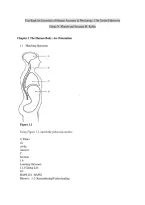
Figure 1.1
Using Figure 1.1, match the following cavities:
1) Thora
cic
cavity.
Answer:
C
Section:
1.6
Learning Outcome:
1.12 Global LO:
G3
HAPS LO: HAPS1
Bloom's: 1-2: Remembering/Understanding
,2) Cranial cavity.
Answer: A
Section: 1.6
Learning Outcome: 1.12
Global LO: G3
HAPS LO: HAPS1
Bloom's: 1-2: Remembering/Understanding
3) Abdominal cavity.
Answer: D
Section: 1.6
Learning Outcome: 1.12
Global LO: G3
HAPS LO: HAPS1
Bloom's: 1-2: Remembering/Understanding
4) Vertebral cavity.
Answer: B
Section: 1.6
Learning Outcome: 1.12
Global LO: G3
HAPS LO: HAPS1
Bloom's: 1-2: Remembering/Understanding
2|Page
,Figure 1.2
Using Figure 1.2, match the following descriptions to the most appropriate letter on the
diagram:
5) Information about body temperature is sent through afferent pathways to the brain.
Answer: C
Section: 1.4
Learning Outcome: 1.7, 1.8
Global LO: G2, G3
HAPS LO: HAPS2, HAPS3
Bloom's: 3-4: Applying/Analyzing
6) Free nerve endings in the skin detect changes in skin temperature (getting warmer).
Answer: B
Section: 1.4
Learning Outcome: 1.7, 1.8
Global LO: G2, G3
HAPS LO: HAPS2, HAPS3
Bloom's: 3-4: Applying/Analyzing
7) Appropriate response information is sent through efferent pathways.
Answer: D
Section: 1.4
Learning Outcome: 1.7, 1.8
Global LO: G2, G3
HAPS LO: HAPS2, HAPS3
Bloom's: 3-4: Applying/Analyzing
3|Page
, 8) A change in the temperature of the external environment (getting warmer).
Answer: A
Section: 1.4
Learning Outcome: 1.7, 1.8
Global LO: G2, G3
HAPS LO: HAPS2, HAPS3
Bloom's: 3-4: Applying/Analyzing
9) Sweat glands are stimulated as well as blood being distributed to the skin to allow cooling of
the body to return the body's temperature to a physiological level.
Answer: E
Section: 1.4
Learning Outcome: 1.7, 1.8
Global LO: G2, G3
HAPS LO: HAPS2, HAPS3
Bloom's: 3-4: Applying/Analyzing
4|Page
Elaine N. Marieb and Suzanne M. Keller
Chapter 1 The Human Body: An Orientation
1.1 Matching Questions
Figure 1.1
Using Figure 1.1, match the following cavities:
1) Thora
cic
cavity.
Answer:
C
Section:
1.6
Learning Outcome:
1.12 Global LO:
G3
HAPS LO: HAPS1
Bloom's: 1-2: Remembering/Understanding
,2) Cranial cavity.
Answer: A
Section: 1.6
Learning Outcome: 1.12
Global LO: G3
HAPS LO: HAPS1
Bloom's: 1-2: Remembering/Understanding
3) Abdominal cavity.
Answer: D
Section: 1.6
Learning Outcome: 1.12
Global LO: G3
HAPS LO: HAPS1
Bloom's: 1-2: Remembering/Understanding
4) Vertebral cavity.
Answer: B
Section: 1.6
Learning Outcome: 1.12
Global LO: G3
HAPS LO: HAPS1
Bloom's: 1-2: Remembering/Understanding
2|Page
,Figure 1.2
Using Figure 1.2, match the following descriptions to the most appropriate letter on the
diagram:
5) Information about body temperature is sent through afferent pathways to the brain.
Answer: C
Section: 1.4
Learning Outcome: 1.7, 1.8
Global LO: G2, G3
HAPS LO: HAPS2, HAPS3
Bloom's: 3-4: Applying/Analyzing
6) Free nerve endings in the skin detect changes in skin temperature (getting warmer).
Answer: B
Section: 1.4
Learning Outcome: 1.7, 1.8
Global LO: G2, G3
HAPS LO: HAPS2, HAPS3
Bloom's: 3-4: Applying/Analyzing
7) Appropriate response information is sent through efferent pathways.
Answer: D
Section: 1.4
Learning Outcome: 1.7, 1.8
Global LO: G2, G3
HAPS LO: HAPS2, HAPS3
Bloom's: 3-4: Applying/Analyzing
3|Page
, 8) A change in the temperature of the external environment (getting warmer).
Answer: A
Section: 1.4
Learning Outcome: 1.7, 1.8
Global LO: G2, G3
HAPS LO: HAPS2, HAPS3
Bloom's: 3-4: Applying/Analyzing
9) Sweat glands are stimulated as well as blood being distributed to the skin to allow cooling of
the body to return the body's temperature to a physiological level.
Answer: E
Section: 1.4
Learning Outcome: 1.7, 1.8
Global LO: G2, G3
HAPS LO: HAPS2, HAPS3
Bloom's: 3-4: Applying/Analyzing
4|Page