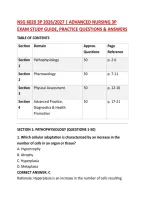
NSG 6020 3P 2026/2027 | ADVANCED NURSING 3P
EXAM STUDY GUIDE, PRACTICE QUESTIONS & ANSWERS
TABLE OF CONTENTS
Section Domain Approx. Page
Questions Reference
Section Pathophysiology 50 p. 2-6
1
Section Pharmacology 50 p. 7-11
2
Section Physical Assessment 50 p. 12-16
3
Section Advanced Practice, 50 p. 17-21
4 Diagnostics & Health
Promotion
SECTION 1: PATHOPHYSIOLOGY (QUESTIONS 1-50)
1. Which cellular adaptation is characterized by an increase in the
number of cells in an organ or tissue?
A. Hypertrophy
B. Atrophy
C. Hyperplasia
D. Metaplasia
CORRECT ANSWER: C
Rationale: Hyperplasia is an increase in the number of cells resulting
,from increased cell division, often in response to hormonal stimulation
or chronic irritation. Hypertrophy is an increase in cell size, atrophy is a
decrease in cell size, and metaplasia is the reversible replacement of
one mature cell type by another.
2. A client presents with severe swelling, redness, and pain in the right
lower extremity. Which pathophysiological process is primarily
responsible for these manifestations?
A. Impaired immune response
B. Acute inflammatory response
C. Cellular necrosis
D. Autoimmune reaction
CORRECT ANSWER: B
Rationale: The cardinal signs of inflammation (rubor, tumor, calor, dolor,
functio laesa) are caused by vasodilation, increased vascular
permeability, and the migration of leukocytes to the site of injury or
infection, characterizing the acute inflammatory response.
3. In the development of atherosclerosis, which process involves the
accumulation of lipid-laden macrophages in the arterial wall?
A. Intimal hyperplasia
B. Formation of foam cells
C. Medial calcification
D. Fibrinoid necrosis
CORRECT ANSWER: B
Rationale: Foam cells are formed when macrophages engulf oxidized
low-density lipoprotein (LDL) cholesterol within the arterial intima. This
is a hallmark early event in the development of atherosclerotic plaques.
,4. Which type of hypersensitivity reaction is responsible for
anaphylaxis?
A. Type I (IgE-mediated)
B. Type II (Cytotoxic)
C. Type III (Immune complex)
D. Type IV (Cell-mediated)
CORRECT ANSWER: A
Rationale: Anaphylaxis is a severe, immediate Type I hypersensitivity
reaction mediated by IgE antibodies binding to mast cells and basophils,
triggering the release of histamine and other vasoactive mediators.
5. A client with chronic obstructive pulmonary disease (COPD)
experiences air trapping. Which pathophysiological change best
explains this?
A. Increased elastic recoil of the lungs
B. Destruction of alveolar walls and loss of radial traction
C. Thickening of the pleural space
D. Bronchial smooth muscle hypertrophy
CORRECT ANSWER: B
Rationale: In COPD (specifically emphysema), the destruction of
alveolar walls decreases radial traction, which normally keeps small
airways open during expiration. This leads to airway collapse and air
trapping.
6. Which electrolyte imbalance is most commonly associated with
prolonged vomiting?
A. Hyperkalemia and metabolic acidosis
B. Hypokalemia and metabolic alkalosis
C. Hypernatremia and metabolic acidosis
D. Hypocalcemia and respiratory alkalosis
, CORRECT ANSWER: B
Rationale: Prolonged vomiting leads to the loss of gastric hydrochloric
acid (HCl) and potassium-rich fluids, resulting in hypokalemia and a loss
of hydrogen ions, causing metabolic alkalosis.
7. The primary pathophysiological defect in Type 1 diabetes mellitus
is:
A. Insulin resistance in peripheral tissues
B. Autoimmune destruction of pancreatic beta cells
C. Excessive glucagon production
D. Decreased renal glucose threshold
CORRECT ANSWER: B
Rationale: Type 1 diabetes is an autoimmune disease characterized by
the destruction of insulin-producing beta cells in the pancreas, leading
to absolute insulin deficiency.
8. A client diagnosed with heart failure has an elevated B-type
natriuretic peptide (BNP). What is the physiological role of BNP?
A. Promotes vasoconstriction and sodium retention
B. Promotes vasodilation and diuresis
C. Increases heart rate and contractility
D. Stimulates the renin-angiotensin-aldosterone system
CORRECT ANSWER: B
Rationale: BNP is released by ventricular myocytes in response to
stretch (volume overload). Its physiological effect is to promote
vasodilation and natriuresis/diuresis to reduce preload and afterload.
9. Which pathophysiological mechanism underlies the development of
a pressure ulcer?
A. Arterial insufficiency