
EMT Exam 3 Study Guide Questions.pdfhttps://online2pdf.com/remove-pdf-header-footer
EMT Exam 3 Study Guide Questions.pdfhttps://online2pdf.com/remove-pdf-header-footer
Page 1 of 63https://online2pdf.com/remove-pdf-header-footer
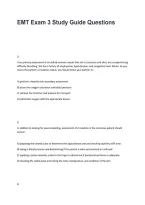
EMT Exam 3 Study Guide Questions
D
Your primary assessment of an elderly woman reveals that she is conscious and alert, but is experiencing
difficulty breathing. She has a history of emphysema, hypertension, and congestive heart failure. As you
assess the patient's circulatory status, you should direct your partner to:
A) perform a head-to-toe secondary assessment.
B) assess her oxygen saturation and blood pressure.
C) retrieve the stretcher and prepare for transport.
D) administer oxygen with the appropriate device.
D
In addition to looking for severe bleeding, assessment of circulation in the conscious patient should
involve:
A) palpating the carotid pulse to determine the approximate rate and checking capillary refill time.
B) taking a blood pressure and determining if the patient is alert and oriented or confused.
C) applying a pulse oximeter probe to the finger to determine if peripheral perfusion is adequate.
D) checking the radial pulse and noting the color, temperature, and condition of the skin.
B
EMT Exam 3 Study Guide Questions.pdfhttps://online2pdf.com/remove-pdf-header-footer
Page 1https://online2pdf.com/remove-pdf-header-footer
Page 1 of 63https://online2pdf.com/remove-pdf-header-footer
,EMT Exam 3 Study Guide Questions.pdfhttps://online2pdf.com/remove-pdf-header-footer
EMT Exam 3 Study Guide Questions.pdfhttps://online2pdf.com/remove-pdf-header-footer
Page 2 of 63https://online2pdf.com/remove-pdf-header-footer
When caring for a patient who takes numerous medications, it is best to:
A) document the medications on your patient care report, but leave them at home so they do not get
misplaced.
B) take all of the patient's medications with you to the hospital and document them on your patient care
report.
C) send the patient's medications to the hospital with a family member or other person who will
safeguard
them.
D) let the hospital staff retrieve the patient's medical records, which should show a list of his or her
current
medications.
C
The secondary assessment of a medical patient:
A) should routinely include a comprehensive examination from head to toe.
B) should be performed at the scene, especially if the patient is critically ill.
C) is not practical if the patient is critically ill or your transport time is short.
D) is typically limited to a focused exam for patients who are unconscious.
A
When performing a secondary assessment on a conscious patient with nontraumatic abdominal pain
and stable vital signs, you should:
A) focus on his or her chief complaint.
EMT Exam 3 Study Guide Questions.pdfhttps://online2pdf.com/remove-pdf-header-footer
Page 2https://online2pdf.com/remove-pdf-header-footer
Page 2 of 63https://online2pdf.com/remove-pdf-header-footer
,EMT Exam 3 Study Guide Questions.pdfhttps://online2pdf.com/remove-pdf-header-footer
EMT Exam 3 Study Guide Questions.pdfhttps://online2pdf.com/remove-pdf-header-footer
Page 3 of 63https://online2pdf.com/remove-pdf-header-footer
B) examine the patient from head to toe.
C) prepare the patient for transport first.
D) only palpate tender areas of the abdomen.
B
Which of the following assessment findings is MOST indicative of a cardiovascular problem?
A) Unequal breath sounds
B) Jugular venous distention
C) Use of the accessory muscles
D) Palpable pain to the epigastrium
A
Assessment of a patient's blood pressure with an automatic BP cuff reveals that it is 204/120 mm Hg.
The patient is conscious and alert and denies any symptoms. The EMT should:
A) obtain a manual blood pressure.
B) prepare for immediate transport.
C) conclude that she has hypertension.
D) reassess her blood pressure in 5 minutes.
D
End-tidal carbon dioxide (ETCO2) monitoring is clearly indicated for patients who present with:
EMT Exam 3 Study Guide Questions.pdfhttps://online2pdf.com/remove-pdf-header-footer
Page 3https://online2pdf.com/remove-pdf-header-footer
Page 3 of 63https://online2pdf.com/remove-pdf-header-footer
, EMT Exam 3 Study Guide Questions.pdfhttps://online2pdf.com/remove-pdf-header-footer
EMT Exam 3 Study Guide Questions.pdfhttps://online2pdf.com/remove-pdf-header-footer
Page 4 of 63https://online2pdf.com/remove-pdf-header-footer
A) headache.
B) abdominal pain.
C) high blood pressure.
D) respiratory distress.
C
Reassessment of a patient with a medical complaint should begin by:
A) reassessing the nature of illness.
B) taking another set of vital signs.
C) repeating the primary assessment.
D) reviewing all treatment performed.
B
Which of the following medications would the EMT be LEAST likely to administer to a patient with a
medical complaint?
A) Aspirin
B) Ibuprofen
C) Albuterol
D) Oral glucose
EMT Exam 3 Study Guide Questions.pdfhttps://online2pdf.com/remove-pdf-header-footer
Page 4https://online2pdf.com/remove-pdf-header-footer
Page 4 of 63https://online2pdf.com/remove-pdf-header-footer
EMT Exam 3 Study Guide Questions.pdfhttps://online2pdf.com/remove-pdf-header-footer
Page 1 of 63https://online2pdf.com/remove-pdf-header-footer
EMT Exam 3 Study Guide Questions
D
Your primary assessment of an elderly woman reveals that she is conscious and alert, but is experiencing
difficulty breathing. She has a history of emphysema, hypertension, and congestive heart failure. As you
assess the patient's circulatory status, you should direct your partner to:
A) perform a head-to-toe secondary assessment.
B) assess her oxygen saturation and blood pressure.
C) retrieve the stretcher and prepare for transport.
D) administer oxygen with the appropriate device.
D
In addition to looking for severe bleeding, assessment of circulation in the conscious patient should
involve:
A) palpating the carotid pulse to determine the approximate rate and checking capillary refill time.
B) taking a blood pressure and determining if the patient is alert and oriented or confused.
C) applying a pulse oximeter probe to the finger to determine if peripheral perfusion is adequate.
D) checking the radial pulse and noting the color, temperature, and condition of the skin.
B
EMT Exam 3 Study Guide Questions.pdfhttps://online2pdf.com/remove-pdf-header-footer
Page 1https://online2pdf.com/remove-pdf-header-footer
Page 1 of 63https://online2pdf.com/remove-pdf-header-footer
,EMT Exam 3 Study Guide Questions.pdfhttps://online2pdf.com/remove-pdf-header-footer
EMT Exam 3 Study Guide Questions.pdfhttps://online2pdf.com/remove-pdf-header-footer
Page 2 of 63https://online2pdf.com/remove-pdf-header-footer
When caring for a patient who takes numerous medications, it is best to:
A) document the medications on your patient care report, but leave them at home so they do not get
misplaced.
B) take all of the patient's medications with you to the hospital and document them on your patient care
report.
C) send the patient's medications to the hospital with a family member or other person who will
safeguard
them.
D) let the hospital staff retrieve the patient's medical records, which should show a list of his or her
current
medications.
C
The secondary assessment of a medical patient:
A) should routinely include a comprehensive examination from head to toe.
B) should be performed at the scene, especially if the patient is critically ill.
C) is not practical if the patient is critically ill or your transport time is short.
D) is typically limited to a focused exam for patients who are unconscious.
A
When performing a secondary assessment on a conscious patient with nontraumatic abdominal pain
and stable vital signs, you should:
A) focus on his or her chief complaint.
EMT Exam 3 Study Guide Questions.pdfhttps://online2pdf.com/remove-pdf-header-footer
Page 2https://online2pdf.com/remove-pdf-header-footer
Page 2 of 63https://online2pdf.com/remove-pdf-header-footer
,EMT Exam 3 Study Guide Questions.pdfhttps://online2pdf.com/remove-pdf-header-footer
EMT Exam 3 Study Guide Questions.pdfhttps://online2pdf.com/remove-pdf-header-footer
Page 3 of 63https://online2pdf.com/remove-pdf-header-footer
B) examine the patient from head to toe.
C) prepare the patient for transport first.
D) only palpate tender areas of the abdomen.
B
Which of the following assessment findings is MOST indicative of a cardiovascular problem?
A) Unequal breath sounds
B) Jugular venous distention
C) Use of the accessory muscles
D) Palpable pain to the epigastrium
A
Assessment of a patient's blood pressure with an automatic BP cuff reveals that it is 204/120 mm Hg.
The patient is conscious and alert and denies any symptoms. The EMT should:
A) obtain a manual blood pressure.
B) prepare for immediate transport.
C) conclude that she has hypertension.
D) reassess her blood pressure in 5 minutes.
D
End-tidal carbon dioxide (ETCO2) monitoring is clearly indicated for patients who present with:
EMT Exam 3 Study Guide Questions.pdfhttps://online2pdf.com/remove-pdf-header-footer
Page 3https://online2pdf.com/remove-pdf-header-footer
Page 3 of 63https://online2pdf.com/remove-pdf-header-footer
, EMT Exam 3 Study Guide Questions.pdfhttps://online2pdf.com/remove-pdf-header-footer
EMT Exam 3 Study Guide Questions.pdfhttps://online2pdf.com/remove-pdf-header-footer
Page 4 of 63https://online2pdf.com/remove-pdf-header-footer
A) headache.
B) abdominal pain.
C) high blood pressure.
D) respiratory distress.
C
Reassessment of a patient with a medical complaint should begin by:
A) reassessing the nature of illness.
B) taking another set of vital signs.
C) repeating the primary assessment.
D) reviewing all treatment performed.
B
Which of the following medications would the EMT be LEAST likely to administer to a patient with a
medical complaint?
A) Aspirin
B) Ibuprofen
C) Albuterol
D) Oral glucose
EMT Exam 3 Study Guide Questions.pdfhttps://online2pdf.com/remove-pdf-header-footer
Page 4https://online2pdf.com/remove-pdf-header-footer
Page 4 of 63https://online2pdf.com/remove-pdf-header-footer

