
lOMoARcPSD|44532475
#####################Week
onditions-Edapt
Week 8 Dermatological
- converted_removed.pdf!!!!!!!!!!!!!!!!!!!!!!!!!!!!!!!!!!!!!!!!!!!!!!!!!!!!!!!!!!!!!!!!!!!!!!!!!!!!!!!################################
Conditions-Edapt
8 Dermatological- Conditions-Edapt
converted_removed.pdf!!!!!!!!!!!!!!!!!!!!!!!!!!!!!!!!!!!!!!!!!!!!!!!!!!!!!!!!!!!!!!!!!!!!!!!!!!!!!!!############
- converted_removed.pdfWeek 8 Dermatological Conditions-Edapt - co
Week 8: Dermatological Conditions-Edapt
Psoriasis
Psoriasis is a chronic non-contagious autoimmune disease that causes
skin inflammation. It may also lead to other autoimmune conditions
like psoriatic arthritis. The rash may cause itching and silver plaques.
Psoriasis often impacts the individual in terms of being self-conscious
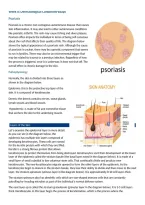
about the rash that affects their quality of life. The diagram below
shows the typical appearance of a psoriasis rash. Although the cause
of psoriasis is unclear, there may be a genetic component that seems
to run in families. There may also be an environmental trigger that
may be related to trauma or a previous infection. Regardless of how
the process is triggered, once it is underway, it does not shut off. The
overall effect is chronic damage to the skin.
Pathophysiology
Normally, the skin is divided into three layers as
shown in the diagram below.
Epidermis: this is the protective top layer of the
skin. It is composed of keratinocytes
Dermis: the dermis contains nerves, sweat glands,
lymph vessels and blood vessels
Hypodermis: is made of fat and connective tissue
that anchors the skin to the underlying muscle.
Layers of the Skin
Let’s examine the epidermal layer in more detail.
As you can see in the diagram below, the
epidermis has multiple skin layers composed of
developing keratinocytes. These cells are named
for the keratin protein with which they are filled.
Keratin is a strong fibrous protein that allows
keratinocytes to protect themselves from being destroyed. Keratinocytes start their development at the lower
layer of the epidermis called the stratum basale (the basal layer noted in the diagram below). It is made of a
small layer of small cuboidal to low columnar stem cells. That continually divide and produce new
keratinocytes. The new keratinocytes migrate upward to form the other layers of the epidermis. As the
keratinocytes begin to mature in the stratum basale, they lose their ability to divide and then move to the next
layer, the stratum spinosum (spinous layer in the diagram below). It is approximately 8-10 cell layers thick.
The stratum spinosum also has dendritic cells which are star-shaped immune cells that are constantly
patrolling for invading microbes as part of the individual’s normal defense system.
The next layer up is called the stratum granulosum (granular layer in the diagram below). It is 3-5 cell layers
thick. Keratinocytes in this layer begin the process of keratinization, which is the process where the
ns-Edapt
#####################Week
Week
- converted_removed.pdf!!!!!!!!!!!!!!!!!!!!!!!!!!!!!!!!!!!!!!!!!!!!!!!!!!!!!!!!!!!!!!!!!!!!!!!!!!!!!!!######################################
8 Dermatological Conditions-Edapt
8 Dermatological
Downloaded by -madiba Conditions-Edapt
converted_removed.pdf!!!!!!!!!!!!!!!!!!!!!!!!!!!!!!!!!!!!!!!!!!!!!!!!!!!!!!!!!!!!!!!!!!!!!!!!!!!!!!!############
South Africa stuvia - converted_removed.pdfWeek 8 Dermatological Conditions-Edapt - co
()
, lOMoARcPSD|44532475
#####################Week
onditions-Edapt
Week 8 Dermatological
- converted_removed.pdf!!!!!!!!!!!!!!!!!!!!!!!!!!!!!!!!!!!!!!!!!!!!!!!!!!!!!!!!!!!!!!!!!!!!!!!!!!!!!!!################################
Conditions-Edapt
8 Dermatological- Conditions-Edapt
converted_removed.pdf!!!!!!!!!!!!!!!!!!!!!!!!!!!!!!!!!!!!!!!!!!!!!!!!!!!!!!!!!!!!!!!!!!!!!!!!!!!!!!!############
- converted_removed.pdfWeek 8 Dermatological Conditions-Edapt - co
keratinocytes flatten, remove their intracellular structures and die. During this process, they create the
epidermal skin layer.
Keratinization leads to the development of the stratum lucidum layer which is 2-3 cell layers thick. It is
composed of translucent, dead keratinocytes that have shed their nuclei. The stratum lucidum is only found in
thick skin (e.g. palms and soles of the feet) because these are the areas that need extra protection. This layer
is absent in thin skin.
Finally, the stratum corneum is the uppermost and thickest layer of the epidermis. It consists of a wall of 20-30
layers. As new keratinocytes push toward the stratum corneum, older dead cells undergo sloughing, forming
skin flake and dandruff. In this way, the thickness of the epithelium remains constant with the regulated turn-
over of keratinocytes.
Normally, there are microbes that live on the surface of the skin. When there is a break in the skin, the
microbes can enter the skin layer. The body recognizes this as foreign invasion. The immune cells of the skin
(dendritic cells) capture the foreign antigens and break then down into smaller fragments that are presented
to the T-cells where cytokines are released to signal interleukin (IL)-12, IL-23, IL-17 (specifically linked to
chronic inflammation), interferon gamma or tumor necrosis factor (TNF) There are two different types of T-
cells. The cytotoxic T-cells that directly kill the infected cells and helper T-cells that help to facilitate the overall
immune response. During this process, there is increased keratinocyte proliferation in the skin. It also recruits
other immune cells (neutrophils) to the site of infection. Once the microbe is completely destroyed, the
immunological response slowly returns to normal.
In psoriasis, an immunologic response leads to excessive inflammation. In the dermis, inflammation causes the
blood vessels to dilate particularly at the border between the dermis and epidermis. This delivers more
immune cells, especially neutrophils to the epidermis. In the dermis, the neutrophils collect in stratum
corneum layer. The inflammation also causes keratinocytes to undergo excessive proliferation and mature
abnormally. The increased keratinocyte proliferation thins the stratum basale but thickens to other layers
above, especially in the stratum corneum and stratum spinosum. As keratinocyte growth outpaces sloughing
off, the cells begin to accumulate. These proliferating keratinocytes have several maturation defects that are
most obvious in the stratum corneum:
Produce more keratin than normal which causes this layer to become even thicker.
Retains their nuclei (parakeratosis)
ns-Edapt
#####################Week
Week
- converted_removed.pdf!!!!!!!!!!!!!!!!!!!!!!!!!!!!!!!!!!!!!!!!!!!!!!!!!!!!!!!!!!!!!!!!!!!!!!!!!!!!!!!######################################
8 Dermatological Conditions-Edapt
8 Dermatological
Downloaded by -madiba Conditions-Edapt
converted_removed.pdf!!!!!!!!!!!!!!!!!!!!!!!!!!!!!!!!!!!!!!!!!!!!!!!!!!!!!!!!!!!!!!!!!!!!!!!!!!!!!!!############
South Africa stuvia - converted_removed.pdfWeek 8 Dermatological Conditions-Edapt - co
()
#####################Week
onditions-Edapt
Week 8 Dermatological
- converted_removed.pdf!!!!!!!!!!!!!!!!!!!!!!!!!!!!!!!!!!!!!!!!!!!!!!!!!!!!!!!!!!!!!!!!!!!!!!!!!!!!!!!################################
Conditions-Edapt
8 Dermatological- Conditions-Edapt
converted_removed.pdf!!!!!!!!!!!!!!!!!!!!!!!!!!!!!!!!!!!!!!!!!!!!!!!!!!!!!!!!!!!!!!!!!!!!!!!!!!!!!!!############
- converted_removed.pdfWeek 8 Dermatological Conditions-Edapt - co
Week 8: Dermatological Conditions-Edapt
Psoriasis
Psoriasis is a chronic non-contagious autoimmune disease that causes
skin inflammation. It may also lead to other autoimmune conditions
like psoriatic arthritis. The rash may cause itching and silver plaques.
Psoriasis often impacts the individual in terms of being self-conscious
about the rash that affects their quality of life. The diagram below
shows the typical appearance of a psoriasis rash. Although the cause
of psoriasis is unclear, there may be a genetic component that seems
to run in families. There may also be an environmental trigger that
may be related to trauma or a previous infection. Regardless of how
the process is triggered, once it is underway, it does not shut off. The
overall effect is chronic damage to the skin.
Pathophysiology
Normally, the skin is divided into three layers as
shown in the diagram below.
Epidermis: this is the protective top layer of the
skin. It is composed of keratinocytes
Dermis: the dermis contains nerves, sweat glands,
lymph vessels and blood vessels
Hypodermis: is made of fat and connective tissue
that anchors the skin to the underlying muscle.
Layers of the Skin
Let’s examine the epidermal layer in more detail.
As you can see in the diagram below, the
epidermis has multiple skin layers composed of
developing keratinocytes. These cells are named
for the keratin protein with which they are filled.
Keratin is a strong fibrous protein that allows
keratinocytes to protect themselves from being destroyed. Keratinocytes start their development at the lower
layer of the epidermis called the stratum basale (the basal layer noted in the diagram below). It is made of a
small layer of small cuboidal to low columnar stem cells. That continually divide and produce new
keratinocytes. The new keratinocytes migrate upward to form the other layers of the epidermis. As the
keratinocytes begin to mature in the stratum basale, they lose their ability to divide and then move to the next
layer, the stratum spinosum (spinous layer in the diagram below). It is approximately 8-10 cell layers thick.
The stratum spinosum also has dendritic cells which are star-shaped immune cells that are constantly
patrolling for invading microbes as part of the individual’s normal defense system.
The next layer up is called the stratum granulosum (granular layer in the diagram below). It is 3-5 cell layers
thick. Keratinocytes in this layer begin the process of keratinization, which is the process where the
ns-Edapt
#####################Week
Week
- converted_removed.pdf!!!!!!!!!!!!!!!!!!!!!!!!!!!!!!!!!!!!!!!!!!!!!!!!!!!!!!!!!!!!!!!!!!!!!!!!!!!!!!!######################################
8 Dermatological Conditions-Edapt
8 Dermatological
Downloaded by -madiba Conditions-Edapt
converted_removed.pdf!!!!!!!!!!!!!!!!!!!!!!!!!!!!!!!!!!!!!!!!!!!!!!!!!!!!!!!!!!!!!!!!!!!!!!!!!!!!!!!############
South Africa stuvia - converted_removed.pdfWeek 8 Dermatological Conditions-Edapt - co
()
, lOMoARcPSD|44532475
#####################Week
onditions-Edapt
Week 8 Dermatological
- converted_removed.pdf!!!!!!!!!!!!!!!!!!!!!!!!!!!!!!!!!!!!!!!!!!!!!!!!!!!!!!!!!!!!!!!!!!!!!!!!!!!!!!!################################
Conditions-Edapt
8 Dermatological- Conditions-Edapt
converted_removed.pdf!!!!!!!!!!!!!!!!!!!!!!!!!!!!!!!!!!!!!!!!!!!!!!!!!!!!!!!!!!!!!!!!!!!!!!!!!!!!!!!############
- converted_removed.pdfWeek 8 Dermatological Conditions-Edapt - co
keratinocytes flatten, remove their intracellular structures and die. During this process, they create the
epidermal skin layer.
Keratinization leads to the development of the stratum lucidum layer which is 2-3 cell layers thick. It is
composed of translucent, dead keratinocytes that have shed their nuclei. The stratum lucidum is only found in
thick skin (e.g. palms and soles of the feet) because these are the areas that need extra protection. This layer
is absent in thin skin.
Finally, the stratum corneum is the uppermost and thickest layer of the epidermis. It consists of a wall of 20-30
layers. As new keratinocytes push toward the stratum corneum, older dead cells undergo sloughing, forming
skin flake and dandruff. In this way, the thickness of the epithelium remains constant with the regulated turn-
over of keratinocytes.
Normally, there are microbes that live on the surface of the skin. When there is a break in the skin, the
microbes can enter the skin layer. The body recognizes this as foreign invasion. The immune cells of the skin
(dendritic cells) capture the foreign antigens and break then down into smaller fragments that are presented
to the T-cells where cytokines are released to signal interleukin (IL)-12, IL-23, IL-17 (specifically linked to
chronic inflammation), interferon gamma or tumor necrosis factor (TNF) There are two different types of T-
cells. The cytotoxic T-cells that directly kill the infected cells and helper T-cells that help to facilitate the overall
immune response. During this process, there is increased keratinocyte proliferation in the skin. It also recruits
other immune cells (neutrophils) to the site of infection. Once the microbe is completely destroyed, the
immunological response slowly returns to normal.
In psoriasis, an immunologic response leads to excessive inflammation. In the dermis, inflammation causes the
blood vessels to dilate particularly at the border between the dermis and epidermis. This delivers more
immune cells, especially neutrophils to the epidermis. In the dermis, the neutrophils collect in stratum
corneum layer. The inflammation also causes keratinocytes to undergo excessive proliferation and mature
abnormally. The increased keratinocyte proliferation thins the stratum basale but thickens to other layers
above, especially in the stratum corneum and stratum spinosum. As keratinocyte growth outpaces sloughing
off, the cells begin to accumulate. These proliferating keratinocytes have several maturation defects that are
most obvious in the stratum corneum:
Produce more keratin than normal which causes this layer to become even thicker.
Retains their nuclei (parakeratosis)
ns-Edapt
#####################Week
Week
- converted_removed.pdf!!!!!!!!!!!!!!!!!!!!!!!!!!!!!!!!!!!!!!!!!!!!!!!!!!!!!!!!!!!!!!!!!!!!!!!!!!!!!!!######################################
8 Dermatological Conditions-Edapt
8 Dermatological
Downloaded by -madiba Conditions-Edapt
converted_removed.pdf!!!!!!!!!!!!!!!!!!!!!!!!!!!!!!!!!!!!!!!!!!!!!!!!!!!!!!!!!!!!!!!!!!!!!!!!!!!!!!!############
South Africa stuvia - converted_removed.pdfWeek 8 Dermatological Conditions-Edapt - co
()

