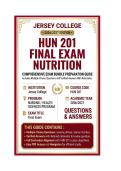
,HUN 201 Final Exam Nutrition Questions And Answers 2026/2027
Jersey College
Q1. What is the primary function of an antioxidant in the body?
A) Increase formation of free radicals
B) Help limit cellular damage caused by reactive molecules
C) Eliminate the need for oxygen
D) Provide the body's major source of energy
Correct Answer: B) Help limit cellular damage caused by reactive molecules
Rationale: Antioxidants help neutralize reactive molecules and reduce
oxidative damage to cellular structures.
Q2. Which vitamin is fat soluble and functions prominently as an
antioxidant within cell membranes?
A) Vitamin C
B) Folate
C) Thiamin
D) Vitamin E
Correct Answer: D) Vitamin E
Rationale: Vitamin E is a fat-soluble antioxidant that helps protect lipids
within cellular membranes from oxidative damage.
Q3. Which vitamin is a water-soluble antioxidant and also enhances
absorption of nonheme iron?
A) Vitamin C
B) Vitamin D
C) Vitamin K
D) Vitamin B12
Correct Answer: A) Vitamin C
Rationale: Vitamin C functions as an antioxidant and increases absorption
of nonheme iron by maintaining iron in a more absorbable form.
Q4. Beta-carotene can be converted by the body into which vitamin?
A) Vitamin E
B) Vitamin K
C) Vitamin A
D) Vitamin B12
,Correct Answer: C) Vitamin A
Rationale: Beta-carotene is a provitamin A carotenoid that can be converted
into active vitamin A as needed.
Q5. Which food is a rich source of beta-carotene?
A) White rice
B) Carrots
C) Table sugar
D) Butter
Correct Answer: B) Carrots
Rationale: Orange and dark-green vegetables are important sources of
carotenoids such as beta-carotene.
Q6. A severe deficiency of vitamin C can result in:
A) Scurvy
B) Rickets
C) Pellagra
D) Beriberi
Correct Answer: A) Scurvy
Rationale: Severe vitamin C deficiency impairs collagen formation and can
cause scurvy, with manifestations such as poor wound healing and bleeding
gums.
Q7. Which statement about free radicals is most accurate?
A) They are always beneficial
B) They occur only after exposure to radiation
C) They are dietary proteins that repair tissues
D) They are highly reactive molecules that can damage cellular components
Correct Answer: D) They are highly reactive molecules that can damage
cellular components
Rationale: Free radicals contain unstable electrons and can react with lipids,
proteins, and DNA.
Q8. Which dietary pattern is most likely to provide a broad variety
of naturally occurring antioxidant compounds?
, A) Primarily refined grains and sweets
B) High intake of processed meats only
C) Varied intake of fruits, vegetables, nuts, seeds, and whole plant foods
D) Elimination of all plant foods
Correct Answer: C) Varied intake of fruits, vegetables, nuts, seeds, and whole
plant foods
Rationale: Plant foods provide vitamin C, vitamin E, carotenoids, and
numerous other compounds involved in antioxidant defense.
CHAPTER 2 — NUTRIENTS IMPORTANT FOR BONE HEALTH
Q9. Which mineral is the most abundant mineral in the human body
and a major structural component of bone?
A) Calcium
B) Iron
C) Sodium
D) Zinc
Correct Answer: A) Calcium
Rationale: Most body calcium is stored in bones and teeth, where it
contributes to mineral structure and strength.
Q10. What is a major function of vitamin D related to skeletal
health?
A) Prevent all bone remodeling
B) Promote intestinal absorption of calcium
C) Replace calcium in bone
D) Convert protein directly into bone tissue
Correct Answer: B) Promote intestinal absorption of calcium
Rationale: Vitamin D supports calcium and phosphorus absorption and
helps maintain normal bone mineralization.
Q11. Which condition is classically associated with vitamin D
deficiency in children?
A) Scurvy
B) Pellagra
C) Beriberi
D) Rickets
Jersey College
Q1. What is the primary function of an antioxidant in the body?
A) Increase formation of free radicals
B) Help limit cellular damage caused by reactive molecules
C) Eliminate the need for oxygen
D) Provide the body's major source of energy
Correct Answer: B) Help limit cellular damage caused by reactive molecules
Rationale: Antioxidants help neutralize reactive molecules and reduce
oxidative damage to cellular structures.
Q2. Which vitamin is fat soluble and functions prominently as an
antioxidant within cell membranes?
A) Vitamin C
B) Folate
C) Thiamin
D) Vitamin E
Correct Answer: D) Vitamin E
Rationale: Vitamin E is a fat-soluble antioxidant that helps protect lipids
within cellular membranes from oxidative damage.
Q3. Which vitamin is a water-soluble antioxidant and also enhances
absorption of nonheme iron?
A) Vitamin C
B) Vitamin D
C) Vitamin K
D) Vitamin B12
Correct Answer: A) Vitamin C
Rationale: Vitamin C functions as an antioxidant and increases absorption
of nonheme iron by maintaining iron in a more absorbable form.
Q4. Beta-carotene can be converted by the body into which vitamin?
A) Vitamin E
B) Vitamin K
C) Vitamin A
D) Vitamin B12
,Correct Answer: C) Vitamin A
Rationale: Beta-carotene is a provitamin A carotenoid that can be converted
into active vitamin A as needed.
Q5. Which food is a rich source of beta-carotene?
A) White rice
B) Carrots
C) Table sugar
D) Butter
Correct Answer: B) Carrots
Rationale: Orange and dark-green vegetables are important sources of
carotenoids such as beta-carotene.
Q6. A severe deficiency of vitamin C can result in:
A) Scurvy
B) Rickets
C) Pellagra
D) Beriberi
Correct Answer: A) Scurvy
Rationale: Severe vitamin C deficiency impairs collagen formation and can
cause scurvy, with manifestations such as poor wound healing and bleeding
gums.
Q7. Which statement about free radicals is most accurate?
A) They are always beneficial
B) They occur only after exposure to radiation
C) They are dietary proteins that repair tissues
D) They are highly reactive molecules that can damage cellular components
Correct Answer: D) They are highly reactive molecules that can damage
cellular components
Rationale: Free radicals contain unstable electrons and can react with lipids,
proteins, and DNA.
Q8. Which dietary pattern is most likely to provide a broad variety
of naturally occurring antioxidant compounds?
, A) Primarily refined grains and sweets
B) High intake of processed meats only
C) Varied intake of fruits, vegetables, nuts, seeds, and whole plant foods
D) Elimination of all plant foods
Correct Answer: C) Varied intake of fruits, vegetables, nuts, seeds, and whole
plant foods
Rationale: Plant foods provide vitamin C, vitamin E, carotenoids, and
numerous other compounds involved in antioxidant defense.
CHAPTER 2 — NUTRIENTS IMPORTANT FOR BONE HEALTH
Q9. Which mineral is the most abundant mineral in the human body
and a major structural component of bone?
A) Calcium
B) Iron
C) Sodium
D) Zinc
Correct Answer: A) Calcium
Rationale: Most body calcium is stored in bones and teeth, where it
contributes to mineral structure and strength.
Q10. What is a major function of vitamin D related to skeletal
health?
A) Prevent all bone remodeling
B) Promote intestinal absorption of calcium
C) Replace calcium in bone
D) Convert protein directly into bone tissue
Correct Answer: B) Promote intestinal absorption of calcium
Rationale: Vitamin D supports calcium and phosphorus absorption and
helps maintain normal bone mineralization.
Q11. Which condition is classically associated with vitamin D
deficiency in children?
A) Scurvy
B) Pellagra
C) Beriberi
D) Rickets