AXISTASE · STUDY SERIES
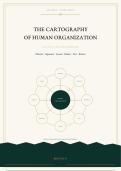
THE CARTOGRAPHY
OF HUMAN ORGANIZATION
PRACTICE & MAPPING WORKBOOK
Observe · Separate · Locate · Relate · Test · Return
POSITION
CHANGE DISTANCE
HUMAN
CARRYING DIRECTION
ORGANIZATION
BOUNDARY LOAD
TIMING
PRACTICAL STUDY LENSES - NOT CANONICAL SOURCE TOPOLOGY
KRISTAL P.
1
, AXISTASE · PRACTICE & MAPPING WORKBOOK
THE CARTOGRAPHY OF HUMAN ORGANIZATION
HOW TO USE THIS WORKBOOK
Write source facts first. AXISTASE terms come later.
ONE CASE
Choose one bounded situation to carry through several pages. You may start a second case only when you deliberately change
frame.
WRITE UNKNOWN
If evidence is missing, write UNKNOWN or NOT ESTABLISHED instead of filling the space with a plausible story.
USE WITH THE MANUAL
Read the matching Study Manual section before a first attempt. Return to this workbook after new evidence appears; the
pages are designed to be revised.
COURSE SCOPE
This workbook is an introductory learning tool, not a diagnostic form, professional assessment instrument, risk score or full
Research Guard execution package.
AXISTASE STUDY SERIES KRISTAL P.
2
, AXISTASE · PRACTICE & MAPPING WORKBOOK
THE CARTOGRAPHY OF HUMAN ORGANIZATION
THE SIX-STEP RETURN LOOP
Use the same loop at increasing resolution. There is no final map.
OBSERVE
RETURN SEPARATE
CORRECTABLE
CARTOGRAPHY
TEST LOCATE
RELATE
STARTING SITUATION
Name one situation you will carry through the workbook.
RETURN CONDITION
What new evidence would be capable of changing your reading?
3
AXISTASE STUDY SERIES 2 KRISTAL P.
, AXISTASE · PRACTICE & MAPPING WORKBOOK
THE CARTOGRAPHY OF HUMAN ORGANIZATION
EVIDENCE LADDER · QUICK CARD
Label later than you observe.
SOURCE FACT
1
What can be traced without interpretation?
DESCRIPTIVE LENS
2
Which practical lens helps organise attention?
FUNCTION CANDIDATE
3
Which canonical function might fit - and what else might fit?
SUPPORTED FUNCTION
4
What direct bridge makes the function defensible?
RELATION
5
Are both poles and the relation itself supported in one frame?
RETURN TEST
6
What future observation could change the map?
STOP RULE
If a step cannot be supported, do not jump over it. Write UNKNOWN or NOT ESTABLISHED and continue with the part of the map
that is actually observable.
AXISTASE STUDY SERIES KRISTAL P.
4