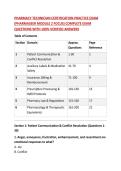
PHARMACY TECHNICIAN CERTIFICATION PRACTICE EXAM
(PHARMASEER MODULE 2 FOCUS) COMPLETE EXAM
QUESTIONS WITH 100% VERIFIED ANSWERS
Table of Contents
Section Domain Approx. Page
Questions Reference
1 Patient Communication & 1-30 1
Conflict Resolution
2 Auxiliary Labels & Medication 31-70 4
Safety
3 Insurance, Billing & 71-100 9
Reimbursement
4 Prescription Processing & 101-130 13
Refill Protocols
5 Pharmacy Law & Regulations 131-160 17
6 Pharmacology & Therapeutic 161-200 21
Equivalents
Section 1: Patient Communication & Conflict Resolution (Questions 1-
30)
1. Anger, annoyance, frustration, embarrassment, and resentment are
emotional responses to what?
A. Joy
B. Conflict
,C. Happiness
D. Success
Correct Answer: B. Conflict
Rationale: These are negative emotional responses typically triggered
by conflict or stressful situations in the pharmacy setting.
2. Which of the following is the most appropriate first step when
dealing with an angry patient at the pharmacy counter?
A. Ask them to lower their voice immediately
B. Listen actively and let them express their frustration without
interruption
C. Call security immediately
D. Tell them they are wrong and explain the pharmacy policy
Correct Answer: B. Listen actively and let them express their
frustration without interruption
Rationale: Active listening de-escalates the situation and makes the
patient feel heard before you attempt to solve the problem.
3. A patient is frustrated because their insurance copay is higher than
expected. How should the technician respond?
A. "That's just how your insurance works."
B. "I can't do anything about the price."
C. "I understand your frustration. Let me check your plan details and see
if there are any alternatives we can explore."
D. "You should just pay cash."
Correct Answer: C. "I understand your frustration. Let me check your
plan details and see if there are any alternatives we can explore."
Rationale: Empathy combined with a proactive solution-oriented
approach is best for patient care.
,4. Which of the following is a sign of active listening?
A. Looking at the computer screen while the patient talks
B. Nodding and maintaining eye contact
C. Interrupting to correct the patient
D. Answering the phone in the middle of the conversation
Correct Answer: B. Nodding and maintaining eye contact
Rationale: Active listening involves non-verbal cues like nodding and eye
contact to show engagement.
5. When a patient is embarrassed about asking questions regarding
their medication, the technician should:
A. Rush them so the line doesn't get long
B. Assure them that asking questions is encouraged and normal
C. Tell them to read the pamphlet
D. Ignore the question
Correct Answer: B. Assure them that asking questions is encouraged
and normal
Rationale: Encouraging questions reduces embarrassment and improves
medication adherence.
6. A patient continually interrupts you while you are trying to explain
a new medication. What should you do?
A. Stop speaking and walk away
B. Politely pause, wait for them to finish, and then continue
C. Speak louder to drown them out
D. Tell them to be quiet
Correct Answer: B. Politely pause, wait for them to finish, and then
continue
Rationale: Politeness and patience are key to managing difficult
interactions.
, 7. Which of the following phrases demonstrates empathy?
A. "I know exactly how you feel."
B. "It sounds like you are very frustrated with this process."
C. "Calm down."
D. "You need to be patient."
Correct Answer: B. "It sounds like you are very frustrated with this
process."
Rationale: Validating the patient's feelings without claiming to know
exactly how they feel shows professional empathy.
8. A patient is angry about a long wait time. What is the best
response?
A. "We are short-staffed today."
B. "Everyone is waiting, you are not special."
C. "I apologize for the delay. We are working as quickly as possible to
get your prescription ready."
D. "You should have called ahead."
Correct Answer: C. "I apologize for the delay. We are working as
quickly as possible to get your prescription ready."
Rationale: A sincere apology and explanation of the situation help
defuse anger.
9. What is the primary goal when resolving a conflict with a patient?
A. To prove the pharmacy is right
B. To get the patient out of the store quickly
C. To reach a mutually agreeable resolution and maintain a positive
relationship
D. To enforce strict store policies
Correct Answer: C. To reach a mutually agreeable resolution and
maintain a positive relationship
(PHARMASEER MODULE 2 FOCUS) COMPLETE EXAM
QUESTIONS WITH 100% VERIFIED ANSWERS
Table of Contents
Section Domain Approx. Page
Questions Reference
1 Patient Communication & 1-30 1
Conflict Resolution
2 Auxiliary Labels & Medication 31-70 4
Safety
3 Insurance, Billing & 71-100 9
Reimbursement
4 Prescription Processing & 101-130 13
Refill Protocols
5 Pharmacy Law & Regulations 131-160 17
6 Pharmacology & Therapeutic 161-200 21
Equivalents
Section 1: Patient Communication & Conflict Resolution (Questions 1-
30)
1. Anger, annoyance, frustration, embarrassment, and resentment are
emotional responses to what?
A. Joy
B. Conflict
,C. Happiness
D. Success
Correct Answer: B. Conflict
Rationale: These are negative emotional responses typically triggered
by conflict or stressful situations in the pharmacy setting.
2. Which of the following is the most appropriate first step when
dealing with an angry patient at the pharmacy counter?
A. Ask them to lower their voice immediately
B. Listen actively and let them express their frustration without
interruption
C. Call security immediately
D. Tell them they are wrong and explain the pharmacy policy
Correct Answer: B. Listen actively and let them express their
frustration without interruption
Rationale: Active listening de-escalates the situation and makes the
patient feel heard before you attempt to solve the problem.
3. A patient is frustrated because their insurance copay is higher than
expected. How should the technician respond?
A. "That's just how your insurance works."
B. "I can't do anything about the price."
C. "I understand your frustration. Let me check your plan details and see
if there are any alternatives we can explore."
D. "You should just pay cash."
Correct Answer: C. "I understand your frustration. Let me check your
plan details and see if there are any alternatives we can explore."
Rationale: Empathy combined with a proactive solution-oriented
approach is best for patient care.
,4. Which of the following is a sign of active listening?
A. Looking at the computer screen while the patient talks
B. Nodding and maintaining eye contact
C. Interrupting to correct the patient
D. Answering the phone in the middle of the conversation
Correct Answer: B. Nodding and maintaining eye contact
Rationale: Active listening involves non-verbal cues like nodding and eye
contact to show engagement.
5. When a patient is embarrassed about asking questions regarding
their medication, the technician should:
A. Rush them so the line doesn't get long
B. Assure them that asking questions is encouraged and normal
C. Tell them to read the pamphlet
D. Ignore the question
Correct Answer: B. Assure them that asking questions is encouraged
and normal
Rationale: Encouraging questions reduces embarrassment and improves
medication adherence.
6. A patient continually interrupts you while you are trying to explain
a new medication. What should you do?
A. Stop speaking and walk away
B. Politely pause, wait for them to finish, and then continue
C. Speak louder to drown them out
D. Tell them to be quiet
Correct Answer: B. Politely pause, wait for them to finish, and then
continue
Rationale: Politeness and patience are key to managing difficult
interactions.
, 7. Which of the following phrases demonstrates empathy?
A. "I know exactly how you feel."
B. "It sounds like you are very frustrated with this process."
C. "Calm down."
D. "You need to be patient."
Correct Answer: B. "It sounds like you are very frustrated with this
process."
Rationale: Validating the patient's feelings without claiming to know
exactly how they feel shows professional empathy.
8. A patient is angry about a long wait time. What is the best
response?
A. "We are short-staffed today."
B. "Everyone is waiting, you are not special."
C. "I apologize for the delay. We are working as quickly as possible to
get your prescription ready."
D. "You should have called ahead."
Correct Answer: C. "I apologize for the delay. We are working as
quickly as possible to get your prescription ready."
Rationale: A sincere apology and explanation of the situation help
defuse anger.
9. What is the primary goal when resolving a conflict with a patient?
A. To prove the pharmacy is right
B. To get the patient out of the store quickly
C. To reach a mutually agreeable resolution and maintain a positive
relationship
D. To enforce strict store policies
Correct Answer: C. To reach a mutually agreeable resolution and
maintain a positive relationship