
AM - GAlen 170 Exam 1 (Perioperative, Comfort, Anemia) 20-30 (Fluid & Electrolytes, Acid Base) 20-30
AM - GAlen 170 Exam 1 (Perioperative, Comfort, Anemia)
20-30 (Fluid & Electrolytes, Acid Base) 20-30
Study online at https://quizlet.com/_78ucgl
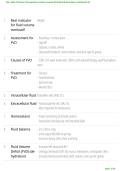
1. Best indicator Weight
for fluid volume
overload?
2. Assessment for - Bounding + increase pulse
FVO - High BP
- Dyspnea, crackles, edema
- Decreased hematocrit, serum sodium, and urine specific gravity
3. Causes of FVO - ESRD, CHF, water intoxication, SIADH, corticosteroid therapy, rapid fluid replace-
ment
4. Treatment for - Diuretics
FVO - Fluid Restriction
- Salt restriction
- Monitor I&O's
5. intracellular fluid fluid within cells; 66%; 25 L
6. Extracellular fluid - Fluid outside the cell; 33%; 15L
- Most important for homeostasis
7. Homeostasis - Proper functioning of all body systems
- Extracellular (intravascular and interstitial fluid)
8. Fluid balance - 2 to 3 liters a day
- urine output 400-600 ml per day
- increases during stress, fever and tachy
9. Fluid Volume - Increased HR; decreased B/P
Deficit (FVD) (de- - Lethargy; decreased UOP; dry mucous membranes; constipation; thirst
hydration) - Increased hemoconcentration; BUN; sodium; urine specific gravity
Page 1 of 18
, AM - GAlen 170 Exam 1 (Perioperative, Comfort, Anemia) 20-30 (Fluid & Electrolytes, Acid Base) 20-30
AM - GAlen 170 Exam 1 (Perioperative, Comfort, Anemia)
20-30 (Fluid & Electrolytes, Acid Base) 20-30
Study online at https://quizlet.com/_78ucgl
10. Causes of FVD vomiting, diarrhea, ileostomy, laxitives, burns, fever, diuretics, GI suctioning and
NPO
11. Interventions of - Halt OTC
FVD - Outdoor activity
- Weight gain/loss
- Diet habits
12. BUN and Creati- Kidney markers and are sensitive to decreased blood flow.
nine are?
13. Normal BUN lev- 10-20 mg/dL
els
14. Normal creati- 0.6-1.2
nine levels
15. BUN and creati- - Nitrogenous wastes are found in the blood indicating kidney impairment.
nine rise when - Also dehydration
16. Hypernatremia - Due to sodium loss, water gain, or inadequate intake
- Diuretics, Anticonvulsants, SSRI's
- Water Gain: CHF, SIADH, polydipsia
- Dehydration
- Common: Restlessness or agitation, anorexia, N/V, weakness, lethargy, confu-
sion, crave water
- Worst case scenario: Decreased LOC, seizures, coma
- Treatment: Fluids! PO/IV; what type of IVF?- - Nursing implications: Frequent VS,
Monitor neurologic status, Seizure/fall precautions, strict I/O's, assess skin/MM,
oral care, monitor labs
17. Hypokalemia - Not enough in: Inadequate K+ intake
- Too much out: GI fluid losses
Page 2 of 18
, AM - GAlen 170 Exam 1 (Perioperative, Comfort, Anemia) 20-30 (Fluid & Electrolytes, Acid Base) 20-30
AM - GAlen 170 Exam 1 (Perioperative, Comfort, Anemia)
20-30 (Fluid & Electrolytes, Acid Base) 20-30
Study online at https://quizlet.com/_78ucgl
- Depleting drugs: Diuretics, corticosteroids, insulin, excessive laxative use, al-
buterol
- Black licorice?
- Common: Cardiac arrhythmias, leg cramps (hallmark), muscle weakness, de-
creased GI motility (decreased BS, constipation, N/V), decreased DTR's, muscle
weakness, alkalosis
- Worst case scenario: Life threatening cardiac arrhythmias/Cardiac arrest!
- **Hypokalemia may potentiate dig toxicity**
- Treatment: Increase dietary intake of potassium, K supplementation. Give IV
potassium SLOWLY!!!
- Nursing implications: Frequent VS, cardiac monitoring, patent IV, monitor labs
(recheck after supplementation), NEVER give potassium IVP or bolus!
18. Hyperkalemia - Too much intake: Increased dietary intake, salt substitutes, potassium supple-
ments
- Donated blood
- Drugs: K-sparing diuretics, -- ACE-I's, ARBS, NSAIDS
- Not enough excreted: Renal failure
- Crush injury: Intracellular K released
- Common: Cardiac arrhythmias, Muscle weakness (which may lead to flaccid
paralysis), increased GI motility, decreased DTR's, acidosis
- Worst case scenario: Life threatening cardiac arrhythmias/cardiac arrest
- Treatment: Potassium restricted diet; if critical/symptomatic will require drug
therapy (such as?)
- Nursing implications: Cardiac monitoring, frequent labs, VS, monitor for hypo-
glycemia if insulin IVP given
19. Electrolyte Im- - Inadequate intake: Calcium and Vit D
balances: Etiolo- - Malabsorption: Post-menopausal women, diseases that affect the small bowel,
gy; drugs (anticonvulsants)
Hypocalcemia: - Calcium Loss: Loop Diuretics
Page 3 of 18
AM - GAlen 170 Exam 1 (Perioperative, Comfort, Anemia)
20-30 (Fluid & Electrolytes, Acid Base) 20-30
Study online at https://quizlet.com/_78ucgl
1. Best indicator Weight
for fluid volume
overload?
2. Assessment for - Bounding + increase pulse
FVO - High BP
- Dyspnea, crackles, edema
- Decreased hematocrit, serum sodium, and urine specific gravity
3. Causes of FVO - ESRD, CHF, water intoxication, SIADH, corticosteroid therapy, rapid fluid replace-
ment
4. Treatment for - Diuretics
FVO - Fluid Restriction
- Salt restriction
- Monitor I&O's
5. intracellular fluid fluid within cells; 66%; 25 L
6. Extracellular fluid - Fluid outside the cell; 33%; 15L
- Most important for homeostasis
7. Homeostasis - Proper functioning of all body systems
- Extracellular (intravascular and interstitial fluid)
8. Fluid balance - 2 to 3 liters a day
- urine output 400-600 ml per day
- increases during stress, fever and tachy
9. Fluid Volume - Increased HR; decreased B/P
Deficit (FVD) (de- - Lethargy; decreased UOP; dry mucous membranes; constipation; thirst
hydration) - Increased hemoconcentration; BUN; sodium; urine specific gravity
Page 1 of 18
, AM - GAlen 170 Exam 1 (Perioperative, Comfort, Anemia) 20-30 (Fluid & Electrolytes, Acid Base) 20-30
AM - GAlen 170 Exam 1 (Perioperative, Comfort, Anemia)
20-30 (Fluid & Electrolytes, Acid Base) 20-30
Study online at https://quizlet.com/_78ucgl
10. Causes of FVD vomiting, diarrhea, ileostomy, laxitives, burns, fever, diuretics, GI suctioning and
NPO
11. Interventions of - Halt OTC
FVD - Outdoor activity
- Weight gain/loss
- Diet habits
12. BUN and Creati- Kidney markers and are sensitive to decreased blood flow.
nine are?
13. Normal BUN lev- 10-20 mg/dL
els
14. Normal creati- 0.6-1.2
nine levels
15. BUN and creati- - Nitrogenous wastes are found in the blood indicating kidney impairment.
nine rise when - Also dehydration
16. Hypernatremia - Due to sodium loss, water gain, or inadequate intake
- Diuretics, Anticonvulsants, SSRI's
- Water Gain: CHF, SIADH, polydipsia
- Dehydration
- Common: Restlessness or agitation, anorexia, N/V, weakness, lethargy, confu-
sion, crave water
- Worst case scenario: Decreased LOC, seizures, coma
- Treatment: Fluids! PO/IV; what type of IVF?- - Nursing implications: Frequent VS,
Monitor neurologic status, Seizure/fall precautions, strict I/O's, assess skin/MM,
oral care, monitor labs
17. Hypokalemia - Not enough in: Inadequate K+ intake
- Too much out: GI fluid losses
Page 2 of 18
, AM - GAlen 170 Exam 1 (Perioperative, Comfort, Anemia) 20-30 (Fluid & Electrolytes, Acid Base) 20-30
AM - GAlen 170 Exam 1 (Perioperative, Comfort, Anemia)
20-30 (Fluid & Electrolytes, Acid Base) 20-30
Study online at https://quizlet.com/_78ucgl
- Depleting drugs: Diuretics, corticosteroids, insulin, excessive laxative use, al-
buterol
- Black licorice?
- Common: Cardiac arrhythmias, leg cramps (hallmark), muscle weakness, de-
creased GI motility (decreased BS, constipation, N/V), decreased DTR's, muscle
weakness, alkalosis
- Worst case scenario: Life threatening cardiac arrhythmias/Cardiac arrest!
- **Hypokalemia may potentiate dig toxicity**
- Treatment: Increase dietary intake of potassium, K supplementation. Give IV
potassium SLOWLY!!!
- Nursing implications: Frequent VS, cardiac monitoring, patent IV, monitor labs
(recheck after supplementation), NEVER give potassium IVP or bolus!
18. Hyperkalemia - Too much intake: Increased dietary intake, salt substitutes, potassium supple-
ments
- Donated blood
- Drugs: K-sparing diuretics, -- ACE-I's, ARBS, NSAIDS
- Not enough excreted: Renal failure
- Crush injury: Intracellular K released
- Common: Cardiac arrhythmias, Muscle weakness (which may lead to flaccid
paralysis), increased GI motility, decreased DTR's, acidosis
- Worst case scenario: Life threatening cardiac arrhythmias/cardiac arrest
- Treatment: Potassium restricted diet; if critical/symptomatic will require drug
therapy (such as?)
- Nursing implications: Cardiac monitoring, frequent labs, VS, monitor for hypo-
glycemia if insulin IVP given
19. Electrolyte Im- - Inadequate intake: Calcium and Vit D
balances: Etiolo- - Malabsorption: Post-menopausal women, diseases that affect the small bowel,
gy; drugs (anticonvulsants)
Hypocalcemia: - Calcium Loss: Loop Diuretics
Page 3 of 18

