

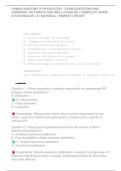
HUMAN ANATOMY & PHYSIOLOGY– EXAM QUESTIONS AND
ANSWERS | ACCURATE AND WELL DETAILED | COMPLETE GUIDE
& RATIONALES | A+ MATERIAL | NEWEST UPDATE
*CORE DOMAINS*
*1. Cellular Biology and Histology*
*2. Integumentary and Skeletal Systems*
*3. Muscular and Nervous Systems*
*4. Cardiovascular and Respiratory Systems*
*5. Digestive and Urinary Systems*
*6. Endocrine and Reproductive Systems*
*7. Immune and Lymphatic Systems*
*8. Pathophysiological Integration and Clinical Scenarios*
*INTRODUCTION*
*This comprehensive examination is designed to rigorously assess ad
Question 1: Which organelle is primarily responsible for generating ATP
through cellular respiration?
A. Ribosome
🟢 B. Mitochondria
C. Golgi apparatus
D. Lysosome
🔴 Explanation: Mitochondria house the enzymes responsible for the
Krebs cycle and oxidative phosphorylation, producing the majority of
cellular ATP.
Question 2: What type of epithelial tissue lines the interior of blood
vessels (endothelium)?
A. Stratified squamous epithelium
B. Pseudostratified ciliated columnar epithelium
🟢 C. Simple squamous epithelium
D. Transitional epithelium
🔴 Explanation: Simple squamous epithelium consists of a single layer of
flattened cells that provides a smooth, frictionless surface for blood flow
and rapid diffusion.
,Question 3: Which bone cell type is responsible for bone resorption and
breakdown of matrix?
A. Osteocyte
B. Osteoblast
🟢 C. Osteoclast
D. Osteogenic cell
🔴 Explanation: Osteoclasts are multinucleated cells derived from
monocytes that secrete acids and enzymes to dissolve bone mineral
matrix during remodeling.
Question 4: During skeletal muscle contraction, which molecule binds to
troponin to expose myosin-binding sites on actin?
🟢 A. Calcium ions
B. Sodium ions
C. Potassium ions
D. Acetylcholine
🔴 Explanation: Calcium ions released from the sarcoplasmic reticulum
bind to troponin, causing tropomyosin to shift and expose the binding
sites for myosin heads.
Question 5: Which neuroglial cell produces myelin in the central nervous
system?
A. Schwann cell
🟢 B. Oligodendrocyte
C. Astrocyte
D. Microglia
🔴 Explanation: Oligodendrocytes form myelin sheaths around axons in
the central nervous system, whereas Schwann cells perform this function
in the peripheral nervous system.
Question 6: What is the primary pacemaker of the normal human heart?
A. Atrioventricular node
B. Bundle of His
🟢 C. Sinoatrial node
D. Purkinje fibers
🔴 Explanation: The sinoatrial node has the highest rate of spontaneous
depolarization, setting the intrinsic heart rate under normal physiological
conditions.
Question 7: Which heart valve separates the left atrium from the left
ventricle?
, A. Tricuspid valve
B. Pulmonary semilunar valve
🟢 C. Bicuspid (mitral) valve
D. Aortic semilunar valve
🔴 Explanation: The bicuspid or mitral valve prevents backflow of blood
from the left ventricle into the left atrium during ventricular systole.
Question 8: What is the normal physiological blood pH range in humans?
A. 7.15 to 7.25
B. 7.30 to 7.40
🟢 C. 7.35 to 7.45
D. 7.45 to 7.55
🔴 Explanation: Strict homeostatic mechanisms maintain arterial blood
pH between 7.35 and 7.45 to ensure optimal enzymatic and metabolic
function.
Question 9: Which respiratory volume represents the amount of air
inhaled or exhaled during normal, quiet breathing?
A. Residual volume
🟢 B. Tidal volume
C. Vital capacity
D. Total lung capacity
🔴 Explanation: Tidal volume is the standard volume of air moved into or
out of the lungs during a single normal respiratory cycle (approximately
500 mL).
Question 10: Carbon dioxide is primarily transported in the blood in which
of the following forms?
A. Dissolved gas in plasma
B. Bound to hemoglobin as carbaminohemoglobin
🟢 C. As bicarbonate ions in plasma
D. Bound to plasma proteins
🔴 Explanation: Approximately 70 percent of carbon dioxide is
transported as bicarbonate ions dissolved in the plasma, buffered
primarily by the carbonic acid system.
Question 11: Which enzyme initiates protein digestion in the stomach?
A. Amylase
B. Lipase
🟢 C. Pepsin
D. Trypsin
ANSWERS | ACCURATE AND WELL DETAILED | COMPLETE GUIDE
& RATIONALES | A+ MATERIAL | NEWEST UPDATE
*CORE DOMAINS*
*1. Cellular Biology and Histology*
*2. Integumentary and Skeletal Systems*
*3. Muscular and Nervous Systems*
*4. Cardiovascular and Respiratory Systems*
*5. Digestive and Urinary Systems*
*6. Endocrine and Reproductive Systems*
*7. Immune and Lymphatic Systems*
*8. Pathophysiological Integration and Clinical Scenarios*
*INTRODUCTION*
*This comprehensive examination is designed to rigorously assess ad
Question 1: Which organelle is primarily responsible for generating ATP
through cellular respiration?
A. Ribosome
🟢 B. Mitochondria
C. Golgi apparatus
D. Lysosome
🔴 Explanation: Mitochondria house the enzymes responsible for the
Krebs cycle and oxidative phosphorylation, producing the majority of
cellular ATP.
Question 2: What type of epithelial tissue lines the interior of blood
vessels (endothelium)?
A. Stratified squamous epithelium
B. Pseudostratified ciliated columnar epithelium
🟢 C. Simple squamous epithelium
D. Transitional epithelium
🔴 Explanation: Simple squamous epithelium consists of a single layer of
flattened cells that provides a smooth, frictionless surface for blood flow
and rapid diffusion.
,Question 3: Which bone cell type is responsible for bone resorption and
breakdown of matrix?
A. Osteocyte
B. Osteoblast
🟢 C. Osteoclast
D. Osteogenic cell
🔴 Explanation: Osteoclasts are multinucleated cells derived from
monocytes that secrete acids and enzymes to dissolve bone mineral
matrix during remodeling.
Question 4: During skeletal muscle contraction, which molecule binds to
troponin to expose myosin-binding sites on actin?
🟢 A. Calcium ions
B. Sodium ions
C. Potassium ions
D. Acetylcholine
🔴 Explanation: Calcium ions released from the sarcoplasmic reticulum
bind to troponin, causing tropomyosin to shift and expose the binding
sites for myosin heads.
Question 5: Which neuroglial cell produces myelin in the central nervous
system?
A. Schwann cell
🟢 B. Oligodendrocyte
C. Astrocyte
D. Microglia
🔴 Explanation: Oligodendrocytes form myelin sheaths around axons in
the central nervous system, whereas Schwann cells perform this function
in the peripheral nervous system.
Question 6: What is the primary pacemaker of the normal human heart?
A. Atrioventricular node
B. Bundle of His
🟢 C. Sinoatrial node
D. Purkinje fibers
🔴 Explanation: The sinoatrial node has the highest rate of spontaneous
depolarization, setting the intrinsic heart rate under normal physiological
conditions.
Question 7: Which heart valve separates the left atrium from the left
ventricle?
, A. Tricuspid valve
B. Pulmonary semilunar valve
🟢 C. Bicuspid (mitral) valve
D. Aortic semilunar valve
🔴 Explanation: The bicuspid or mitral valve prevents backflow of blood
from the left ventricle into the left atrium during ventricular systole.
Question 8: What is the normal physiological blood pH range in humans?
A. 7.15 to 7.25
B. 7.30 to 7.40
🟢 C. 7.35 to 7.45
D. 7.45 to 7.55
🔴 Explanation: Strict homeostatic mechanisms maintain arterial blood
pH between 7.35 and 7.45 to ensure optimal enzymatic and metabolic
function.
Question 9: Which respiratory volume represents the amount of air
inhaled or exhaled during normal, quiet breathing?
A. Residual volume
🟢 B. Tidal volume
C. Vital capacity
D. Total lung capacity
🔴 Explanation: Tidal volume is the standard volume of air moved into or
out of the lungs during a single normal respiratory cycle (approximately
500 mL).
Question 10: Carbon dioxide is primarily transported in the blood in which
of the following forms?
A. Dissolved gas in plasma
B. Bound to hemoglobin as carbaminohemoglobin
🟢 C. As bicarbonate ions in plasma
D. Bound to plasma proteins
🔴 Explanation: Approximately 70 percent of carbon dioxide is
transported as bicarbonate ions dissolved in the plasma, buffered
primarily by the carbonic acid system.
Question 11: Which enzyme initiates protein digestion in the stomach?
A. Amylase
B. Lipase
🟢 C. Pepsin
D. Trypsin

