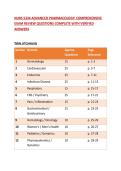
NURS 5334 ADVANCED PHARMACOLOGY: COMPREHENSIVE
EXAM REVIEW QUESTIONS COMPLETE WITH VERIFIED
ANSWERS
Table of Contents
Section Domain Approx. Page
Questions Reference
1 Dermatology 15 p. 1-3
2 Cardiovascular 25 p. 3-7
3 Endocrine 25 p. 7-11
4 Infectious Disease 25 p. 11-15
5 Respiratory 15 p. 15-17
6 CNS / Psychiatry 25 p. 17-21
7 Pain / Inflammation 15 p. 21-23
8 Gastrointestinal / 15 p. 23-25
Genitourinary
9 Hematology / Oncology 10 p. 25-26
10 Women's / Men's Health 10 p. 26-27
11 Pediatrics / Geriatrics 10 p. 27-28
12 Pharmacokinetics / 10 p. 28-29
Dynamics
,SECTION 1: DERMATOLOGY
1. A 45-year-old male presents with severe plaque psoriasis. Which
topical agent is a vitamin D analog?
A. Clobetasol propionate
B. Calcipotriene
C. Tazarotene
D. Salicylic acid
Correct Answer: B
Rationale: Calcipotriene is a synthetic vitamin D3 analog that slows
down the rapid growth of skin cells. Clobetasol is a corticosteroid,
Tazarotene is a retinoid, and Salicylic acid is a keratolytic.
2. A 28-year-old woman with acne vulgaris is prescribed topical
tretinoin. What is the most important patient education point?
A. Apply a thick layer to affected areas
B. Use an additional topical antibiotic concurrently
C. Apply sunscreen daily and avoid sun exposure
D. Expect immediate improvement within 48 hours
Correct Answer: C
Rationale: Tretinoin increases photosensitivity. Patients must use strict
sun protection. It takes 8-12 weeks for full effect, should be applied in a
thin layer, and is often used with benzoyl peroxide or clindamycin.
3. Which topical agent is a selective alpha-2 adrenergic agonist used
for persistent facial erythema in rosacea?
A. Metronidazole
B. Ivermectin
C. Brimonidine
D. Azelaic acid
,Correct Answer: C
Rationale: Brimonidine is an alpha-2 adrenergic agonist that constricts
dilated facial blood vessels, reducing erythema. Metronidazole,
ivermectin, and azelaic acid are used for papulopustular lesions.
4. A patient with a fungal nail infection is prescribed oral terbinafine.
What baseline lab test is most critical before initiating therapy?
A. Renal function panel
B. Liver function tests
C. Complete blood count
D. Serum electrolytes
Correct Answer: B
Rationale: Terbinafine is hepatically metabolized and can cause
hepatotoxicity. Baseline LFTs are recommended. It does not require
renal adjustment initially, though renal impairment affects clearance.
5. A 16-year-old male is prescribed isotretinoin for severe nodular
acne. Which adverse effect requires mandatory monitoring?
A. Hyperkalemia
B. Hypertriglyceridemia
C. Hypoglycemia
D. Hypocalcemia
Correct Answer: B
Rationale: Isotretinoin commonly causes elevated triglycerides and
cholesterol. It also causes elevated liver enzymes, dry skin, and severe
birth defects (requires iPLEDGE program for females).
6. Which topical corticosteroid has the highest potency?
A. Hydrocortisone 2.5%
B. Triamcinolone 0.1%
, C. Clobetasol propionate 0.05%
D. Betamethasone dipropionate 0.05%
Correct Answer: C
Rationale: Clobetasol propionate is a superpotent (Class I) topical
corticosteroid. Hydrocortisone is low potency. Triamcinolone and
betamethasone are medium to high potency.
7. A patient applying topical clobetasol to the groin area should be
counseled about which risk?
A. Skin atrophy and striae
B. Hyperpigmentation
C. Tachycardia
D. Hypertension
Correct Answer: A
Rationale: Potent topical corticosteroids applied to thin skin (like the
groin) or large surface areas increase the risk of local skin atrophy,
striae, and systemic absorption (HPA axis suppression).
8. Which medication is a topical calcineurin inhibitor used for atopic
dermatitis?
A. Crisaborole
B. Tacrolimus
C. Hydrocortisone
D. Crisaborole and Tacrolimus
Correct Answer: D
Rationale: Both crisaborole (PDE-4 inhibitor) and tacrolimus (calcineurin
inhibitor) are non-steroidal topical treatments for atopic dermatitis.
Hydrocortisone is a steroid.
EXAM REVIEW QUESTIONS COMPLETE WITH VERIFIED
ANSWERS
Table of Contents
Section Domain Approx. Page
Questions Reference
1 Dermatology 15 p. 1-3
2 Cardiovascular 25 p. 3-7
3 Endocrine 25 p. 7-11
4 Infectious Disease 25 p. 11-15
5 Respiratory 15 p. 15-17
6 CNS / Psychiatry 25 p. 17-21
7 Pain / Inflammation 15 p. 21-23
8 Gastrointestinal / 15 p. 23-25
Genitourinary
9 Hematology / Oncology 10 p. 25-26
10 Women's / Men's Health 10 p. 26-27
11 Pediatrics / Geriatrics 10 p. 27-28
12 Pharmacokinetics / 10 p. 28-29
Dynamics
,SECTION 1: DERMATOLOGY
1. A 45-year-old male presents with severe plaque psoriasis. Which
topical agent is a vitamin D analog?
A. Clobetasol propionate
B. Calcipotriene
C. Tazarotene
D. Salicylic acid
Correct Answer: B
Rationale: Calcipotriene is a synthetic vitamin D3 analog that slows
down the rapid growth of skin cells. Clobetasol is a corticosteroid,
Tazarotene is a retinoid, and Salicylic acid is a keratolytic.
2. A 28-year-old woman with acne vulgaris is prescribed topical
tretinoin. What is the most important patient education point?
A. Apply a thick layer to affected areas
B. Use an additional topical antibiotic concurrently
C. Apply sunscreen daily and avoid sun exposure
D. Expect immediate improvement within 48 hours
Correct Answer: C
Rationale: Tretinoin increases photosensitivity. Patients must use strict
sun protection. It takes 8-12 weeks for full effect, should be applied in a
thin layer, and is often used with benzoyl peroxide or clindamycin.
3. Which topical agent is a selective alpha-2 adrenergic agonist used
for persistent facial erythema in rosacea?
A. Metronidazole
B. Ivermectin
C. Brimonidine
D. Azelaic acid
,Correct Answer: C
Rationale: Brimonidine is an alpha-2 adrenergic agonist that constricts
dilated facial blood vessels, reducing erythema. Metronidazole,
ivermectin, and azelaic acid are used for papulopustular lesions.
4. A patient with a fungal nail infection is prescribed oral terbinafine.
What baseline lab test is most critical before initiating therapy?
A. Renal function panel
B. Liver function tests
C. Complete blood count
D. Serum electrolytes
Correct Answer: B
Rationale: Terbinafine is hepatically metabolized and can cause
hepatotoxicity. Baseline LFTs are recommended. It does not require
renal adjustment initially, though renal impairment affects clearance.
5. A 16-year-old male is prescribed isotretinoin for severe nodular
acne. Which adverse effect requires mandatory monitoring?
A. Hyperkalemia
B. Hypertriglyceridemia
C. Hypoglycemia
D. Hypocalcemia
Correct Answer: B
Rationale: Isotretinoin commonly causes elevated triglycerides and
cholesterol. It also causes elevated liver enzymes, dry skin, and severe
birth defects (requires iPLEDGE program for females).
6. Which topical corticosteroid has the highest potency?
A. Hydrocortisone 2.5%
B. Triamcinolone 0.1%
, C. Clobetasol propionate 0.05%
D. Betamethasone dipropionate 0.05%
Correct Answer: C
Rationale: Clobetasol propionate is a superpotent (Class I) topical
corticosteroid. Hydrocortisone is low potency. Triamcinolone and
betamethasone are medium to high potency.
7. A patient applying topical clobetasol to the groin area should be
counseled about which risk?
A. Skin atrophy and striae
B. Hyperpigmentation
C. Tachycardia
D. Hypertension
Correct Answer: A
Rationale: Potent topical corticosteroids applied to thin skin (like the
groin) or large surface areas increase the risk of local skin atrophy,
striae, and systemic absorption (HPA axis suppression).
8. Which medication is a topical calcineurin inhibitor used for atopic
dermatitis?
A. Crisaborole
B. Tacrolimus
C. Hydrocortisone
D. Crisaborole and Tacrolimus
Correct Answer: D
Rationale: Both crisaborole (PDE-4 inhibitor) and tacrolimus (calcineurin
inhibitor) are non-steroidal topical treatments for atopic dermatitis.
Hydrocortisone is a steroid.