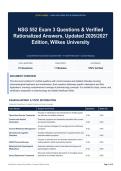
[STUDY GUIDE] • HIGH-YIELD PRACTICE & REVIEW EDITION
NSG 552 Exam 3 Questions & Verified
Rationalized Answers, Updated 2026/2027
Edition, Wilkes University
Comprehensive Examination Question Bank • In-Depth Rationales • Concept Mapping
TOTAL QUESTIONS EXAM TOPICS RATIONALES
91 Questions 11 Modules 100% Verified
DOCUMENT OVERVIEW
This document contains 91 verified questions with correct answers and detailed rationales covering
pharmacological treatments and mechanisms. Each question addresses specific medications and their
applications, ensuring comprehensive coverage of pharmacology concepts. It is suitable for study, review, and
certification preparation in pharmacology and related healthcare fields.
EXAM BLUEPRINT & TOPIC DISTRIBUTION
Systematic breakdown of subject domains and exam coverage.
Topic Module Scope & Core Focus Questions Share (%)
Focuses on medications and mechanisms for treating opioid
Opioid Use Disorder Treatments use disorder and related conditions. 9 Qs 9.9%
Cocaine and Alcohol Examines symptoms and treatments associated with cocaine
Intoxication and alcohol intoxication. 9 Qs 9.9%
Covers treatment strategies for managing alcohol withdrawal
Alcohol Withdrawal Management symptoms. 9 Qs 9.9%
Dementia and Cognitive Includes medications and treatments for cognitive decline and
Disorders dementia-related symptoms. 8 Qs 8.8%
Focuses on stimulant and non-stimulant medications used in
ADHD Pharmacotherapy treating attention deficit hyperactivity disorder. 8 Qs 8.8%
Behavioral and Psychological Examines medications used to treat behavioral issues and
Medications psychological conditions. 8 Qs 8.8%
Discusses pharmacological approaches to managing sexual
Sexual Dysfunction Treatments dysfunction and related disorders. 8 Qs 8.8%
Confidential • Student Study Edition • Practice & Review Guide Page 1 of 33
,STUDENT STUDY & MASTERY EDITION PRACTICE & REVIEW GUIDE
Stimulant Side Effects and Reviews common side effects of stimulant medications and
Management their management. 8 Qs 8.8%
Tic Disorders and Treatment
Strategies Focuses on medications used for managing tic disorders. 8 Qs 8.8%
Miscellaneous Pharmacological Covers various pharmacological concepts not categorized
Knowledge elsewhere. 8 Qs 8.8%
Clinical Considerations in Highlights important clinical considerations regarding
Pharmacology medication use and patient assessment. 8 Qs 8.8%
Total Exam Coverage 11 Integrated Topic Modules 91 Qs 100.0%
Confidential • Student Study Edition • Practice & Review Guide Page 2 of 33
,STUDENT STUDY & MASTERY EDITION PRACTICE & REVIEW GUIDE
TOPIC 1: OPIOID USE DISORDER TREATMENTS
9 Questions • 9.9% of Exam • Focuses on medications and mechanisms for treating opioid use disorder and related conditions.
QUESTION 1
What is the mechanism of action of Naloxone?
Correct Answer: Pure opioid antagonist that competes and displaces opioids receptor sites.
Rationale: Naloxone works by binding to opioid receptors in the brain, which are the same receptors that opioids like heroin
and morphine bind to, effectively competing with them for space on these receptors. By displacing opioids from their
receptor sites, naloxone reverses the effects of opioid overdose, such as sedation and respiratory depression, making it a
highly effective antidote.
QUESTION 2
What medications treat opioid disorder?
Correct Answer: Methadone;
Buprenorphine, buprenorphine + Naloxone.
Rationale: Methadone and Buprenorphine are partial opioid agonists, which means they activate opioid receptors in the
brain to reduce withdrawal symptoms and cravings without producing the same high as illicit opioids. The addition of
Naloxone to Buprenorphine in certain formulations prevents misuse by blocking the opioid receptor activity if the medication
is injected, thereby preventing overdose, but still allows oral consumption for therapeutic purposes.
QUESTION 3
What medication for opioid use disorder is used with comorbid pain?
Correct Answer: Buprenorphine + Naloxone.
Rationale: Buprenorphine + Naloxone is a suitable medication for opioid use disorder in patients with comorbid pain
because it provides a balance between managing pain and reducing the risk of misuse or overdose. The naloxone
component helps deter intravenous injection, while the buprenorphine helps mitigate withdrawal symptoms, making it an
effective treatment for individuals with pain and opioid use disorder.
Confidential • Student Study Edition • Practice & Review Guide Page 3 of 33
, STUDENT STUDY & MASTERY EDITION PRACTICE & REVIEW GUIDE
QUESTION 4
Inappropriate use of what substance may be due to uncontrolled pain?
Correct Answer: Opioids.
Rationale: The use of opioids as a pain relief medication can lead to dependence and addiction due to their ability to
activate the brain's reward centers, causing individuals to continue taking them despite the risk of negative consequences.
This is a well-documented phenomenon, particularly with prescription opioids, which has contributed to the opioid epidemic
and the association of uncontrolled pain with inappropriate opioid use.
QUESTION 5
What medication is given for opioid intoxication during cardiac or respiratory
depression is a concern?
Correct Answer: Naloxone.
Rationale: Naloxone is given for opioid intoxication during cardiac or respiratory depression because it is a potent opioid
antagonist that rapidly reverses the life-threatening effects of opioids on the respiratory system, allowing for the restoration
of normal breathing patterns and preventing further complications. By blocking the opioid receptors in the brain, naloxone
effectively counteracts the sedative and depressant effects of opioids, making it a crucial medication in emergency
situations involving opioid overdose.
QUESTION 6
What medication can be given to patients with AUD with hepatic dysfunction?
Correct Answer: Acamprosate.
Rationale: Acamprosate is often preferred for patients with AUD and hepatic dysfunction because it is primarily metabolized
in the liver and then excreted through the kidneys, making it a safer option for patients with compromised liver function.
Unlike other medications, such as disulfiram, which can cause liver damage, acamprosate's metabolism and excretion
pathways minimize the risk of further liver injury in patients with pre-existing hepatic dysfunction.
Confidential • Student Study Edition • Practice & Review Guide Page 4 of 33
NSG 552 Exam 3 Questions & Verified
Rationalized Answers, Updated 2026/2027
Edition, Wilkes University
Comprehensive Examination Question Bank • In-Depth Rationales • Concept Mapping
TOTAL QUESTIONS EXAM TOPICS RATIONALES
91 Questions 11 Modules 100% Verified
DOCUMENT OVERVIEW
This document contains 91 verified questions with correct answers and detailed rationales covering
pharmacological treatments and mechanisms. Each question addresses specific medications and their
applications, ensuring comprehensive coverage of pharmacology concepts. It is suitable for study, review, and
certification preparation in pharmacology and related healthcare fields.
EXAM BLUEPRINT & TOPIC DISTRIBUTION
Systematic breakdown of subject domains and exam coverage.
Topic Module Scope & Core Focus Questions Share (%)
Focuses on medications and mechanisms for treating opioid
Opioid Use Disorder Treatments use disorder and related conditions. 9 Qs 9.9%
Cocaine and Alcohol Examines symptoms and treatments associated with cocaine
Intoxication and alcohol intoxication. 9 Qs 9.9%
Covers treatment strategies for managing alcohol withdrawal
Alcohol Withdrawal Management symptoms. 9 Qs 9.9%
Dementia and Cognitive Includes medications and treatments for cognitive decline and
Disorders dementia-related symptoms. 8 Qs 8.8%
Focuses on stimulant and non-stimulant medications used in
ADHD Pharmacotherapy treating attention deficit hyperactivity disorder. 8 Qs 8.8%
Behavioral and Psychological Examines medications used to treat behavioral issues and
Medications psychological conditions. 8 Qs 8.8%
Discusses pharmacological approaches to managing sexual
Sexual Dysfunction Treatments dysfunction and related disorders. 8 Qs 8.8%
Confidential • Student Study Edition • Practice & Review Guide Page 1 of 33
,STUDENT STUDY & MASTERY EDITION PRACTICE & REVIEW GUIDE
Stimulant Side Effects and Reviews common side effects of stimulant medications and
Management their management. 8 Qs 8.8%
Tic Disorders and Treatment
Strategies Focuses on medications used for managing tic disorders. 8 Qs 8.8%
Miscellaneous Pharmacological Covers various pharmacological concepts not categorized
Knowledge elsewhere. 8 Qs 8.8%
Clinical Considerations in Highlights important clinical considerations regarding
Pharmacology medication use and patient assessment. 8 Qs 8.8%
Total Exam Coverage 11 Integrated Topic Modules 91 Qs 100.0%
Confidential • Student Study Edition • Practice & Review Guide Page 2 of 33
,STUDENT STUDY & MASTERY EDITION PRACTICE & REVIEW GUIDE
TOPIC 1: OPIOID USE DISORDER TREATMENTS
9 Questions • 9.9% of Exam • Focuses on medications and mechanisms for treating opioid use disorder and related conditions.
QUESTION 1
What is the mechanism of action of Naloxone?
Correct Answer: Pure opioid antagonist that competes and displaces opioids receptor sites.
Rationale: Naloxone works by binding to opioid receptors in the brain, which are the same receptors that opioids like heroin
and morphine bind to, effectively competing with them for space on these receptors. By displacing opioids from their
receptor sites, naloxone reverses the effects of opioid overdose, such as sedation and respiratory depression, making it a
highly effective antidote.
QUESTION 2
What medications treat opioid disorder?
Correct Answer: Methadone;
Buprenorphine, buprenorphine + Naloxone.
Rationale: Methadone and Buprenorphine are partial opioid agonists, which means they activate opioid receptors in the
brain to reduce withdrawal symptoms and cravings without producing the same high as illicit opioids. The addition of
Naloxone to Buprenorphine in certain formulations prevents misuse by blocking the opioid receptor activity if the medication
is injected, thereby preventing overdose, but still allows oral consumption for therapeutic purposes.
QUESTION 3
What medication for opioid use disorder is used with comorbid pain?
Correct Answer: Buprenorphine + Naloxone.
Rationale: Buprenorphine + Naloxone is a suitable medication for opioid use disorder in patients with comorbid pain
because it provides a balance between managing pain and reducing the risk of misuse or overdose. The naloxone
component helps deter intravenous injection, while the buprenorphine helps mitigate withdrawal symptoms, making it an
effective treatment for individuals with pain and opioid use disorder.
Confidential • Student Study Edition • Practice & Review Guide Page 3 of 33
, STUDENT STUDY & MASTERY EDITION PRACTICE & REVIEW GUIDE
QUESTION 4
Inappropriate use of what substance may be due to uncontrolled pain?
Correct Answer: Opioids.
Rationale: The use of opioids as a pain relief medication can lead to dependence and addiction due to their ability to
activate the brain's reward centers, causing individuals to continue taking them despite the risk of negative consequences.
This is a well-documented phenomenon, particularly with prescription opioids, which has contributed to the opioid epidemic
and the association of uncontrolled pain with inappropriate opioid use.
QUESTION 5
What medication is given for opioid intoxication during cardiac or respiratory
depression is a concern?
Correct Answer: Naloxone.
Rationale: Naloxone is given for opioid intoxication during cardiac or respiratory depression because it is a potent opioid
antagonist that rapidly reverses the life-threatening effects of opioids on the respiratory system, allowing for the restoration
of normal breathing patterns and preventing further complications. By blocking the opioid receptors in the brain, naloxone
effectively counteracts the sedative and depressant effects of opioids, making it a crucial medication in emergency
situations involving opioid overdose.
QUESTION 6
What medication can be given to patients with AUD with hepatic dysfunction?
Correct Answer: Acamprosate.
Rationale: Acamprosate is often preferred for patients with AUD and hepatic dysfunction because it is primarily metabolized
in the liver and then excreted through the kidneys, making it a safer option for patients with compromised liver function.
Unlike other medications, such as disulfiram, which can cause liver damage, acamprosate's metabolism and excretion
pathways minimize the risk of further liver injury in patients with pre-existing hepatic dysfunction.
Confidential • Student Study Edition • Practice & Review Guide Page 4 of 33