[STUDY GUIDE] • HIGH-YIELD PRACTICE & REVIEW EDITION
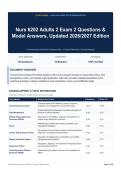
Nurs 6202 Adults 2 Exam 2 Questions &
Model Answers, Updated 2026/2027 Edition
Comprehensive Examination Question Bank • In-Depth Rationales • Concept Mapping
TOTAL QUESTIONS EXAM TOPICS RATIONALES
93 Questions 10 Modules 100% Verified
DOCUMENT OVERVIEW
This document contains 93 verified questions with correct answers focusing on acute kidney injury, fluid
management, shock, and multiple organ dysfunction. Each item provides a detailed explanation of the
underlying principles, making it suitable for exam preparation, review, and certification study.
EXAM BLUEPRINT & TOPIC DISTRIBUTION
Systematic breakdown of subject domains and exam coverage.
Topic Module Scope & Core Focus Questions Share (%)
Concepts related to the definition, causes, symptoms,
Acute Kidney Injury (AKI) diagnosis, and management of acute kidney injury. 12 Qs 12.9%
Understanding fluid replacement calculations and types of
Fluid Management fluid loss in clinical scenarios. 9 Qs 9.7%
Multiple Organ Dysfunction Exploration of the definition, diagnosis, and treatment of
Syndrome (MODS) multiple organ dysfunction syndrome. 9 Qs 9.7%
Different types of shock, their causes, symptoms, and
Shock management strategies. 9 Qs 9.7%
Key aspects of chronic kidney disease, including symptoms,
Chronic Kidney Disease (CKD) diagnosis, and dietary recommendations. 9 Qs 9.7%
Discussion on dialysis types, complications, and patient
Dialysis Treatment Options management during dialysis. 9 Qs 9.7%
Recognition, diagnosis, and treatment of respiratory failure
Respiratory Failure and associated conditions. 9 Qs 9.7%
Acute Respiratory Distress Understanding the phases, causes, and complications of
Syndrome (ARDS) ARDS. 9 Qs 9.7%
Confidential • Student Study Edition • Practice & Review Guide Page 1 of 26
,STUDENT STUDY & MASTERY EDITION PRACTICE & REVIEW GUIDE
Identification of common electrolyte imbalances and their
Electrolyte Imbalances clinical implications. 9 Qs 9.7%
Key assessments and indicators for various critical conditions
Assessment and Monitoring and interventions. 9 Qs 9.7%
Total Exam Coverage 10 Integrated Topic Modules 93 Qs 100.0%
Confidential • Student Study Edition • Practice & Review Guide Page 2 of 26
, STUDENT STUDY & MASTERY EDITION PRACTICE & REVIEW GUIDE
TOPIC 1: ACUTE KIDNEY INJURY (AKI)
12 Questions • 12.9% of Exam • Concepts related to the definition, causes, symptoms, diagnosis, and management of acute kidney
injury.
QUESTION 1
What is an Acute Kidney Injury?
Correct Answer: = Acute/rapid loss of kidney function.
QUESTION 2
What are common causes of AKIs?
Correct Answer: 1. Infection - limits blood flow to kidneys
2. Prolonged dehydration
3. Excessive medication use (NSAIDs)
QUESTION 3
What are s/s of an AKI?
Correct Answer: Decreased urine output
- Edema
- Fatigue
- Confusion (electrolyte imbalance)
QUESTION 4
How do you dx an AKI?
Correct Answer: 1. Blood and urine tests to measure kidney function
- Creatinine Clearance = 24hr urine collection to test how well creatinine is removed from your blood by your
kidneys
2. Ultrasound and biopsies to determine damage.
Confidential • Student Study Edition • Practice & Review Guide Page 3 of 26
Nurs 6202 Adults 2 Exam 2 Questions &
Model Answers, Updated 2026/2027 Edition
Comprehensive Examination Question Bank • In-Depth Rationales • Concept Mapping
TOTAL QUESTIONS EXAM TOPICS RATIONALES
93 Questions 10 Modules 100% Verified
DOCUMENT OVERVIEW
This document contains 93 verified questions with correct answers focusing on acute kidney injury, fluid
management, shock, and multiple organ dysfunction. Each item provides a detailed explanation of the
underlying principles, making it suitable for exam preparation, review, and certification study.
EXAM BLUEPRINT & TOPIC DISTRIBUTION
Systematic breakdown of subject domains and exam coverage.
Topic Module Scope & Core Focus Questions Share (%)
Concepts related to the definition, causes, symptoms,
Acute Kidney Injury (AKI) diagnosis, and management of acute kidney injury. 12 Qs 12.9%
Understanding fluid replacement calculations and types of
Fluid Management fluid loss in clinical scenarios. 9 Qs 9.7%
Multiple Organ Dysfunction Exploration of the definition, diagnosis, and treatment of
Syndrome (MODS) multiple organ dysfunction syndrome. 9 Qs 9.7%
Different types of shock, their causes, symptoms, and
Shock management strategies. 9 Qs 9.7%
Key aspects of chronic kidney disease, including symptoms,
Chronic Kidney Disease (CKD) diagnosis, and dietary recommendations. 9 Qs 9.7%
Discussion on dialysis types, complications, and patient
Dialysis Treatment Options management during dialysis. 9 Qs 9.7%
Recognition, diagnosis, and treatment of respiratory failure
Respiratory Failure and associated conditions. 9 Qs 9.7%
Acute Respiratory Distress Understanding the phases, causes, and complications of
Syndrome (ARDS) ARDS. 9 Qs 9.7%
Confidential • Student Study Edition • Practice & Review Guide Page 1 of 26
,STUDENT STUDY & MASTERY EDITION PRACTICE & REVIEW GUIDE
Identification of common electrolyte imbalances and their
Electrolyte Imbalances clinical implications. 9 Qs 9.7%
Key assessments and indicators for various critical conditions
Assessment and Monitoring and interventions. 9 Qs 9.7%
Total Exam Coverage 10 Integrated Topic Modules 93 Qs 100.0%
Confidential • Student Study Edition • Practice & Review Guide Page 2 of 26
, STUDENT STUDY & MASTERY EDITION PRACTICE & REVIEW GUIDE
TOPIC 1: ACUTE KIDNEY INJURY (AKI)
12 Questions • 12.9% of Exam • Concepts related to the definition, causes, symptoms, diagnosis, and management of acute kidney
injury.
QUESTION 1
What is an Acute Kidney Injury?
Correct Answer: = Acute/rapid loss of kidney function.
QUESTION 2
What are common causes of AKIs?
Correct Answer: 1. Infection - limits blood flow to kidneys
2. Prolonged dehydration
3. Excessive medication use (NSAIDs)
QUESTION 3
What are s/s of an AKI?
Correct Answer: Decreased urine output
- Edema
- Fatigue
- Confusion (electrolyte imbalance)
QUESTION 4
How do you dx an AKI?
Correct Answer: 1. Blood and urine tests to measure kidney function
- Creatinine Clearance = 24hr urine collection to test how well creatinine is removed from your blood by your
kidneys
2. Ultrasound and biopsies to determine damage.
Confidential • Student Study Edition • Practice & Review Guide Page 3 of 26