

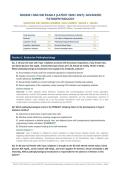
NSG530 / NSG 530 EXAM 4 (LATEST ): ADVANCED
PATHOPHYSIOLOGY
QUESTIONS AND VERIFIED ANSWERS | 100% CORRECT | GRADE A - WILKES
Wilkes University · Graduate Nursing & Advanced Practice Education · Aligned with AACN Essentials of Master's Education &
Advanced Pathophysiology Competencies (2026/2027 Edition) · Generated September 2026
Total Questions 100 Clinical Reasoning (Scenario-Based) 15
Sections 7 Lab Value & Diagnostic Interpretation 10
Cognitive: Recall 20% Pathophysiological Mechanisms 10
Cognitive: Application 50% Scenario-Based Items 75%
Cognitive: Analysis 30% Direct Knowledge Items 25%
Section 1: Endocrine Pathophysiology
Q1: A 19-year-old male with Type 1 diabetes presents with Kussmaul respirations, fruity breath odor,
and blood glucose 612 mg/dL. Arterial blood gas shows pH 7.18, PaCO2 22 mmHg, HCO3- 8 mEq/L.
Which pathophysiological mechanism best explains the metabolic acidosis?
A. Accumulation of lactic acid from anaerobic glycolysis in peripheral tissues
B. Hepatic conversion of free fatty acids to ketoacids (beta-hydroxybutyrate and acetoacetate) due to
insulin deficiency *[CORRECT]*
C. Renal tubular inability to excrete hydrogen ions with subsequent bicarbonate wasting
D. Direct suppression of the respiratory center causing CO2 retention and respiratory acidosis
Correct Answer: B
Rationale: In DKA, absolute insulin deficiency combined with counterregulatory hormone excess (glucagon,
catecholamines, cortisol, GH) activates hormone-sensitive lipase, releasing free fatty acids that the liver converts to
ketoacids (beta-hydroxybutyrate and acetoacetate). Kussmaul respirations are the compensatory response to
metabolic acidosis. Lactic acidosis (A) is not the primary mechanism, renal acid excretion failure (C) is later
compensation, and respiratory acidosis (D) contradicts the low PaCO2.
Q2: Which pathophysiological event is the PRIMARY initiating defect in the development of Type 2
diabetes mellitus?
A. Autoimmune destruction of pancreatic beta cells
B. Absolute insulin deficiency requiring exogenous replacement
C. Insulin resistance in skeletal muscle, liver, and adipose tissue with compensatory hyperinsulinemia
progressing to beta-cell failure *[CORRECT]*
D. Defective insulin receptor binding at the cell membrane
Correct Answer: C
Rationale: Type 2 diabetes is initiated by insulin resistance in target tissues (skeletal muscle, liver, adipose),
triggering compensatory beta-cell hyperinsulinemia. Over time, beta-cell exhaustion and amyloid deposition (amylin)
lead to relative insulin deficiency. Autoimmune beta-cell destruction (A, B) characterizes Type 1 diabetes; pure
receptor defects (D) cause rare forms of diabetes (e.g., Type A insulin resistance).
Q3: An 82-year-old female with Type 2 diabetes is brought to the ED with altered mental status, blood
glucose 924 mg/dL, serum sodium 128 mEq/L, and urine negative for ketones. Serum osmolality is 384
mOsm/kg. Which pathophysiological mechanism is responsible for the absence of ketones in this
patient?
NSG530 / NSG 530 Exam 4 (Latest 2026/2027): Advanced Pathophysiology | Questions and Verified Answers | 100% Correct | Grade A - Wilkes
,NSG 530 Exam 4 | Advanced Pathophysiology | Wilkes University Page 2
A. Inadequate counterregulatory hormone response
B. Sufficient circulating insulin to suppress lipolysis but inadequate to promote glucose uptake
*[CORRECT]*
C. Hepatic ketogenesis impairment due to fatty infiltration
D. Peripheral tissue insulin resistance preventing ketoacid formation
Correct Answer: B
Rationale: Hyperosmolar hyperglycemic state (HHS) occurs in Type 2 diabetics who retain enough insulin to inhibit
lipolysis and ketogenesis but not enough to promote peripheral glucose uptake, resulting in profound hyperglycemia
without significant ketoacidosis. The resulting osmotic diuresis leads to severe dehydration and hyperosmolality.
Inadequate counterregulatory response (A) is incorrect; hepatic fatty infiltration (C) does not prevent ketogenesis;
insulin resistance does not prevent ketone formation (D).
Q4: A 32-year-old Type 1 diabetic has intermittent morning hyperglycemia (210-280 mg/dL) with
overnight hypoglycemia detected on continuous glucose monitoring. Which pathophysiological
mechanism best accounts for the morning hyperglycemia?
A. Dawn phenomenon due to nocturnal growth hormone and cortisol secretion increasing hepatic
gluconeogenesis *[CORRECT]*
B. Somogyi effect from counterregulatory hormone response to undetected nocturnal hypoglycemia
C. Progressive beta-cell destruction reducing endogenous insulin
D. Development of insulin antibodies neutralizing evening insulin
Correct Answer: A
Rationale: The dawn phenomenon results from nocturnal surges of counterregulatory hormones (growth hormone,
cortisol, catecholamines) between 4-8 AM that increase hepatic glucose output. The Somogyi effect (B) involves
rebound hyperglycemia following undetected nocturnal hypoglycemia, but the question specifies morning
hyperglycemia WITHOUT documented antecedent hypoglycemia. Beta-cell destruction (C) and insulin antibodies (D)
do not explain the temporal pattern.
Q5: Which pathophysiological mechanism triggers thyroid storm, a life-threatening complication of
hyperthyroidism?
A. Sudden increase in thyroid-binding globulin reducing free T4
B. Massive release of stored thyroid hormone with adrenergic hypersensitivity precipitated by stress,
surgery, or infection *[CORRECT]*
C. Autoimmune destruction of thyroid follicular cells
D. Pituitary TSH surge stimulating thyroid hormone synthesis
Correct Answer: B
Rationale: Thyroid storm results from an acute massive release of stored thyroid hormone combined with heightened
adrenergic receptor sensitivity, typically precipitated by stressors such as surgery, infection, trauma, or iodine load.
Patients develop hyperpyrexia, tachycardia, altered mental status, and cardiovascular collapse. Reduced TBG (A),
autoimmune destruction (C, causing hypothyroidism), and TSH surge (D, opposite of hyperthyroidism) are incorrect
mechanisms.
Q6: A 76-year-old female with a history of Hashimoto thyroiditis presents in winter with hypothermia
(33.2°C/91.8°F), bradycardia (42 bpm), hypoventilation, and altered mental status. Lab: TSH 78 mIU/L
(high), free T4 0.2 ng/dL (low), Na+ 118 mEq/L. Which pathophysiological mechanism explains the
hyponatremia?
A. Excess ADH secretion due to increased hypothalamic ADH release and reduced free water clearance
from decreased renal perfusion *[CORRECT]*
B. Primary adrenal insufficiency causing mineralocorticoid deficiency
C. Syndrome of inappropriate antidiuretic hormone from ectopic ADH production
NSG530 / NSG 530 Exam 4 (Latest 2026/2027): Advanced Pathophysiology | Questions and Verified Answers | 100% Correct | Grade A - Wilkes
,NSG 530 Exam 4 | Advanced Pathophysiology | Wilkes University Page 3
D. Renal salt-wasting from medullary interstitial damage
Correct Answer: A
Rationale: Myxedema coma causes hyponatremia through decreased renal perfusion (reduced cardiac output)
reducing free water clearance and increased ADH secretion. The hypothyroid state also reduces renal tubular sodium
reabsorption. Treatment requires IV levothyroxine and hydrocortisone (to treat coexisting adrenal insufficiency).
Primary adrenal insufficiency (B) is a differential but TSH pattern excludes it; ectopic ADH (C) is not the primary
mechanism; renal salt-wasting (D) is unrelated to hypothyroidism.
Q7: A 44-year-old female presents with central obesity, moon facies, purple abdominal striae,
hypertension, and proximal muscle weakness. Lab: 24-hour urine cortisol 320 mcg (high, normal
10-100), 1-mg dexamethasone suppression cortisol 18 mcg/dL (non-suppressed). Which
pathophysiological mechanism best explains these findings?
A. Adrenal adenoma autonomously secreting cortisol with loss of pituitary ACTH feedback *[CORRECT]*
B. Pituitary corticotroph adenoma secreting excess ACTH with bilateral adrenal hyperplasia
C. Ectopic ACTH secretion from small cell lung carcinoma
D. Exogenous glucocorticoid administration suppressing the HPA axis
Correct Answer: A
Rationale: Failure to suppress with high-dose dexamethasone (Cushing's syndrome of adrenal origin) suggests an
autonomously functioning adrenal adenoma producing cortisol independent of ACTH feedback. Cushing's DISEASE
(B) is pituitary ACTH-dependent and would suppress with high-dose dexamethasone. Ectopic ACTH (C) typically
presents with hypokalemia and hyperpigmentation; exogenous steroids (D) would suppress endogenous cortisol
production.
Q8: A 38-year-old male with a history of autoimmune thyroiditis presents to the ED with hypotension
(82/48), nausea, vomiting, abdominal pain, hyponatremia (Na+ 122), hyperkalemia (K+ 6.1), and
hypoglycemia. Which pathophysiological process explains the electrolyte abnormalities?
A. Aldosterone deficiency causing renal sodium wasting and potassium retention *[CORRECT]*
B. Excess cortisol mineralocorticoid effect on distal tubule
C. SIADH with dilutional hyponatremia
D. Renal tubular acidosis type 4 from hyporeninemic hypoaldosteronism
Correct Answer: A
Rationale: This presentation of primary adrenal insufficiency (Addisonian crisis) involves destruction of the adrenal
cortex, leading to deficiency of both cortisol and aldosterone. Aldosterone deficiency causes renal sodium wasting
(hyponatremia, hypovolemia) and potassium retention (hyperkalemia). Cortisol deficiency causes hypoglycemia and
increased ACTH (hyperpigmentation). Treatment is IV hydrocortisone and volume resuscitation with normal saline.
Q9: A patient with small cell lung cancer develops hyponatremia (Na+ 121 mEq/L), serum osmolality
248 mOsm/kg, urine osmolality 350 mOsm/kg (inappropriately concentrated), and urine sodium 60
mEq/L. Which pathophysiological mechanism is the most likely cause?
A. Ectopic ADH production by the tumor causing free water retention and dilutional hyponatremia
*[CORRECT]*
B. Adrenal insufficiency causing mineralocorticoid deficiency
C. Cerebral salt-wasting from central nervous system pathology
D. Primary polydipsia with resultant water intoxication
Correct Answer: A
Rationale: SIADH (syndrome of inappropriate antidiuretic hormone) is commonly associated with small cell lung
cancer, which ectopically produces ADH. Excess ADH causes free water retention in the renal collecting ducts,
producing dilutional hyponatremia with inappropriately concentrated urine and high urine sodium. Adrenal
insufficiency (B) causes hyperkalemia; cerebral salt-wasting (C) causes hypovolemia; primary polydipsia (D)
NSG530 / NSG 530 Exam 4 (Latest 2026/2027): Advanced Pathophysiology | Questions and Verified Answers | 100% Correct | Grade A - Wilkes
, NSG 530 Exam 4 | Advanced Pathophysiology | Wilkes University Page 4
produces dilute urine.
Q10: A 28-year-old male presents with polyuria (8 L/day), polydipsia, and mild dehydration. Serum Na+
149 mEq/L, urine osmolality 80 mOsm/kg. After 8-hour water deprivation, urine osmolality remains 90
mOsm/kg. After desmopressin administration, urine osmolality rises to 320 mOsm/kg. Which
pathophysiological mechanism is responsible?
A. Deficient ADH secretion from hypothalamic supraoptic/paraventricular nuclei (central DI) *[CORRECT]*
B. Renal collecting duct unresponsiveness to ADH (nephrogenic DI)
C. Primary polydipsia with downregulation of ADH receptors
D. Excess ADH from a pulmonary source
Correct Answer: A
Rationale: Central diabetes insipidus results from deficient ADH production by hypothalamic supraoptic and
paraventricular nuclei, often from trauma, tumor, or idiopathic causes. The kidneys respond normally to ADH, so
exogenous desmopressin (a V2 receptor agonist) increases urine osmolality. In nephrogenic DI (B), desmopressin
would not increase urine osmolality because renal V2 receptors are defective. Primary polydipsia (C) shows low ADH
but with normal response to water deprivation.
Q11: A 42-year-old female presents with episodic severe hypertension (210/120), palpitations,
diaphoresis, and headache. During episodes, plasma free metanephrines are markedly elevated. Which
pathophysiological mechanism explains these episodic symptoms?
A. Chromaffin cell tumor of the adrenal medulla intermittently releasing catecholamines *[CORRECT]*
B. Renal artery stenosis activating the renin-angiotensin-aldosterone system
C. Cortisol excess causing mineralocorticoid receptor activation
D. Primary hyperaldosteronism from bilateral adrenal hyperplasia
Correct Answer: A
Rationale: Pheochromocytoma is a chromaffin cell tumor (typically in the adrenal medulla) that intermittently releases
catecholamines (norepinephrine, epinephrine, dopamine), causing paroxysmal hypertension with the classic triad of
headache, diaphoresis, and palpitations. Diagnosis is via plasma free metanephrines or 24-hour urine fractionated
metanephrines. Renovascular hypertension (B), cortisol excess (C), and Conn's syndrome (D) cause sustained, not
episodic, hypertension.
Q12: A 50-year-old male presents with hypertension (160/98), hypokalemia (K+ 2.9), metabolic alkalosis,
and low plasma renin. Plasma aldosterone is elevated. Which pathophysiological mechanism is most
likely?
A. Adrenal adenoma autonomously secreting aldosterone (Conn's syndrome) with suppression of renin
*[CORRECT]*
B. Renal artery stenosis causing secondary hyperaldosteronism with elevated renin
C. Cushing's syndrome with cortisol-mediated mineralocorticoid effect
D. Pheochromocytoma causing catecholamine-induced hypertension
Correct Answer: A
Rationale: Primary hyperaldosteronism (Conn's syndrome) is most commonly caused by an adrenal adenoma that
autonomously produces aldosterone, leading to sodium retention (hypertension), potassium excretion (hypokalemia),
and hydrogen ion excretion (metabolic alkalosis). The elevated aldosterone suppresses renin (low plasma renin is
diagnostic). Secondary hyperaldosteronism (B) shows high renin; Cushing's (C) shows low potassium with low
aldosterone; pheochromocytoma (D) causes episodic hypertension.
Q13: A 53-year-old male presents with enlarged hands and feet, coarse facial features, prognathism,
and hyperglycemia. IGF-1 is markedly elevated; GH is not suppressed after oral glucose load. Which
pathophysiological mechanism is responsible?
NSG530 / NSG 530 Exam 4 (Latest 2026/2027): Advanced Pathophysiology | Questions and Verified Answers | 100% Correct | Grade A - Wilkes
PATHOPHYSIOLOGY
QUESTIONS AND VERIFIED ANSWERS | 100% CORRECT | GRADE A - WILKES
Wilkes University · Graduate Nursing & Advanced Practice Education · Aligned with AACN Essentials of Master's Education &
Advanced Pathophysiology Competencies (2026/2027 Edition) · Generated September 2026
Total Questions 100 Clinical Reasoning (Scenario-Based) 15
Sections 7 Lab Value & Diagnostic Interpretation 10
Cognitive: Recall 20% Pathophysiological Mechanisms 10
Cognitive: Application 50% Scenario-Based Items 75%
Cognitive: Analysis 30% Direct Knowledge Items 25%
Section 1: Endocrine Pathophysiology
Q1: A 19-year-old male with Type 1 diabetes presents with Kussmaul respirations, fruity breath odor,
and blood glucose 612 mg/dL. Arterial blood gas shows pH 7.18, PaCO2 22 mmHg, HCO3- 8 mEq/L.
Which pathophysiological mechanism best explains the metabolic acidosis?
A. Accumulation of lactic acid from anaerobic glycolysis in peripheral tissues
B. Hepatic conversion of free fatty acids to ketoacids (beta-hydroxybutyrate and acetoacetate) due to
insulin deficiency *[CORRECT]*
C. Renal tubular inability to excrete hydrogen ions with subsequent bicarbonate wasting
D. Direct suppression of the respiratory center causing CO2 retention and respiratory acidosis
Correct Answer: B
Rationale: In DKA, absolute insulin deficiency combined with counterregulatory hormone excess (glucagon,
catecholamines, cortisol, GH) activates hormone-sensitive lipase, releasing free fatty acids that the liver converts to
ketoacids (beta-hydroxybutyrate and acetoacetate). Kussmaul respirations are the compensatory response to
metabolic acidosis. Lactic acidosis (A) is not the primary mechanism, renal acid excretion failure (C) is later
compensation, and respiratory acidosis (D) contradicts the low PaCO2.
Q2: Which pathophysiological event is the PRIMARY initiating defect in the development of Type 2
diabetes mellitus?
A. Autoimmune destruction of pancreatic beta cells
B. Absolute insulin deficiency requiring exogenous replacement
C. Insulin resistance in skeletal muscle, liver, and adipose tissue with compensatory hyperinsulinemia
progressing to beta-cell failure *[CORRECT]*
D. Defective insulin receptor binding at the cell membrane
Correct Answer: C
Rationale: Type 2 diabetes is initiated by insulin resistance in target tissues (skeletal muscle, liver, adipose),
triggering compensatory beta-cell hyperinsulinemia. Over time, beta-cell exhaustion and amyloid deposition (amylin)
lead to relative insulin deficiency. Autoimmune beta-cell destruction (A, B) characterizes Type 1 diabetes; pure
receptor defects (D) cause rare forms of diabetes (e.g., Type A insulin resistance).
Q3: An 82-year-old female with Type 2 diabetes is brought to the ED with altered mental status, blood
glucose 924 mg/dL, serum sodium 128 mEq/L, and urine negative for ketones. Serum osmolality is 384
mOsm/kg. Which pathophysiological mechanism is responsible for the absence of ketones in this
patient?
NSG530 / NSG 530 Exam 4 (Latest 2026/2027): Advanced Pathophysiology | Questions and Verified Answers | 100% Correct | Grade A - Wilkes
,NSG 530 Exam 4 | Advanced Pathophysiology | Wilkes University Page 2
A. Inadequate counterregulatory hormone response
B. Sufficient circulating insulin to suppress lipolysis but inadequate to promote glucose uptake
*[CORRECT]*
C. Hepatic ketogenesis impairment due to fatty infiltration
D. Peripheral tissue insulin resistance preventing ketoacid formation
Correct Answer: B
Rationale: Hyperosmolar hyperglycemic state (HHS) occurs in Type 2 diabetics who retain enough insulin to inhibit
lipolysis and ketogenesis but not enough to promote peripheral glucose uptake, resulting in profound hyperglycemia
without significant ketoacidosis. The resulting osmotic diuresis leads to severe dehydration and hyperosmolality.
Inadequate counterregulatory response (A) is incorrect; hepatic fatty infiltration (C) does not prevent ketogenesis;
insulin resistance does not prevent ketone formation (D).
Q4: A 32-year-old Type 1 diabetic has intermittent morning hyperglycemia (210-280 mg/dL) with
overnight hypoglycemia detected on continuous glucose monitoring. Which pathophysiological
mechanism best accounts for the morning hyperglycemia?
A. Dawn phenomenon due to nocturnal growth hormone and cortisol secretion increasing hepatic
gluconeogenesis *[CORRECT]*
B. Somogyi effect from counterregulatory hormone response to undetected nocturnal hypoglycemia
C. Progressive beta-cell destruction reducing endogenous insulin
D. Development of insulin antibodies neutralizing evening insulin
Correct Answer: A
Rationale: The dawn phenomenon results from nocturnal surges of counterregulatory hormones (growth hormone,
cortisol, catecholamines) between 4-8 AM that increase hepatic glucose output. The Somogyi effect (B) involves
rebound hyperglycemia following undetected nocturnal hypoglycemia, but the question specifies morning
hyperglycemia WITHOUT documented antecedent hypoglycemia. Beta-cell destruction (C) and insulin antibodies (D)
do not explain the temporal pattern.
Q5: Which pathophysiological mechanism triggers thyroid storm, a life-threatening complication of
hyperthyroidism?
A. Sudden increase in thyroid-binding globulin reducing free T4
B. Massive release of stored thyroid hormone with adrenergic hypersensitivity precipitated by stress,
surgery, or infection *[CORRECT]*
C. Autoimmune destruction of thyroid follicular cells
D. Pituitary TSH surge stimulating thyroid hormone synthesis
Correct Answer: B
Rationale: Thyroid storm results from an acute massive release of stored thyroid hormone combined with heightened
adrenergic receptor sensitivity, typically precipitated by stressors such as surgery, infection, trauma, or iodine load.
Patients develop hyperpyrexia, tachycardia, altered mental status, and cardiovascular collapse. Reduced TBG (A),
autoimmune destruction (C, causing hypothyroidism), and TSH surge (D, opposite of hyperthyroidism) are incorrect
mechanisms.
Q6: A 76-year-old female with a history of Hashimoto thyroiditis presents in winter with hypothermia
(33.2°C/91.8°F), bradycardia (42 bpm), hypoventilation, and altered mental status. Lab: TSH 78 mIU/L
(high), free T4 0.2 ng/dL (low), Na+ 118 mEq/L. Which pathophysiological mechanism explains the
hyponatremia?
A. Excess ADH secretion due to increased hypothalamic ADH release and reduced free water clearance
from decreased renal perfusion *[CORRECT]*
B. Primary adrenal insufficiency causing mineralocorticoid deficiency
C. Syndrome of inappropriate antidiuretic hormone from ectopic ADH production
NSG530 / NSG 530 Exam 4 (Latest 2026/2027): Advanced Pathophysiology | Questions and Verified Answers | 100% Correct | Grade A - Wilkes
,NSG 530 Exam 4 | Advanced Pathophysiology | Wilkes University Page 3
D. Renal salt-wasting from medullary interstitial damage
Correct Answer: A
Rationale: Myxedema coma causes hyponatremia through decreased renal perfusion (reduced cardiac output)
reducing free water clearance and increased ADH secretion. The hypothyroid state also reduces renal tubular sodium
reabsorption. Treatment requires IV levothyroxine and hydrocortisone (to treat coexisting adrenal insufficiency).
Primary adrenal insufficiency (B) is a differential but TSH pattern excludes it; ectopic ADH (C) is not the primary
mechanism; renal salt-wasting (D) is unrelated to hypothyroidism.
Q7: A 44-year-old female presents with central obesity, moon facies, purple abdominal striae,
hypertension, and proximal muscle weakness. Lab: 24-hour urine cortisol 320 mcg (high, normal
10-100), 1-mg dexamethasone suppression cortisol 18 mcg/dL (non-suppressed). Which
pathophysiological mechanism best explains these findings?
A. Adrenal adenoma autonomously secreting cortisol with loss of pituitary ACTH feedback *[CORRECT]*
B. Pituitary corticotroph adenoma secreting excess ACTH with bilateral adrenal hyperplasia
C. Ectopic ACTH secretion from small cell lung carcinoma
D. Exogenous glucocorticoid administration suppressing the HPA axis
Correct Answer: A
Rationale: Failure to suppress with high-dose dexamethasone (Cushing's syndrome of adrenal origin) suggests an
autonomously functioning adrenal adenoma producing cortisol independent of ACTH feedback. Cushing's DISEASE
(B) is pituitary ACTH-dependent and would suppress with high-dose dexamethasone. Ectopic ACTH (C) typically
presents with hypokalemia and hyperpigmentation; exogenous steroids (D) would suppress endogenous cortisol
production.
Q8: A 38-year-old male with a history of autoimmune thyroiditis presents to the ED with hypotension
(82/48), nausea, vomiting, abdominal pain, hyponatremia (Na+ 122), hyperkalemia (K+ 6.1), and
hypoglycemia. Which pathophysiological process explains the electrolyte abnormalities?
A. Aldosterone deficiency causing renal sodium wasting and potassium retention *[CORRECT]*
B. Excess cortisol mineralocorticoid effect on distal tubule
C. SIADH with dilutional hyponatremia
D. Renal tubular acidosis type 4 from hyporeninemic hypoaldosteronism
Correct Answer: A
Rationale: This presentation of primary adrenal insufficiency (Addisonian crisis) involves destruction of the adrenal
cortex, leading to deficiency of both cortisol and aldosterone. Aldosterone deficiency causes renal sodium wasting
(hyponatremia, hypovolemia) and potassium retention (hyperkalemia). Cortisol deficiency causes hypoglycemia and
increased ACTH (hyperpigmentation). Treatment is IV hydrocortisone and volume resuscitation with normal saline.
Q9: A patient with small cell lung cancer develops hyponatremia (Na+ 121 mEq/L), serum osmolality
248 mOsm/kg, urine osmolality 350 mOsm/kg (inappropriately concentrated), and urine sodium 60
mEq/L. Which pathophysiological mechanism is the most likely cause?
A. Ectopic ADH production by the tumor causing free water retention and dilutional hyponatremia
*[CORRECT]*
B. Adrenal insufficiency causing mineralocorticoid deficiency
C. Cerebral salt-wasting from central nervous system pathology
D. Primary polydipsia with resultant water intoxication
Correct Answer: A
Rationale: SIADH (syndrome of inappropriate antidiuretic hormone) is commonly associated with small cell lung
cancer, which ectopically produces ADH. Excess ADH causes free water retention in the renal collecting ducts,
producing dilutional hyponatremia with inappropriately concentrated urine and high urine sodium. Adrenal
insufficiency (B) causes hyperkalemia; cerebral salt-wasting (C) causes hypovolemia; primary polydipsia (D)
NSG530 / NSG 530 Exam 4 (Latest 2026/2027): Advanced Pathophysiology | Questions and Verified Answers | 100% Correct | Grade A - Wilkes
, NSG 530 Exam 4 | Advanced Pathophysiology | Wilkes University Page 4
produces dilute urine.
Q10: A 28-year-old male presents with polyuria (8 L/day), polydipsia, and mild dehydration. Serum Na+
149 mEq/L, urine osmolality 80 mOsm/kg. After 8-hour water deprivation, urine osmolality remains 90
mOsm/kg. After desmopressin administration, urine osmolality rises to 320 mOsm/kg. Which
pathophysiological mechanism is responsible?
A. Deficient ADH secretion from hypothalamic supraoptic/paraventricular nuclei (central DI) *[CORRECT]*
B. Renal collecting duct unresponsiveness to ADH (nephrogenic DI)
C. Primary polydipsia with downregulation of ADH receptors
D. Excess ADH from a pulmonary source
Correct Answer: A
Rationale: Central diabetes insipidus results from deficient ADH production by hypothalamic supraoptic and
paraventricular nuclei, often from trauma, tumor, or idiopathic causes. The kidneys respond normally to ADH, so
exogenous desmopressin (a V2 receptor agonist) increases urine osmolality. In nephrogenic DI (B), desmopressin
would not increase urine osmolality because renal V2 receptors are defective. Primary polydipsia (C) shows low ADH
but with normal response to water deprivation.
Q11: A 42-year-old female presents with episodic severe hypertension (210/120), palpitations,
diaphoresis, and headache. During episodes, plasma free metanephrines are markedly elevated. Which
pathophysiological mechanism explains these episodic symptoms?
A. Chromaffin cell tumor of the adrenal medulla intermittently releasing catecholamines *[CORRECT]*
B. Renal artery stenosis activating the renin-angiotensin-aldosterone system
C. Cortisol excess causing mineralocorticoid receptor activation
D. Primary hyperaldosteronism from bilateral adrenal hyperplasia
Correct Answer: A
Rationale: Pheochromocytoma is a chromaffin cell tumor (typically in the adrenal medulla) that intermittently releases
catecholamines (norepinephrine, epinephrine, dopamine), causing paroxysmal hypertension with the classic triad of
headache, diaphoresis, and palpitations. Diagnosis is via plasma free metanephrines or 24-hour urine fractionated
metanephrines. Renovascular hypertension (B), cortisol excess (C), and Conn's syndrome (D) cause sustained, not
episodic, hypertension.
Q12: A 50-year-old male presents with hypertension (160/98), hypokalemia (K+ 2.9), metabolic alkalosis,
and low plasma renin. Plasma aldosterone is elevated. Which pathophysiological mechanism is most
likely?
A. Adrenal adenoma autonomously secreting aldosterone (Conn's syndrome) with suppression of renin
*[CORRECT]*
B. Renal artery stenosis causing secondary hyperaldosteronism with elevated renin
C. Cushing's syndrome with cortisol-mediated mineralocorticoid effect
D. Pheochromocytoma causing catecholamine-induced hypertension
Correct Answer: A
Rationale: Primary hyperaldosteronism (Conn's syndrome) is most commonly caused by an adrenal adenoma that
autonomously produces aldosterone, leading to sodium retention (hypertension), potassium excretion (hypokalemia),
and hydrogen ion excretion (metabolic alkalosis). The elevated aldosterone suppresses renin (low plasma renin is
diagnostic). Secondary hyperaldosteronism (B) shows high renin; Cushing's (C) shows low potassium with low
aldosterone; pheochromocytoma (D) causes episodic hypertension.
Q13: A 53-year-old male presents with enlarged hands and feet, coarse facial features, prognathism,
and hyperglycemia. IGF-1 is markedly elevated; GH is not suppressed after oral glucose load. Which
pathophysiological mechanism is responsible?
NSG530 / NSG 530 Exam 4 (Latest 2026/2027): Advanced Pathophysiology | Questions and Verified Answers | 100% Correct | Grade A - Wilkes

