[STUDY GUIDE] • HIGH-YIELD PRACTICE & REVIEW EDITION
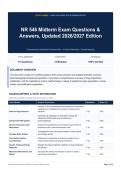
NR 546 Midterm Exam Questions &
Answers, Updated 2026/2027 Edition
Comprehensive Examination Question Bank • In-Depth Rationales • Concept Mapping
TOTAL QUESTIONS EXAM TOPICS RATIONALES
81 Questions 12 Modules 100% Verified
DOCUMENT OVERVIEW
This document contains 81 verified questions with correct answers and detailed rationales covering
pharmacological principles and practices. It provides a comprehensive overview of drug interactions,
metabolism, and the implications of prior medical history, making it suitable for exam preparation, course
review, and certification preparation.
EXAM BLUEPRINT & TOPIC DISTRIBUTION
Systematic breakdown of subject domains and exam coverage.
Topic Module Scope & Core Focus Questions Share (%)
Focuses on the considerations and implications of prescribing
medications to individuals with a history of adverse drug
Adverse Drug Reactions reactions. 7 Qs 8.6%
Examines the metabolism of medications through the
cytochrome P450 system and its relevance in
Cytochrome P450 System pharmacotherapy. 7 Qs 8.6%
Narrow Therapeutic Index Covers the characteristics and monitoring requirements for
Medications medications with a narrow therapeutic index. 7 Qs 8.6%
Investigates the role of the dorsal striatum in motor control
Complex Motor Actions and complex actions. 7 Qs 8.6%
Prior Medical History Addresses the importance of reviewing a patient’s prior
Considerations medical history before prescribing medications. 7 Qs 8.6%
Genetic Testing and Drug Explores the impact of genetic variations on drug metabolism
Response and efficacy. 7 Qs 8.6%
Medication Mechanisms and Discusses the primary mechanisms of action for various
Effects psychotropic medications. 7 Qs 8.6%
Confidential • Student Study Edition • Practice & Review Guide Page 1 of 41
,STUDENT STUDY & MASTERY EDITION PRACTICE & REVIEW GUIDE
Substance Abuse and Examines considerations for prescribing medications to
Medication Interactions clients with a history of substance abuse. 7 Qs 8.6%
Focuses on prescribing practices and considerations for
Antipsychotic Medications antipsychotic medications in the treatment of schizophrenia. 7 Qs 8.6%
Pharmacokinetics and Drug Addresses pharmacokinetic principles including half-life and
Levels steady state concentrations. 6 Qs 7.4%
Psychotropic Medication Covers various classes of psychotropic medications and their
Classes metabolic pathways. 6 Qs 7.4%
Psychological and Explores the influence of environmental and psychosocial
Environmental Factors factors on mental health disorders. 6 Qs 7.4%
Total Exam Coverage 12 Integrated Topic Modules 81 Qs 100.0%
Confidential • Student Study Edition • Practice & Review Guide Page 2 of 41
,STUDENT STUDY & MASTERY EDITION PRACTICE & REVIEW GUIDE
TOPIC 1: ADVERSE DRUG REACTIONS
7 Questions • 8.6% of Exam • Focuses on the considerations and implications of prescribing medications to individuals with a history
of adverse drug reactions.
QUESTION 1
A patient with a history of adverse drug reactions is prescribed a chemical restraint.
What should the PMHNP consider?
[A] Medical history of substance abuse
[B] Allergy status and prior adverse drug reactions
[C] State regulations regarding chemical restraints
[D] Patient's genetic makeup
Correct Answer: B. Allergy status and prior adverse drug reactions.
Rationale: The PMHNP should consider the patient's allergy status and prior adverse drug reactions to prevent further
complications.
QUESTION 2
A patient is prescribed a chemical restraint for aggressive behavior. Before
administration, what should the PMHNP consider?
[A] The patient's current mental status
[B] The patient's medical history for adverse drug reactions
[C] The patient's current medications
[D] The patient's family history
Correct Answer: B. The patient's medical history for adverse drug reactions.
Rationale: Adverse drug reactions can be a significant concern when administering chemical restraints, and the PMHNP
must consider the patient's medical history to minimize this risk.
Confidential • Student Study Edition • Practice & Review Guide Page 3 of 41
, STUDENT STUDY & MASTERY EDITION PRACTICE & REVIEW GUIDE
QUESTION 3
A PMHNP is considering prescribing a chemical restraint to a client with a history of
substance abuse. What should the PMHNP prioritize?
[A] Administering the first dose as soon as possible
[B] Reviewing the client's medical history for potential interactions
[C] Ensuring the client's family is aware of the plan
[D] Considering the client's genetic predisposition to addiction
Correct Answer: Reviewing the client's medical history for potential interactions.
Rationale: This is crucial to prevent adverse reactions and ensure safe administration.
QUESTION 4
A PMHNP is prescribed a chemical restraint to a patient with a known history of
adverse reactions to similar medications. What is the first action the PMHNP should
take?
[A] Administer the medication as prescribed
[B] Review the patient's medical history and current medications
[C] Consult with a colleague for a second opinion
[D] Inform the patient of the potential risks and benefits
Correct Answer: B. Review the patient's medical history and current medications.
Rationale: The PMHNP should review the patient's medical history and current medications to assess potential risks and
contraindications.
Confidential • Student Study Edition • Practice & Review Guide Page 4 of 41
NR 546 Midterm Exam Questions &
Answers, Updated 2026/2027 Edition
Comprehensive Examination Question Bank • In-Depth Rationales • Concept Mapping
TOTAL QUESTIONS EXAM TOPICS RATIONALES
81 Questions 12 Modules 100% Verified
DOCUMENT OVERVIEW
This document contains 81 verified questions with correct answers and detailed rationales covering
pharmacological principles and practices. It provides a comprehensive overview of drug interactions,
metabolism, and the implications of prior medical history, making it suitable for exam preparation, course
review, and certification preparation.
EXAM BLUEPRINT & TOPIC DISTRIBUTION
Systematic breakdown of subject domains and exam coverage.
Topic Module Scope & Core Focus Questions Share (%)
Focuses on the considerations and implications of prescribing
medications to individuals with a history of adverse drug
Adverse Drug Reactions reactions. 7 Qs 8.6%
Examines the metabolism of medications through the
cytochrome P450 system and its relevance in
Cytochrome P450 System pharmacotherapy. 7 Qs 8.6%
Narrow Therapeutic Index Covers the characteristics and monitoring requirements for
Medications medications with a narrow therapeutic index. 7 Qs 8.6%
Investigates the role of the dorsal striatum in motor control
Complex Motor Actions and complex actions. 7 Qs 8.6%
Prior Medical History Addresses the importance of reviewing a patient’s prior
Considerations medical history before prescribing medications. 7 Qs 8.6%
Genetic Testing and Drug Explores the impact of genetic variations on drug metabolism
Response and efficacy. 7 Qs 8.6%
Medication Mechanisms and Discusses the primary mechanisms of action for various
Effects psychotropic medications. 7 Qs 8.6%
Confidential • Student Study Edition • Practice & Review Guide Page 1 of 41
,STUDENT STUDY & MASTERY EDITION PRACTICE & REVIEW GUIDE
Substance Abuse and Examines considerations for prescribing medications to
Medication Interactions clients with a history of substance abuse. 7 Qs 8.6%
Focuses on prescribing practices and considerations for
Antipsychotic Medications antipsychotic medications in the treatment of schizophrenia. 7 Qs 8.6%
Pharmacokinetics and Drug Addresses pharmacokinetic principles including half-life and
Levels steady state concentrations. 6 Qs 7.4%
Psychotropic Medication Covers various classes of psychotropic medications and their
Classes metabolic pathways. 6 Qs 7.4%
Psychological and Explores the influence of environmental and psychosocial
Environmental Factors factors on mental health disorders. 6 Qs 7.4%
Total Exam Coverage 12 Integrated Topic Modules 81 Qs 100.0%
Confidential • Student Study Edition • Practice & Review Guide Page 2 of 41
,STUDENT STUDY & MASTERY EDITION PRACTICE & REVIEW GUIDE
TOPIC 1: ADVERSE DRUG REACTIONS
7 Questions • 8.6% of Exam • Focuses on the considerations and implications of prescribing medications to individuals with a history
of adverse drug reactions.
QUESTION 1
A patient with a history of adverse drug reactions is prescribed a chemical restraint.
What should the PMHNP consider?
[A] Medical history of substance abuse
[B] Allergy status and prior adverse drug reactions
[C] State regulations regarding chemical restraints
[D] Patient's genetic makeup
Correct Answer: B. Allergy status and prior adverse drug reactions.
Rationale: The PMHNP should consider the patient's allergy status and prior adverse drug reactions to prevent further
complications.
QUESTION 2
A patient is prescribed a chemical restraint for aggressive behavior. Before
administration, what should the PMHNP consider?
[A] The patient's current mental status
[B] The patient's medical history for adverse drug reactions
[C] The patient's current medications
[D] The patient's family history
Correct Answer: B. The patient's medical history for adverse drug reactions.
Rationale: Adverse drug reactions can be a significant concern when administering chemical restraints, and the PMHNP
must consider the patient's medical history to minimize this risk.
Confidential • Student Study Edition • Practice & Review Guide Page 3 of 41
, STUDENT STUDY & MASTERY EDITION PRACTICE & REVIEW GUIDE
QUESTION 3
A PMHNP is considering prescribing a chemical restraint to a client with a history of
substance abuse. What should the PMHNP prioritize?
[A] Administering the first dose as soon as possible
[B] Reviewing the client's medical history for potential interactions
[C] Ensuring the client's family is aware of the plan
[D] Considering the client's genetic predisposition to addiction
Correct Answer: Reviewing the client's medical history for potential interactions.
Rationale: This is crucial to prevent adverse reactions and ensure safe administration.
QUESTION 4
A PMHNP is prescribed a chemical restraint to a patient with a known history of
adverse reactions to similar medications. What is the first action the PMHNP should
take?
[A] Administer the medication as prescribed
[B] Review the patient's medical history and current medications
[C] Consult with a colleague for a second opinion
[D] Inform the patient of the potential risks and benefits
Correct Answer: B. Review the patient's medical history and current medications.
Rationale: The PMHNP should review the patient's medical history and current medications to assess potential risks and
contraindications.
Confidential • Student Study Edition • Practice & Review Guide Page 4 of 41