
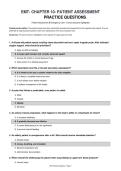
EMT- CHAPTER 10- PATIENT ASSESSMENT
PRACTICE QUESTIONS
Patient Assessment & Emergency Care • Correct answers highlighted
Original practice edition: The questions below have been substantially reworded and reorganized from the supplied study material. They are
presented as original practice questions rather than reproductions of the source question bank.
Answer key: The correct choice is highlighted in each question for rapid study and review.
1. A 62-year-old patient reports crushing chest discomfort and has a rapid, irregular pulse. After indicated
oxygen support, what should be prioritized?
A. Apply an AED immediately
B. Arrange rapid transport and consider advanced support
C. Assume the rhythm is normal because of age
D. Delay action for a detailed assessment
2. Which description best fits a focused secondary assessment?
A. It is limited to the area or system related to the chief complaint
B. It is always a complete head-to-toe exam
C. It must always occur before transport
D. It replaces management of life threats
3. A pulse that follows a predictable, even pattern is called:
A. Weak
B. Irregular
C. Regular
D. Bounding
4. As serious trauma progresses, what happens to the body's ability to compensate for shock?
A. It increases indefinitely
B. It gradually becomes less effective
C. It causes blood pressure to rise significantly
D. It prevents internal bleeding
5. An elderly patient is unresponsive after a fall. What should receive immediate attention?
A. Detailed history
B. Airway, breathing, and circulation
C. Baseline temperature only
D. Administrative documentation
6. Where should the stethoscope be placed when auscultating an upper-arm blood pressure?
A. Femoral artery
EMT Practice Questions • Page 1
, B. Brachial artery
C. Radial artery
D. Apical area
7. What produces the palpable arterial pulse?
A. Electrical activity alone
B. Pressure waves generated by cardiac contraction
C. Venous pressure against the veins
D. Venous return to the heart
8. For an unstable patient, how often should reassessment occur according to the supplied study material?
A. Every 10 minutes
B. Every 15 minutes
C. Every 20 minutes
D. Every 5 minutes
9. Which finding most directly suggests altered mental status?
A. A patient reports an intentional overdose
B. A dizzy patient with an allergic reaction
C. A head-injured patient who responds unusually slowly
D. A diabetic patient with nausea
10. When life threats require continuous management, what may happen to the secondary assessment?
A. It becomes mandatory before treatment
B. It may need to be delayed or shortened
C. It must always be completed first
D. It replaces reassessment
11. JVD is most appropriately evaluated with the patient positioned:
A. Completely prone
B. Flat and supine
C. At roughly a 45-degree angle
D. Standing upright
12. Which opening question best invites a patient to state the chief complaint?
A. When did the symptom begin?
B. Do you have diabetes?
C. What seems to be wrong?
D. Is the pain severe?
EMT Practice Questions • Page 2
PRACTICE QUESTIONS
Patient Assessment & Emergency Care • Correct answers highlighted
Original practice edition: The questions below have been substantially reworded and reorganized from the supplied study material. They are
presented as original practice questions rather than reproductions of the source question bank.
Answer key: The correct choice is highlighted in each question for rapid study and review.
1. A 62-year-old patient reports crushing chest discomfort and has a rapid, irregular pulse. After indicated
oxygen support, what should be prioritized?
A. Apply an AED immediately
B. Arrange rapid transport and consider advanced support
C. Assume the rhythm is normal because of age
D. Delay action for a detailed assessment
2. Which description best fits a focused secondary assessment?
A. It is limited to the area or system related to the chief complaint
B. It is always a complete head-to-toe exam
C. It must always occur before transport
D. It replaces management of life threats
3. A pulse that follows a predictable, even pattern is called:
A. Weak
B. Irregular
C. Regular
D. Bounding
4. As serious trauma progresses, what happens to the body's ability to compensate for shock?
A. It increases indefinitely
B. It gradually becomes less effective
C. It causes blood pressure to rise significantly
D. It prevents internal bleeding
5. An elderly patient is unresponsive after a fall. What should receive immediate attention?
A. Detailed history
B. Airway, breathing, and circulation
C. Baseline temperature only
D. Administrative documentation
6. Where should the stethoscope be placed when auscultating an upper-arm blood pressure?
A. Femoral artery
EMT Practice Questions • Page 1
, B. Brachial artery
C. Radial artery
D. Apical area
7. What produces the palpable arterial pulse?
A. Electrical activity alone
B. Pressure waves generated by cardiac contraction
C. Venous pressure against the veins
D. Venous return to the heart
8. For an unstable patient, how often should reassessment occur according to the supplied study material?
A. Every 10 minutes
B. Every 15 minutes
C. Every 20 minutes
D. Every 5 minutes
9. Which finding most directly suggests altered mental status?
A. A patient reports an intentional overdose
B. A dizzy patient with an allergic reaction
C. A head-injured patient who responds unusually slowly
D. A diabetic patient with nausea
10. When life threats require continuous management, what may happen to the secondary assessment?
A. It becomes mandatory before treatment
B. It may need to be delayed or shortened
C. It must always be completed first
D. It replaces reassessment
11. JVD is most appropriately evaluated with the patient positioned:
A. Completely prone
B. Flat and supine
C. At roughly a 45-degree angle
D. Standing upright
12. Which opening question best invites a patient to state the chief complaint?
A. When did the symptom begin?
B. Do you have diabetes?
C. What seems to be wrong?
D. Is the pain severe?
EMT Practice Questions • Page 2

