

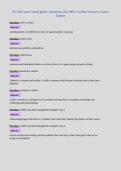
NU 456 exam 2 study guide | Questions with 100% Verified Answers | Latest
Update
Question: what is a bias?
Answer:
a predisposition or preference in favor or against people, or groups
Question: implicit bias
Answer:
subconscious preference/prejudices
Question: explicit bias
Answer:
conscious and intentional choices or action in favor of or again people, groups or things
Question: destructive conflict
Answer:
Tendency to expand and escalate. Conflict continues until becomes irrelevant and or have been
forgotten
Question: productive conflict
Answer:
conflict centered in a perspective of a problem solving which is mutually rewarding to the
conflicting individuals/groups
Question: conflict practical management strategies: step 1
Answer:
Acknowledge/agree that there is a problem (who and what), identify the players and the causes
Question: conflict practical management strategies: step 2
Answer:
choose an option for dealing with the problem (how and why); what is the goal? what are we
trying to accomplish?
, Question: conflict practical management strategies: step 3
Answer:
methods of management; how to cope? avoidance, compromising, collaboration,
accommodation
Question: key ingredients to productive conflict resolutions
Answer:
- good communication
-establishing trust
- creating a good working relationship
- clearly identifying your interest /goals
- recognizing and understanding emotions and how they may be affecting the dynamics
of the situation
- creating opportunities for mutual gain
-agreeing and disagreeing
Question: team work in nursing
Answer:
involves functioning effectively within nursing and interdisciplinary teams. requires effective
open communication, mutual respect, and shared decision making to achieve quality patient
care
Question: Authoritarian
Answer:
leader is making decisions without input from the team (not ideal type of leadership, more
dictatorship), useful in emergency situations
Question: laissez-faire leadership style
Answer:
a leader that lets people lead themselves and make decisions for themselves, leads to low
productivity and frustration because there is no actual leadership
Question: demographic leadership style
Answer:
leader and team work together towards the same goals and outcomes. Promotes group
satisfaction, but slows decision making when getting everyones input
Update
Question: what is a bias?
Answer:
a predisposition or preference in favor or against people, or groups
Question: implicit bias
Answer:
subconscious preference/prejudices
Question: explicit bias
Answer:
conscious and intentional choices or action in favor of or again people, groups or things
Question: destructive conflict
Answer:
Tendency to expand and escalate. Conflict continues until becomes irrelevant and or have been
forgotten
Question: productive conflict
Answer:
conflict centered in a perspective of a problem solving which is mutually rewarding to the
conflicting individuals/groups
Question: conflict practical management strategies: step 1
Answer:
Acknowledge/agree that there is a problem (who and what), identify the players and the causes
Question: conflict practical management strategies: step 2
Answer:
choose an option for dealing with the problem (how and why); what is the goal? what are we
trying to accomplish?
, Question: conflict practical management strategies: step 3
Answer:
methods of management; how to cope? avoidance, compromising, collaboration,
accommodation
Question: key ingredients to productive conflict resolutions
Answer:
- good communication
-establishing trust
- creating a good working relationship
- clearly identifying your interest /goals
- recognizing and understanding emotions and how they may be affecting the dynamics
of the situation
- creating opportunities for mutual gain
-agreeing and disagreeing
Question: team work in nursing
Answer:
involves functioning effectively within nursing and interdisciplinary teams. requires effective
open communication, mutual respect, and shared decision making to achieve quality patient
care
Question: Authoritarian
Answer:
leader is making decisions without input from the team (not ideal type of leadership, more
dictatorship), useful in emergency situations
Question: laissez-faire leadership style
Answer:
a leader that lets people lead themselves and make decisions for themselves, leads to low
productivity and frustration because there is no actual leadership
Question: demographic leadership style
Answer:
leader and team work together towards the same goals and outcomes. Promotes group
satisfaction, but slows decision making when getting everyones input

