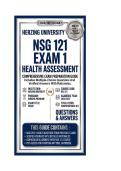
,NSG 121 Exam 1 Health Assessment Questions And Answers
2026/2027 HERZING UNIVERSITY
Q1. Which responsibility is a primary role of the nurse during health
assessment?
A) Prescribing medications
B) Performing surgery
C) Promoting health and preventing illness
D) Establishing medical diagnoses
Correct Answer: C) Promoting health and preventing illness
Rationale: Nursing health assessment supports health promotion, illness
prevention, treatment of human responses to health or illness, and advocacy
for patients and populations.
Q2. A client arrives at the emergency department with severe
respiratory distress and obvious instability. Which type of
assessment should the nurse perform first?
A) Emergency assessment
B) Comprehensive assessment
C) Focused assessment
D) Functional assessment
Correct Answer: A) Emergency assessment
Rationale: An emergency assessment is used when a life-threatening or
unstable condition requires immediate evaluation of the most critical
physiologic needs.
Q3. A newly admitted client with no known acute problems requires
a complete evaluation of physical and psychosocial health. Which
assessment is most appropriate?
A) Focused assessment
B) Emergency assessment
C) Comprehensive assessment
D) Follow-up assessment
Correct Answer: C) Comprehensive assessment
Rationale: A comprehensive assessment establishes a broad baseline by
systematically collecting extensive physical, psychosocial, developmental,
and health-history information.
, Q4. Which situation most appropriately calls for a focused
assessment?
A) Establishing a baseline for a newly admitted client
B) Evaluating a previously identified health concern
C) Assessing an unconscious client with airway obstruction
D) Completing a full annual examination
Correct Answer: B) Evaluating a previously identified health concern
Rationale: A focused assessment concentrates on a specific problem,
symptom, body system, or concern rather than evaluating the client
comprehensively.
Q5. The general survey primarily provides information about which
aspect of the client?
A) Overall appearance and general physical and behavioral status
B) Detailed laboratory results
C) Specific neurological reflexes
D) Complete family genetic history
Correct Answer: A) Overall appearance and general physical and behavioral
status
Rationale: The general survey provides an initial overall impression of the
client's appearance, behavior, posture, mobility, nutritional status, and level
of distress.
Q6. Which intervention represents primary prevention?
A) Screening for hypertension
B) Rehabilitation after a stroke
C) Administering treatment for pneumonia
D) Providing immunization to prevent disease
Correct Answer: D) Providing immunization to prevent disease
Rationale: Primary prevention aims to prevent disease before it occurs.
Immunization is designed to reduce the likelihood of developing a specific
infection.
Q7. Which activity is an example of secondary prevention?
A) Physical therapy after a hip fracture
B) Screening for a disease before symptoms appear
2026/2027 HERZING UNIVERSITY
Q1. Which responsibility is a primary role of the nurse during health
assessment?
A) Prescribing medications
B) Performing surgery
C) Promoting health and preventing illness
D) Establishing medical diagnoses
Correct Answer: C) Promoting health and preventing illness
Rationale: Nursing health assessment supports health promotion, illness
prevention, treatment of human responses to health or illness, and advocacy
for patients and populations.
Q2. A client arrives at the emergency department with severe
respiratory distress and obvious instability. Which type of
assessment should the nurse perform first?
A) Emergency assessment
B) Comprehensive assessment
C) Focused assessment
D) Functional assessment
Correct Answer: A) Emergency assessment
Rationale: An emergency assessment is used when a life-threatening or
unstable condition requires immediate evaluation of the most critical
physiologic needs.
Q3. A newly admitted client with no known acute problems requires
a complete evaluation of physical and psychosocial health. Which
assessment is most appropriate?
A) Focused assessment
B) Emergency assessment
C) Comprehensive assessment
D) Follow-up assessment
Correct Answer: C) Comprehensive assessment
Rationale: A comprehensive assessment establishes a broad baseline by
systematically collecting extensive physical, psychosocial, developmental,
and health-history information.
, Q4. Which situation most appropriately calls for a focused
assessment?
A) Establishing a baseline for a newly admitted client
B) Evaluating a previously identified health concern
C) Assessing an unconscious client with airway obstruction
D) Completing a full annual examination
Correct Answer: B) Evaluating a previously identified health concern
Rationale: A focused assessment concentrates on a specific problem,
symptom, body system, or concern rather than evaluating the client
comprehensively.
Q5. The general survey primarily provides information about which
aspect of the client?
A) Overall appearance and general physical and behavioral status
B) Detailed laboratory results
C) Specific neurological reflexes
D) Complete family genetic history
Correct Answer: A) Overall appearance and general physical and behavioral
status
Rationale: The general survey provides an initial overall impression of the
client's appearance, behavior, posture, mobility, nutritional status, and level
of distress.
Q6. Which intervention represents primary prevention?
A) Screening for hypertension
B) Rehabilitation after a stroke
C) Administering treatment for pneumonia
D) Providing immunization to prevent disease
Correct Answer: D) Providing immunization to prevent disease
Rationale: Primary prevention aims to prevent disease before it occurs.
Immunization is designed to reduce the likelihood of developing a specific
infection.
Q7. Which activity is an example of secondary prevention?
A) Physical therapy after a hip fracture
B) Screening for a disease before symptoms appear