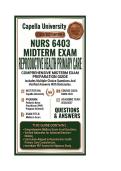
,NURS 6403 Midterm Exam Reproductive Health Primary Care
Questions And Answers | 2026/2027 Capella University
Q1. Which component is essential when obtaining a comprehensive
reproductive health history?
A) Menstrual, sexual, contraceptive, obstetric, gynecologic, and relevant
medical history
B) Only the current medication list
C) Only the date of the last menstrual period
D) Only the patient's family history
Correct Answer: A) Menstrual, sexual, contraceptive, obstetric, gynecologic,
and relevant medical history
Rationale: A comprehensive reproductive history integrates menstrual
patterns, sexual practices, contraception, pregnancy history, prior
gynecologic conditions, medications, and relevant medical risks. Together,
these details provide the information needed for individualized assessment
and management.
Q2. Which question is most appropriate when assessing sexual
history without making assumptions about a patient's behavior?
A) "Are you married?"
B) "Are you sexually active with men?"
C) "Tell me about your sexual partners and the types of sexual activity you
have."
D) "You use condoms, correct?"
Correct Answer: C) "Tell me about your sexual partners and the types of
sexual activity you have."
Rationale: Behavior-based, open-ended questions avoid assumptions about
relationship status, sexual orientation, number of partners, or practices. This
approach produces more clinically useful information and supports respectful
communication.
Q3. Which finding during a reproductive-health history requires
further evaluation?
A) Regular menstrual cycles without symptoms
B) Bleeding after sexual intercourse
C) Mild predictable premenstrual breast tenderness
D) Stable menstrual flow
, Correct Answer: B) Bleeding after sexual intercourse
Rationale: Postcoital bleeding can result from cervical infection, trauma,
ectropion, polyps, dysplasia, or malignancy. It should therefore be evaluated
rather than automatically considered a normal menstrual variation.
Q4. Which history finding is most important when determining a
patient's risk for pregnancy?
A) Current pregnancy intention and contraceptive use
B) Favorite exercise
C) Preferred appointment time
D) Family size alone
Correct Answer: A) Current pregnancy intention and contraceptive use
Rationale: Pregnancy risk depends on sexual activity, reproductive
potential, contraceptive use, and pregnancy intentions. Clarifying whether
pregnancy is desired now, later, or not at all guides preventive and
contraceptive counseling.
Q5. Which approach is most appropriate when discussing
reproductive goals?
A) Assume every patient eventually wants pregnancy.
B) Ask whether the patient wants pregnancy now, later, or not at all.
C) Base counseling only on age.
D) Base counseling only on marital status.
Correct Answer: B) Ask whether the patient wants pregnancy now, later, or
not at all.
Rationale: Reproductive-life planning should be guided by the patient's
goals rather than assumptions. Pregnancy intention affects contraception,
preconception counseling, medication choices, and preventive care.
Q6. Which medical-history element is particularly important when
evaluating reproductive-health risk?
A) History of thromboembolism
B) Preferred breakfast food
C) Hand dominance
D) Childhood shoe size
Correct Answer: A) History of thromboembolism
Questions And Answers | 2026/2027 Capella University
Q1. Which component is essential when obtaining a comprehensive
reproductive health history?
A) Menstrual, sexual, contraceptive, obstetric, gynecologic, and relevant
medical history
B) Only the current medication list
C) Only the date of the last menstrual period
D) Only the patient's family history
Correct Answer: A) Menstrual, sexual, contraceptive, obstetric, gynecologic,
and relevant medical history
Rationale: A comprehensive reproductive history integrates menstrual
patterns, sexual practices, contraception, pregnancy history, prior
gynecologic conditions, medications, and relevant medical risks. Together,
these details provide the information needed for individualized assessment
and management.
Q2. Which question is most appropriate when assessing sexual
history without making assumptions about a patient's behavior?
A) "Are you married?"
B) "Are you sexually active with men?"
C) "Tell me about your sexual partners and the types of sexual activity you
have."
D) "You use condoms, correct?"
Correct Answer: C) "Tell me about your sexual partners and the types of
sexual activity you have."
Rationale: Behavior-based, open-ended questions avoid assumptions about
relationship status, sexual orientation, number of partners, or practices. This
approach produces more clinically useful information and supports respectful
communication.
Q3. Which finding during a reproductive-health history requires
further evaluation?
A) Regular menstrual cycles without symptoms
B) Bleeding after sexual intercourse
C) Mild predictable premenstrual breast tenderness
D) Stable menstrual flow
, Correct Answer: B) Bleeding after sexual intercourse
Rationale: Postcoital bleeding can result from cervical infection, trauma,
ectropion, polyps, dysplasia, or malignancy. It should therefore be evaluated
rather than automatically considered a normal menstrual variation.
Q4. Which history finding is most important when determining a
patient's risk for pregnancy?
A) Current pregnancy intention and contraceptive use
B) Favorite exercise
C) Preferred appointment time
D) Family size alone
Correct Answer: A) Current pregnancy intention and contraceptive use
Rationale: Pregnancy risk depends on sexual activity, reproductive
potential, contraceptive use, and pregnancy intentions. Clarifying whether
pregnancy is desired now, later, or not at all guides preventive and
contraceptive counseling.
Q5. Which approach is most appropriate when discussing
reproductive goals?
A) Assume every patient eventually wants pregnancy.
B) Ask whether the patient wants pregnancy now, later, or not at all.
C) Base counseling only on age.
D) Base counseling only on marital status.
Correct Answer: B) Ask whether the patient wants pregnancy now, later, or
not at all.
Rationale: Reproductive-life planning should be guided by the patient's
goals rather than assumptions. Pregnancy intention affects contraception,
preconception counseling, medication choices, and preventive care.
Q6. Which medical-history element is particularly important when
evaluating reproductive-health risk?
A) History of thromboembolism
B) Preferred breakfast food
C) Hand dominance
D) Childhood shoe size
Correct Answer: A) History of thromboembolism