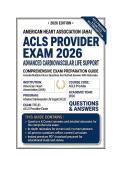
,ACLS Provider Exam 2026 | Comprehensive Test Bank | Questions
And Answers
TABLE OF CONTENTS
1. Adult Cardiac Arrest and High-Quality CPR — Q1–Q45
2. Bradycardia and Tachyarrhythmias — Q46–Q85
3. Acute Coronary Syndromes and Stroke — Q86–Q120
4. ACLS Pharmacology and Reversible Causes — Q121–Q155
5. Post-Cardiac Arrest Care and Special Circumstances — Q156–Q180
6. Team Dynamics, Monitoring, and Integrated Scenarios — Q181–Q200
1. ADULT CARDIAC ARREST AND HIGH-QUALITY CPR
Q1. A healthcare provider finds an adult unresponsive with no
normal breathing. What should occur first?
A) Obtain a complete medical history
B) Assess responsiveness and breathing and activate the emergency
response system
C) Administer amiodarone
D) Obtain a 12-lead ECG
Correct Answer: B) Assess responsiveness and breathing and activate the
emergency response system
Rationale: Rapid recognition of cardiac arrest and activation of emergency
resources are essential before immediate resuscitation begins.
Q2. An unresponsive adult has occasional gasping but no normal
breathing. How should the gasping be interpreted?
A) Normal breathing
B) Agonal breathing associated with cardiac arrest
C) Effective ventilation
D) A reason to delay CPR
Correct Answer: B) Agonal breathing associated with cardiac arrest
Rationale: Agonal gasps are abnormal and can occur during cardiac arrest;
they should not be mistaken for normal breathing.
,Q3. A healthcare provider checks an adult's pulse during cardiac
arrest assessment. What is the maximum recommended time for the
pulse check?
A) 5 seconds
B) 10 seconds
C) 30 seconds
D) 60 seconds
Correct Answer: B) 10 seconds
Rationale: A pulse check should be brief to prevent unnecessary delay in
starting CPR.
Q4. An adult is unresponsive, not breathing normally, and has no
definite pulse. What should the provider do?
A) Begin CPR
B) Obtain a blood pressure
C) Obtain a 12-lead ECG
D) Administer oral medication
Correct Answer: A) Begin CPR
Rationale: These findings indicate cardiac arrest and require immediate
chest compressions and resuscitative care.
Q5. What is the recommended adult chest-compression rate?
A) 60–80/min
B) 80–100/min
C) 100–120/min
D) 130–150/min
Correct Answer: C) 100–120/min
Rationale: Adult CPR uses a compression rate of 100 to 120 compressions
per minute.
Q6. What is the recommended minimum adult compression depth?
A) 1 cm
B) 3 cm
C) 5 cm
D) 8 cm
Correct Answer: C) 5 cm
, Rationale: Adult compressions should be at least 5 cm deep while avoiding
excessive depth.
Q7. Where should adult chest compressions be performed?
A) Upper sternum
B) Lower half of the sternum
C) Left side of the chest
D) Upper abdomen
Correct Answer: B) Lower half of the sternum
Rationale: Compression of the lower half of the sternum produces effective
blood flow during CPR.
Q8. Which action helps optimize venous return during CPR?
A) Allow complete chest recoil
B) Lean on the chest
C) Pause after every compression
D) Reduce compression depth
Correct Answer: A) Allow complete chest recoil
Rationale: Full recoil permits the heart to refill between compressions.
Q9. Why should interruptions in CPR be minimized?
A) Interruptions reduce coronary and cerebral perfusion
B) Interruptions increase cardiac output
C) Interruptions improve defibrillation
D) Interruptions increase oxygen delivery
Correct Answer: A) Interruptions reduce coronary and cerebral perfusion
Rationale: Blood flow generated by chest compressions falls rapidly when
compressions stop.
Q10. When no advanced airway is in place, what is the adult CPR
compression-to-ventilation ratio?
A) 15:2
B) 30:2
C) 5:1
D) 50:5
Correct Answer: B) 30:2
And Answers
TABLE OF CONTENTS
1. Adult Cardiac Arrest and High-Quality CPR — Q1–Q45
2. Bradycardia and Tachyarrhythmias — Q46–Q85
3. Acute Coronary Syndromes and Stroke — Q86–Q120
4. ACLS Pharmacology and Reversible Causes — Q121–Q155
5. Post-Cardiac Arrest Care and Special Circumstances — Q156–Q180
6. Team Dynamics, Monitoring, and Integrated Scenarios — Q181–Q200
1. ADULT CARDIAC ARREST AND HIGH-QUALITY CPR
Q1. A healthcare provider finds an adult unresponsive with no
normal breathing. What should occur first?
A) Obtain a complete medical history
B) Assess responsiveness and breathing and activate the emergency
response system
C) Administer amiodarone
D) Obtain a 12-lead ECG
Correct Answer: B) Assess responsiveness and breathing and activate the
emergency response system
Rationale: Rapid recognition of cardiac arrest and activation of emergency
resources are essential before immediate resuscitation begins.
Q2. An unresponsive adult has occasional gasping but no normal
breathing. How should the gasping be interpreted?
A) Normal breathing
B) Agonal breathing associated with cardiac arrest
C) Effective ventilation
D) A reason to delay CPR
Correct Answer: B) Agonal breathing associated with cardiac arrest
Rationale: Agonal gasps are abnormal and can occur during cardiac arrest;
they should not be mistaken for normal breathing.
,Q3. A healthcare provider checks an adult's pulse during cardiac
arrest assessment. What is the maximum recommended time for the
pulse check?
A) 5 seconds
B) 10 seconds
C) 30 seconds
D) 60 seconds
Correct Answer: B) 10 seconds
Rationale: A pulse check should be brief to prevent unnecessary delay in
starting CPR.
Q4. An adult is unresponsive, not breathing normally, and has no
definite pulse. What should the provider do?
A) Begin CPR
B) Obtain a blood pressure
C) Obtain a 12-lead ECG
D) Administer oral medication
Correct Answer: A) Begin CPR
Rationale: These findings indicate cardiac arrest and require immediate
chest compressions and resuscitative care.
Q5. What is the recommended adult chest-compression rate?
A) 60–80/min
B) 80–100/min
C) 100–120/min
D) 130–150/min
Correct Answer: C) 100–120/min
Rationale: Adult CPR uses a compression rate of 100 to 120 compressions
per minute.
Q6. What is the recommended minimum adult compression depth?
A) 1 cm
B) 3 cm
C) 5 cm
D) 8 cm
Correct Answer: C) 5 cm
, Rationale: Adult compressions should be at least 5 cm deep while avoiding
excessive depth.
Q7. Where should adult chest compressions be performed?
A) Upper sternum
B) Lower half of the sternum
C) Left side of the chest
D) Upper abdomen
Correct Answer: B) Lower half of the sternum
Rationale: Compression of the lower half of the sternum produces effective
blood flow during CPR.
Q8. Which action helps optimize venous return during CPR?
A) Allow complete chest recoil
B) Lean on the chest
C) Pause after every compression
D) Reduce compression depth
Correct Answer: A) Allow complete chest recoil
Rationale: Full recoil permits the heart to refill between compressions.
Q9. Why should interruptions in CPR be minimized?
A) Interruptions reduce coronary and cerebral perfusion
B) Interruptions increase cardiac output
C) Interruptions improve defibrillation
D) Interruptions increase oxygen delivery
Correct Answer: A) Interruptions reduce coronary and cerebral perfusion
Rationale: Blood flow generated by chest compressions falls rapidly when
compressions stop.
Q10. When no advanced airway is in place, what is the adult CPR
compression-to-ventilation ratio?
A) 15:2
B) 30:2
C) 5:1
D) 50:5
Correct Answer: B) 30:2