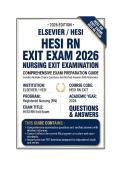
,HESI RN Exit Exam 2026 | Comprehensive Test Bank | Questions And
Answers
TABLE OF CONTENTS
1. Fundamentals and Basic Nursing Care — Q1–Q25
2. Medical-Surgical Nursing — Q26–Q75
3. Pharmacology — Q76–Q100
4. Maternal-Newborn Nursing — Q101–Q125
5. Pediatric Nursing — Q126–Q145
6. Psychiatric Nursing — Q146–Q165
7. Leadership, Management, Community, and Professional Practice —
Q166–Q185
8. Gerontologic Nursing — Q186–Q200
1. FUNDAMENTALS AND BASIC NURSING CARE
Q1. A nurse receives report on four clients. Which client should the
nurse assess first?
A) A client requesting assistance with bathing
B) A client with new-onset stridor
C) A client reporting chronic knee pain
D) A client awaiting discharge instructions
Correct Answer: B) A client with new-onset stridor
Rationale: Stridor indicates upper-airway obstruction and can rapidly
progress to respiratory failure.
Q2. Which intervention is most effective for preventing healthcare-
associated infection?
A) Wearing gloves for every interaction
B) Performing hand hygiene at appropriate times
C) Limiting all visitors
D) Wearing a surgical mask for every client
Correct Answer: B) Performing hand hygiene at appropriate times
,Rationale: Hand hygiene is the primary measure for reducing transmission
of microorganisms in healthcare settings.
Q3. A client is identified as being at high risk for falls. Which
intervention is appropriate?
A) Keep the bed in the highest position
B) Place frequently used items within reach
C) Encourage independent ambulation
D) Keep the room dark
Correct Answer: B) Place frequently used items within reach
Rationale: Easy access to essential items decreases unnecessary
movement and reduces fall risk.
Q4. A client has impaired mobility and is at risk for pressure injury.
Which intervention is most appropriate?
A) Reposition the client regularly
B) Massage reddened bony areas
C) Keep the client in one position
D) Restrict protein intake
Correct Answer: A) Reposition the client regularly
Rationale: Repositioning relieves prolonged pressure and helps maintain
tissue perfusion.
Q5. Which assessment finding requires immediate intervention?
A) Oxygen saturation 84% with respiratory distress
B) Temperature 37.1°C (98.8°F)
C) Heart rate 76/min
D) Blood pressure 118/70 mm Hg
Correct Answer: A) Oxygen saturation 84% with respiratory distress
Rationale: Significant hypoxemia with respiratory distress indicates
impaired oxygenation and threatens vital organ function.
Q6. A client reports severe pain. Which action should the nurse take
first?
A) Tell the client pain is expected
B) Assess the pain characteristics
, C) Document the pain and wait
D) Encourage the client to sleep
Correct Answer: B) Assess the pain characteristics
Rationale: Pain assessment provides the information needed to determine
the appropriate intervention and evaluate treatment response.
Q7. Which assessment finding suggests dehydration?
A) Bounding pulse and edema
B) Dry mucous membranes and concentrated urine
C) Crackles and weight gain
D) Jugular venous distention
Correct Answer: B) Dry mucous membranes and concentrated urine
Rationale: Decreased body water commonly produces dry mucous
membranes and concentrated urine.
Q8. Which position is most appropriate for a client experiencing
dyspnea?
A) High-Fowler's
B) Trendelenburg
C) Flat supine
D) Prone
Correct Answer: A) High-Fowler's
Rationale: Upright positioning promotes lung expansion and can reduce the
work of breathing.
Q9. A client begins vomiting while lying in bed. What is the priority
intervention?
A) Offer water
B) Turn the client to the side
C) Document the amount
D) Encourage deep breathing
Correct Answer: B) Turn the client to the side
Rationale: Side-lying helps protect the airway and reduces aspiration risk.
Q10. Which finding indicates an IV infiltration?
Answers
TABLE OF CONTENTS
1. Fundamentals and Basic Nursing Care — Q1–Q25
2. Medical-Surgical Nursing — Q26–Q75
3. Pharmacology — Q76–Q100
4. Maternal-Newborn Nursing — Q101–Q125
5. Pediatric Nursing — Q126–Q145
6. Psychiatric Nursing — Q146–Q165
7. Leadership, Management, Community, and Professional Practice —
Q166–Q185
8. Gerontologic Nursing — Q186–Q200
1. FUNDAMENTALS AND BASIC NURSING CARE
Q1. A nurse receives report on four clients. Which client should the
nurse assess first?
A) A client requesting assistance with bathing
B) A client with new-onset stridor
C) A client reporting chronic knee pain
D) A client awaiting discharge instructions
Correct Answer: B) A client with new-onset stridor
Rationale: Stridor indicates upper-airway obstruction and can rapidly
progress to respiratory failure.
Q2. Which intervention is most effective for preventing healthcare-
associated infection?
A) Wearing gloves for every interaction
B) Performing hand hygiene at appropriate times
C) Limiting all visitors
D) Wearing a surgical mask for every client
Correct Answer: B) Performing hand hygiene at appropriate times
,Rationale: Hand hygiene is the primary measure for reducing transmission
of microorganisms in healthcare settings.
Q3. A client is identified as being at high risk for falls. Which
intervention is appropriate?
A) Keep the bed in the highest position
B) Place frequently used items within reach
C) Encourage independent ambulation
D) Keep the room dark
Correct Answer: B) Place frequently used items within reach
Rationale: Easy access to essential items decreases unnecessary
movement and reduces fall risk.
Q4. A client has impaired mobility and is at risk for pressure injury.
Which intervention is most appropriate?
A) Reposition the client regularly
B) Massage reddened bony areas
C) Keep the client in one position
D) Restrict protein intake
Correct Answer: A) Reposition the client regularly
Rationale: Repositioning relieves prolonged pressure and helps maintain
tissue perfusion.
Q5. Which assessment finding requires immediate intervention?
A) Oxygen saturation 84% with respiratory distress
B) Temperature 37.1°C (98.8°F)
C) Heart rate 76/min
D) Blood pressure 118/70 mm Hg
Correct Answer: A) Oxygen saturation 84% with respiratory distress
Rationale: Significant hypoxemia with respiratory distress indicates
impaired oxygenation and threatens vital organ function.
Q6. A client reports severe pain. Which action should the nurse take
first?
A) Tell the client pain is expected
B) Assess the pain characteristics
, C) Document the pain and wait
D) Encourage the client to sleep
Correct Answer: B) Assess the pain characteristics
Rationale: Pain assessment provides the information needed to determine
the appropriate intervention and evaluate treatment response.
Q7. Which assessment finding suggests dehydration?
A) Bounding pulse and edema
B) Dry mucous membranes and concentrated urine
C) Crackles and weight gain
D) Jugular venous distention
Correct Answer: B) Dry mucous membranes and concentrated urine
Rationale: Decreased body water commonly produces dry mucous
membranes and concentrated urine.
Q8. Which position is most appropriate for a client experiencing
dyspnea?
A) High-Fowler's
B) Trendelenburg
C) Flat supine
D) Prone
Correct Answer: A) High-Fowler's
Rationale: Upright positioning promotes lung expansion and can reduce the
work of breathing.
Q9. A client begins vomiting while lying in bed. What is the priority
intervention?
A) Offer water
B) Turn the client to the side
C) Document the amount
D) Encourage deep breathing
Correct Answer: B) Turn the client to the side
Rationale: Side-lying helps protect the airway and reduces aspiration risk.
Q10. Which finding indicates an IV infiltration?