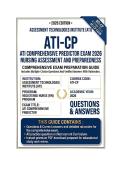
,ATI Comprehensive Predictor Exam 2026 | Comprehensive Test Bank
| Questions And Answers
TABLE OF CONTENTS
1. Fundamentals of Nursing — Q1–Q20
2. Adult Medical-Surgical Nursing I — Q21–Q40
3. Adult Medical-Surgical Nursing II — Q41–Q60
4. Pharmacology — Q61–Q80
5. Maternal-Newborn Nursing — Q81–Q100
6. Nursing Care of Children — Q101–Q120
7. Mental Health Nursing — Q121–Q140
8. Community Health Nursing — Q141–Q160
9. Leadership and Management — Q161–Q180
10. Nutrition — Q181–Q200
1. FUNDAMENTALS OF NURSING
Q1. A nurse is caring for a client who is at risk for falls. Which
intervention is most appropriate?
A) Keep the bed in the highest position
B) Place frequently used items within reach
C) Encourage the client to walk without assistance
D) Keep the room dark at night
Correct Answer: B) Place frequently used items within reach
Rationale: Keeping essential items within reach reduces the need for the
client to get out of bed unnecessarily and lowers fall risk.
Q2. A nurse is preparing to administer medication. Which action
best verifies the client's identity?
A) Ask the client's room number
B) Check the client's diagnosis
C) Use two approved identifiers
D) Ask another nurse to identify the client
,Correct Answer: C) Use two approved identifiers
Rationale: Two approved identifiers reduce the risk of medication being
administered to the wrong client.
Q3. Which action is most effective for preventing transmission of
infection?
A) Wearing gloves for every client interaction
B) Performing hand hygiene at appropriate times
C) Restricting all visitors
D) Wearing a mask during every procedure
Correct Answer: B) Performing hand hygiene at appropriate times
Rationale: Hand hygiene is the primary measure for reducing transmission
of infectious organisms in healthcare settings.
Q4. A client has a pressure injury risk due to immobility. Which
intervention is appropriate?
A) Massage reddened bony areas
B) Reposition the client regularly
C) Keep the client in one position
D) Restrict protein intake
Correct Answer: B) Reposition the client regularly
Rationale: Regular repositioning reduces prolonged pressure and helps
prevent tissue ischemia and pressure injury.
Q5. Which finding requires the nurse's immediate attention?
A) Oxygen saturation 88% in a client with respiratory distress
B) Temperature 37.1°C (98.8°F)
C) Heart rate 78/min
D) Blood pressure 118/72 mm Hg
Correct Answer: A) Oxygen saturation 88% in a client with respiratory
distress
Rationale: Hypoxemia accompanied by respiratory distress indicates
impaired oxygenation and requires immediate assessment and intervention.
Q6. A client reports pain of 8/10. Which nursing action is
appropriate first?
, A) Tell the client pain is expected
B) Assess the pain characteristics
C) Delay intervention until the physician rounds
D) Document the pain without further action
Correct Answer: B) Assess the pain characteristics
Rationale: Pain assessment determines location, quality, severity, timing,
and associated factors needed to guide appropriate treatment.
Q7. Which finding indicates adequate tissue perfusion?
A) Capillary refill less than 2 seconds
B) Cyanotic nail beds
C) Cool mottled extremities
D) Weak peripheral pulses
Correct Answer: A) Capillary refill less than 2 seconds
Rationale: A rapid capillary refill generally suggests adequate peripheral
perfusion.
Q8. A client receiving oxygen by nasal cannula asks why it is
necessary. Which response is appropriate?
A) "It prevents all respiratory infections."
B) "It increases the amount of oxygen available to your body."
C) "It lowers your blood pressure."
D) "It replaces the need for breathing."
Correct Answer: B) "It increases the amount of oxygen available to your
body."
Rationale: Supplemental oxygen increases the concentration of oxygen
available for gas exchange and tissue oxygenation.
Q9. Which assessment finding is most consistent with dehydration?
A) Bounding pulse and edema
B) Dry mucous membranes and concentrated urine
C) Crackles and weight gain
D) Jugular venous distention
Correct Answer: B) Dry mucous membranes and concentrated urine
Rationale: Reduced body water commonly causes dry mucous membranes
and more concentrated urine.
| Questions And Answers
TABLE OF CONTENTS
1. Fundamentals of Nursing — Q1–Q20
2. Adult Medical-Surgical Nursing I — Q21–Q40
3. Adult Medical-Surgical Nursing II — Q41–Q60
4. Pharmacology — Q61–Q80
5. Maternal-Newborn Nursing — Q81–Q100
6. Nursing Care of Children — Q101–Q120
7. Mental Health Nursing — Q121–Q140
8. Community Health Nursing — Q141–Q160
9. Leadership and Management — Q161–Q180
10. Nutrition — Q181–Q200
1. FUNDAMENTALS OF NURSING
Q1. A nurse is caring for a client who is at risk for falls. Which
intervention is most appropriate?
A) Keep the bed in the highest position
B) Place frequently used items within reach
C) Encourage the client to walk without assistance
D) Keep the room dark at night
Correct Answer: B) Place frequently used items within reach
Rationale: Keeping essential items within reach reduces the need for the
client to get out of bed unnecessarily and lowers fall risk.
Q2. A nurse is preparing to administer medication. Which action
best verifies the client's identity?
A) Ask the client's room number
B) Check the client's diagnosis
C) Use two approved identifiers
D) Ask another nurse to identify the client
,Correct Answer: C) Use two approved identifiers
Rationale: Two approved identifiers reduce the risk of medication being
administered to the wrong client.
Q3. Which action is most effective for preventing transmission of
infection?
A) Wearing gloves for every client interaction
B) Performing hand hygiene at appropriate times
C) Restricting all visitors
D) Wearing a mask during every procedure
Correct Answer: B) Performing hand hygiene at appropriate times
Rationale: Hand hygiene is the primary measure for reducing transmission
of infectious organisms in healthcare settings.
Q4. A client has a pressure injury risk due to immobility. Which
intervention is appropriate?
A) Massage reddened bony areas
B) Reposition the client regularly
C) Keep the client in one position
D) Restrict protein intake
Correct Answer: B) Reposition the client regularly
Rationale: Regular repositioning reduces prolonged pressure and helps
prevent tissue ischemia and pressure injury.
Q5. Which finding requires the nurse's immediate attention?
A) Oxygen saturation 88% in a client with respiratory distress
B) Temperature 37.1°C (98.8°F)
C) Heart rate 78/min
D) Blood pressure 118/72 mm Hg
Correct Answer: A) Oxygen saturation 88% in a client with respiratory
distress
Rationale: Hypoxemia accompanied by respiratory distress indicates
impaired oxygenation and requires immediate assessment and intervention.
Q6. A client reports pain of 8/10. Which nursing action is
appropriate first?
, A) Tell the client pain is expected
B) Assess the pain characteristics
C) Delay intervention until the physician rounds
D) Document the pain without further action
Correct Answer: B) Assess the pain characteristics
Rationale: Pain assessment determines location, quality, severity, timing,
and associated factors needed to guide appropriate treatment.
Q7. Which finding indicates adequate tissue perfusion?
A) Capillary refill less than 2 seconds
B) Cyanotic nail beds
C) Cool mottled extremities
D) Weak peripheral pulses
Correct Answer: A) Capillary refill less than 2 seconds
Rationale: A rapid capillary refill generally suggests adequate peripheral
perfusion.
Q8. A client receiving oxygen by nasal cannula asks why it is
necessary. Which response is appropriate?
A) "It prevents all respiratory infections."
B) "It increases the amount of oxygen available to your body."
C) "It lowers your blood pressure."
D) "It replaces the need for breathing."
Correct Answer: B) "It increases the amount of oxygen available to your
body."
Rationale: Supplemental oxygen increases the concentration of oxygen
available for gas exchange and tissue oxygenation.
Q9. Which assessment finding is most consistent with dehydration?
A) Bounding pulse and edema
B) Dry mucous membranes and concentrated urine
C) Crackles and weight gain
D) Jugular venous distention
Correct Answer: B) Dry mucous membranes and concentrated urine
Rationale: Reduced body water commonly causes dry mucous membranes
and more concentrated urine.