
@@@@DCASE
DCASE
DCASE
Unit
Unit4.pdf~~~!!!!!!!!!!!!!!!!!!!!!!!!!!@#!#@@@@@@@@@@@@@@@@@@@!!!!!!!!!!!!!!!!!!!!!!@@@@@@@@@@@@@@@@@@@@@@@@
Unit
4.pdf~~DCASE
4.pdf~~~!!!!!!!!!!!!!!!!!!!!!!!!!!@#!#@@@@@@@@@@@@@@@@@@@!!!!!!!!!!!!!!!!!!!!!!@@@@@@@@@@@@@@@@@@@@
Unit 4.pdf~~~!!!!!!!!!!!!!!!!!!!!!!!!!!@#!#@@@@@@@@@@@@@@@@@@@!!!!!!!!!!!!!!!!!!!!!!@@@@@@@@@@@@@@@@@@@
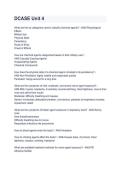
DCASE Unit 4
What are the six categories used to classify chemical agents? - ANS-Physiological
Effects
Military Use
Physical State
Persistency
Route of Entry
Onset of Effects
How are chemical agents categorized based on their military use? -
ANS-Casualty-Causing Agents
Incapacitating Agents
Chemical Compounds
How does the physical state of a chemical agent correlate to its persistency? -
ANS-Non-Persistent: highly volatile and evaporates quickly
Persistent: hangs around for a long time
What are the symptoms of mild, moderate, and severe nerve agent exposure? -
ANS-Mild: myosis, headache, involuntary muscle twitching, chest tightness, mucus from
nose and saliva from mouth
Moderate: difficulty breathing and nausea
Severe: involuntary defecation/urination, convulsions, paralysis of respiratory muscles,
impairment, death
What are the symptoms of blister agent exposure in respiratory tract? - ANS-Runny
nose
Sore throat/hoarseness
Difficulty breathing due to mucus
Respiratory infections like pneumonia
How do blood agents enter the body? - ANS-Inhalation
How do choking agents affect the body? - ANS-Causes tears, dry throat, chest
tightness, nausea, vomiting, headache
What are available treatment methods for nerve agent exposure? - ANS-PB
Altropine Sulfate
@@@@@@DCASE
DCASE
DCASE
UnitUnit
Unit
4.pdf~~~!!!!!!!!!!!!!!!!!!!!!!!!!!@#!#@@@@@@@@@@@@@@@@@@@!!!!!!!!!!!!!!!!!!!!!!@@@@@@@@@@@@@@@@DCASE
4.pdf~~~!!!!!!!!!!!!!!!!!!!!!!!!!!@#!#@@@@@@@@@@@@@@@@@@@!!!!!!!!!!!!!!!!!!!!!!@@@@@@@@@@@@@@@@@@@@@@
4.pdf~~~!!!!!!!!!!!!!!!!!!!!!!!!!!@#!#@@@@@@@@@@@@@@@@@@@!!!!!!!!!!!!!!!!!!!!!!@@@@@@@@@@@@@@@@@@@@
Unit 4.pdf~~~!!!!!!!
,@@@@DCASE
DCASE
DCASE
Unit
Unit4.pdf~~~!!!!!!!!!!!!!!!!!!!!!!!!!!@#!#@@@@@@@@@@@@@@@@@@@!!!!!!!!!!!!!!!!!!!!!!@@@@@@@@@@@@@@@@@@@@@@@@
Unit
4.pdf~~DCASE
4.pdf~~~!!!!!!!!!!!!!!!!!!!!!!!!!!@#!#@@@@@@@@@@@@@@@@@@@!!!!!!!!!!!!!!!!!!!!!!@@@@@@@@@@@@@@@@@@@@
Unit 4.pdf~~~!!!!!!!!!!!!!!!!!!!!!!!!!!@#!#@@@@@@@@@@@@@@@@@@@!!!!!!!!!!!!!!!!!!!!!!@@@@@@@@@@@@@@@@@@@
2-PAM Cl
Diazepam
What are the steps for buddy-aid following nerve agent exposure? - ANS-1. ID severe
symptoms of nerve agent exposure and determine individual unable to administer
self-aid
2. Don protective mask and ensure casualty's mask properly adjusted and sealed
3. Locate Atropine Sulfate and 2-PAM Cl auto-injectors
4. Inject casualty with all 6 injections, bend needles 180 degrees and hook into pocket
flap
5. As required, corpsman for CANA injection
6. Notify medical and move casualty to CCA ASAP
What immediate actions should be taken in the event of a blood agent exposure? -
ANS-1. Stop breathing and don protective mask
2. Clear mask
3. Aid others donning
4. Report symptoms to CCA
Describe the two categories of biological agents. - ANS-Pathogens: microscopic
organisms that cause disease
Toxins: chemical compounds of biological origin that can be lethal if ingested or
incapacitating on skin contact
What are the possible delivery methods of BW agents? - ANS-Aerosols
Injections
Water
Food
What are the environmental factors that affect toxin and pathogen aerosols? -
ANS-Direct sunlight
Humidity
High wind speed
Atmospheric pollutants
Low temperature
What are the routes that biological agents can enter the body? - ANS-Inhalation
Ingestion
Percutaneous
@@@@@@DCASE
DCASE
DCASE
UnitUnit
Unit
4.pdf~~~!!!!!!!!!!!!!!!!!!!!!!!!!!@#!#@@@@@@@@@@@@@@@@@@@!!!!!!!!!!!!!!!!!!!!!!@@@@@@@@@@@@@@@@DCASE
4.pdf~~~!!!!!!!!!!!!!!!!!!!!!!!!!!@#!#@@@@@@@@@@@@@@@@@@@!!!!!!!!!!!!!!!!!!!!!!@@@@@@@@@@@@@@@@@@@@@@
4.pdf~~~!!!!!!!!!!!!!!!!!!!!!!!!!!@#!#@@@@@@@@@@@@@@@@@@@!!!!!!!!!!!!!!!!!!!!!!@@@@@@@@@@@@@@@@@@@@
Unit 4.pdf~~~!!!!!!!
DCASE
DCASE
Unit
Unit4.pdf~~~!!!!!!!!!!!!!!!!!!!!!!!!!!@#!#@@@@@@@@@@@@@@@@@@@!!!!!!!!!!!!!!!!!!!!!!@@@@@@@@@@@@@@@@@@@@@@@@
Unit
4.pdf~~DCASE
4.pdf~~~!!!!!!!!!!!!!!!!!!!!!!!!!!@#!#@@@@@@@@@@@@@@@@@@@!!!!!!!!!!!!!!!!!!!!!!@@@@@@@@@@@@@@@@@@@@
Unit 4.pdf~~~!!!!!!!!!!!!!!!!!!!!!!!!!!@#!#@@@@@@@@@@@@@@@@@@@!!!!!!!!!!!!!!!!!!!!!!@@@@@@@@@@@@@@@@@@@
DCASE Unit 4
What are the six categories used to classify chemical agents? - ANS-Physiological
Effects
Military Use
Physical State
Persistency
Route of Entry
Onset of Effects
How are chemical agents categorized based on their military use? -
ANS-Casualty-Causing Agents
Incapacitating Agents
Chemical Compounds
How does the physical state of a chemical agent correlate to its persistency? -
ANS-Non-Persistent: highly volatile and evaporates quickly
Persistent: hangs around for a long time
What are the symptoms of mild, moderate, and severe nerve agent exposure? -
ANS-Mild: myosis, headache, involuntary muscle twitching, chest tightness, mucus from
nose and saliva from mouth
Moderate: difficulty breathing and nausea
Severe: involuntary defecation/urination, convulsions, paralysis of respiratory muscles,
impairment, death
What are the symptoms of blister agent exposure in respiratory tract? - ANS-Runny
nose
Sore throat/hoarseness
Difficulty breathing due to mucus
Respiratory infections like pneumonia
How do blood agents enter the body? - ANS-Inhalation
How do choking agents affect the body? - ANS-Causes tears, dry throat, chest
tightness, nausea, vomiting, headache
What are available treatment methods for nerve agent exposure? - ANS-PB
Altropine Sulfate
@@@@@@DCASE
DCASE
DCASE
UnitUnit
Unit
4.pdf~~~!!!!!!!!!!!!!!!!!!!!!!!!!!@#!#@@@@@@@@@@@@@@@@@@@!!!!!!!!!!!!!!!!!!!!!!@@@@@@@@@@@@@@@@DCASE
4.pdf~~~!!!!!!!!!!!!!!!!!!!!!!!!!!@#!#@@@@@@@@@@@@@@@@@@@!!!!!!!!!!!!!!!!!!!!!!@@@@@@@@@@@@@@@@@@@@@@
4.pdf~~~!!!!!!!!!!!!!!!!!!!!!!!!!!@#!#@@@@@@@@@@@@@@@@@@@!!!!!!!!!!!!!!!!!!!!!!@@@@@@@@@@@@@@@@@@@@
Unit 4.pdf~~~!!!!!!!
,@@@@DCASE
DCASE
DCASE
Unit
Unit4.pdf~~~!!!!!!!!!!!!!!!!!!!!!!!!!!@#!#@@@@@@@@@@@@@@@@@@@!!!!!!!!!!!!!!!!!!!!!!@@@@@@@@@@@@@@@@@@@@@@@@
Unit
4.pdf~~DCASE
4.pdf~~~!!!!!!!!!!!!!!!!!!!!!!!!!!@#!#@@@@@@@@@@@@@@@@@@@!!!!!!!!!!!!!!!!!!!!!!@@@@@@@@@@@@@@@@@@@@
Unit 4.pdf~~~!!!!!!!!!!!!!!!!!!!!!!!!!!@#!#@@@@@@@@@@@@@@@@@@@!!!!!!!!!!!!!!!!!!!!!!@@@@@@@@@@@@@@@@@@@
2-PAM Cl
Diazepam
What are the steps for buddy-aid following nerve agent exposure? - ANS-1. ID severe
symptoms of nerve agent exposure and determine individual unable to administer
self-aid
2. Don protective mask and ensure casualty's mask properly adjusted and sealed
3. Locate Atropine Sulfate and 2-PAM Cl auto-injectors
4. Inject casualty with all 6 injections, bend needles 180 degrees and hook into pocket
flap
5. As required, corpsman for CANA injection
6. Notify medical and move casualty to CCA ASAP
What immediate actions should be taken in the event of a blood agent exposure? -
ANS-1. Stop breathing and don protective mask
2. Clear mask
3. Aid others donning
4. Report symptoms to CCA
Describe the two categories of biological agents. - ANS-Pathogens: microscopic
organisms that cause disease
Toxins: chemical compounds of biological origin that can be lethal if ingested or
incapacitating on skin contact
What are the possible delivery methods of BW agents? - ANS-Aerosols
Injections
Water
Food
What are the environmental factors that affect toxin and pathogen aerosols? -
ANS-Direct sunlight
Humidity
High wind speed
Atmospheric pollutants
Low temperature
What are the routes that biological agents can enter the body? - ANS-Inhalation
Ingestion
Percutaneous
@@@@@@DCASE
DCASE
DCASE
UnitUnit
Unit
4.pdf~~~!!!!!!!!!!!!!!!!!!!!!!!!!!@#!#@@@@@@@@@@@@@@@@@@@!!!!!!!!!!!!!!!!!!!!!!@@@@@@@@@@@@@@@@DCASE
4.pdf~~~!!!!!!!!!!!!!!!!!!!!!!!!!!@#!#@@@@@@@@@@@@@@@@@@@!!!!!!!!!!!!!!!!!!!!!!@@@@@@@@@@@@@@@@@@@@@@
4.pdf~~~!!!!!!!!!!!!!!!!!!!!!!!!!!@#!#@@@@@@@@@@@@@@@@@@@!!!!!!!!!!!!!!!!!!!!!!@@@@@@@@@@@@@@@@@@@@
Unit 4.pdf~~~!!!!!!!

