
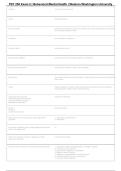
PSY 250 Exam 2 | Behavioral Mental Health | Western Washington University
emotion very brief, more extreme
mood lasts days/weeks
mood disorders represent more extreme moods or emotons that cause impairment in funcitoning
for a specific duration of time
anhedonia loss of interest or pleasure
euthymic state your baseline mood
psychomotor agitation excessive motor and cognitive activity, moving fast
psychomotor retardation slowing of movements, speech, and thoughts
hypomania abnormally elevated mood with elation or hyperactivity, less severe and impairing
than mania
mania highly elevated or irratable mood with feelings of euphoria, lack of inhibitions,
racing thoughts, talkativeness, and risk taking
major deprssive disorder depressive disorders
persistent depressive disorder
seasonal affective disorder
postpartum depression
bipolar I bipolar disorders
bipolar II
cyclothymic disorder
what symptoms are required for major depressive 1. depressed mood [and/or]
episode? 2. anhedonia
how many symptoms does a major depressive episode 5+
need to be diagnosed?
what is the duration needed to diagnose a major 2 consecutive weeks
depressive episode?
what are other symptoms of major depressive episode? 1. signifigant weight loss/weight gain or change in apetite
2. insomnia or hypersomnia
3. psychomotor agitation or retardation
4. fatigue or loss of energy
5. feelings of worthlessness or excessive guilt
6. dimished ability to think or concentrate
7. recurrent suicidal ideation
, PSY 250 Exam 2 | Behavioral Mental Health | Western Washington University
what is the duration of a major depressive episode with 2-9 months untreated
and without treatment? 4-6 weeks treated
what is the recurrence rate of major depressive episode? 35-85% of people have more than 1 episode
how does major depressive episode rate itself? its rated by a dimensional approach (mild, moderate, severe)
what is another name for seasonal affective disorder major depressive disorder - recurrent - with seasonal pattern
(SAD)?
what symptoms are required for seasonal affective 1. depression that begins and ends during a specific season of every year (full
disorder? remittance during other seasons is mandatory)
2. pattern for at least 2 years
what would the biological approach say for seasonal seasonal changes may alter biological rhythms in the body and the availability of
affective disorder? the mood regulating neurotransmitter serotonin
what is the duration of seasonal affective disorder? >2 years
what is a treatment approach for seasonal affective phototherapy (big light).
disorder?
what symptoms are required for postpartum depression? 1. persistent and severe mood changes that occur after childbirth
2. a major depressive episode within the onset of pregnancy or within 4 weeks of
delivery
what is postpartum depression often accompanied by? 1. disturbances in appetite and sleep
2. difficulties in maintaining concentration or attention
3. interruption of infant-caregiver bond
4. martial/relational conflict and difficulties
what are the risk factors for postpartum depression? 1. genetic predisposition
2. history of depression or anxiety
3. lack of social support
4. first time parent
5. existing relational discord
what are treatment options for postpartum depression? 1. medication
2. TMS (transcranial magnetic stimulation)
3. ECT (electriconvulsive therapy)
4. therapy
what symptoms are required for persistent depressive 1. consistently low mood
disorder?
what is the duration needed to diagnose persistent >2 years
depressive disorder?
what is persistent depressive disorder? lower intensity symptoms of a major depressive epsiode, but they are still
impairing
less than 2 month break from symptoms (chronically recurring)
emotion very brief, more extreme
mood lasts days/weeks
mood disorders represent more extreme moods or emotons that cause impairment in funcitoning
for a specific duration of time
anhedonia loss of interest or pleasure
euthymic state your baseline mood
psychomotor agitation excessive motor and cognitive activity, moving fast
psychomotor retardation slowing of movements, speech, and thoughts
hypomania abnormally elevated mood with elation or hyperactivity, less severe and impairing
than mania
mania highly elevated or irratable mood with feelings of euphoria, lack of inhibitions,
racing thoughts, talkativeness, and risk taking
major deprssive disorder depressive disorders
persistent depressive disorder
seasonal affective disorder
postpartum depression
bipolar I bipolar disorders
bipolar II
cyclothymic disorder
what symptoms are required for major depressive 1. depressed mood [and/or]
episode? 2. anhedonia
how many symptoms does a major depressive episode 5+
need to be diagnosed?
what is the duration needed to diagnose a major 2 consecutive weeks
depressive episode?
what are other symptoms of major depressive episode? 1. signifigant weight loss/weight gain or change in apetite
2. insomnia or hypersomnia
3. psychomotor agitation or retardation
4. fatigue or loss of energy
5. feelings of worthlessness or excessive guilt
6. dimished ability to think or concentrate
7. recurrent suicidal ideation
, PSY 250 Exam 2 | Behavioral Mental Health | Western Washington University
what is the duration of a major depressive episode with 2-9 months untreated
and without treatment? 4-6 weeks treated
what is the recurrence rate of major depressive episode? 35-85% of people have more than 1 episode
how does major depressive episode rate itself? its rated by a dimensional approach (mild, moderate, severe)
what is another name for seasonal affective disorder major depressive disorder - recurrent - with seasonal pattern
(SAD)?
what symptoms are required for seasonal affective 1. depression that begins and ends during a specific season of every year (full
disorder? remittance during other seasons is mandatory)
2. pattern for at least 2 years
what would the biological approach say for seasonal seasonal changes may alter biological rhythms in the body and the availability of
affective disorder? the mood regulating neurotransmitter serotonin
what is the duration of seasonal affective disorder? >2 years
what is a treatment approach for seasonal affective phototherapy (big light).
disorder?
what symptoms are required for postpartum depression? 1. persistent and severe mood changes that occur after childbirth
2. a major depressive episode within the onset of pregnancy or within 4 weeks of
delivery
what is postpartum depression often accompanied by? 1. disturbances in appetite and sleep
2. difficulties in maintaining concentration or attention
3. interruption of infant-caregiver bond
4. martial/relational conflict and difficulties
what are the risk factors for postpartum depression? 1. genetic predisposition
2. history of depression or anxiety
3. lack of social support
4. first time parent
5. existing relational discord
what are treatment options for postpartum depression? 1. medication
2. TMS (transcranial magnetic stimulation)
3. ECT (electriconvulsive therapy)
4. therapy
what symptoms are required for persistent depressive 1. consistently low mood
disorder?
what is the duration needed to diagnose persistent >2 years
depressive disorder?
what is persistent depressive disorder? lower intensity symptoms of a major depressive epsiode, but they are still
impairing
less than 2 month break from symptoms (chronically recurring)

