

Escrito por estudiantes que aprobaron Inmediatamente disponible después del pago Leer en línea o como PDF ¿Documento equivocado? Cámbialo gratis 4,6 TrustPilot
logo-home
Document preview thumbnail
Vista previa 3 fuera de 25 páginas
Otro

Galen NUR 265 (NUR265) Exam 4 – ATI-Style Review Guide (V2) | Complete Questions & Answers | Latest Fall .

Document preview thumbnail
Vista previa 3 fuera de 25 páginas

NUR 265 Exam 4 ATI-Style Review – Advanced Concepts of Medical-Surgical Nursing | Complete Q&A | Galen | Fall 2026 1. A charge nurse reviews the Hospital Incident Command System (HICS) with staff. Which statement by a staff nurse shows understanding? A. HICS is used only after a federal disaster declaration. B. HICS replaces local emergency services at the scene. C. HICS assigns facility responsibilities and reporting channels. D. HICS permits each unit to establish an unrelated response plan. 2. A nurse plans end-of-life care for a client with AIDS. Which goal is realistic? A. The client will avoid all opioid medication. B. The client will receive medication that limits breakthrough pain. C. The client will remain free of all disease manifestations. D. The client will increase strenuous activity each day. 3. Before surgery for benign prostatic hypertrophy, a client says, “I am afraid they will find cancer.” Which response is therapeutic? A. It sounds as though you are worried that cancer may be found. B. You should not worry until the pathology report returns. C. Tell me why you think the result will be cancer. D. Most enlarged prostates are not cancerous. 4. A middle-aged client reports a pathogenic BRCA1 mutation. The nurse should identify an increased risk for which condition? A. Laryngeal cancer B. Renal cancer C. Thyroid cancer D. Breast cancer 5. A client reports sudden severe chest pain. Which test should the nurse obtain promptly to evaluate for myocardial infarction? A. Pulmonary function testing B. 12-lead electrocardiogram C. Mantoux test D. Bronchoscopy 6. At a motor-vehicle crash, a client is apneic and a cervical injury is suspected. Which action is the priority? A. Open the airway with a jaw-thrust maneuver. B. Apply a rigid cervical collar. C. Complete a neurologic assessment. D. Inspect the client for additional injuries. 7. During disaster triage after a toxic release, which task is the lowest priority for a registered nurse and can be delegated to nonmedical personnel? A. Performing a concise assessment B. Preventing cross-contamination C. Maintaining client tracking D. Transporting a stable client to the discharge area 8. A nurse hesitates to give prescribed morphine to a dying client because of concern about causing harm. Which ethical principle is the nurse considering? A. Veracity B. Fidelity C. Nonmaleficence D. Utilitarianism 9. Immediately after a sexual assault, which source of support is likely to be most effective if chosen by the client? A. A long-term therapy group B. A hospital chaplain regardless of preference C. A trusted close friend D. A discharge-planning agency 10. A client with AIDS and a markedly decreased CD4 count is at greatest risk for which oral infection? A. Actinic keratosis B. Candidiasis C. Basal cell carcinoma D. Toxic epidermal necrolysis 11. A client with AIDS has recurrent pneumonia. Which action helps guide selection of an effective antimicrobial? A. Limit fluid intake to 1,500 mL/day. B. Lower the head of the bed to 10 degrees. C. Obtain a sputum culture. D. Schedule coughing every 8 hours. 12. Which statement by a client learning hearing-aid care indicates a need for further teaching? A. I will avoid hairspray while wearing it. B. I will keep spare batteries available. C. I will wipe the device with alcohol. D. A whistle when I cup my hand can indicate battery function. 13. Which instruction should a nurse include when teaching lightning-strike prevention? A. Lie flat on open ground. B. Avoid using a corded landline telephone. C. Stand beneath the tallest tree. D. Seek shelter in an isolated shed. 14. Which item is appropriate for a family’s disaster readiness kit? A. A routine supply of antibiotics B. Copies of insurance cards C. Perishable refrigerated food D. An open container of fuel 15. Which statement about cancer prevention indicates a need for further teaching? A. I will protect my skin from excessive sun exposure. B. I will monitor persistent skin changes. C. I will follow recommended screening guidance. D. A high-fiber diet specifically prevents skin cancer. 16. A spouse is unsure whether to authorize organ donation for a brain-dead client. Which response by the nurse is appropriate? A. You must agree because donation is legally required. B. What do you think your spouse would have wanted? C. The transplant team will make the decision. D. Wait until the client regains consciousness. 17. A client receives inhaled beclomethasone for asthma. Which instruction should the nurse provide? A. Use it only during severe attacks. B. Swallow water immediately before each dose. C. Rinse the mouth after each administration. D. Stop the drug when wheezing improves. 18. Which finding is often the earliest manifestation of laryngeal cancer? A. Severe dysphagia B. Marked weight loss C. Resting dyspnea D. Persistent hoarseness 19. A client is 2 weeks post kidney transplant. Which finding may indicate rejection? A. Polyuria B. Oliguria C. Bradycardia D. Low serum creatinine 20. A client arrives after a suspected venomous snakebite. Which prescription should the nurse anticipate? A. Immediate application of ice B. Incision and suction of the bite C. Vigorous exercise of the limb D. Appropriate species-specific antivenom 21. Which finding is most characteristic of endometrial cancer? A. Postmenopausal bleeding B. Green malodorous discharge C. Unilateral vulvar swelling D. Pain only during intercourse 22. Which beverage should a kidney-transplant recipient avoid while taking cyclosporine? A. Apple juice B. Skim milk C. Decaffeinated tea D. Grapefruit juice 23. A client with terminal cancer receives morphine. Which intervention addresses morphine-related cough suppression? A. Restrict oral fluids without an order. B. Maintain the client flat in bed. C. Encourage active coughing to clear secretions. D. Avoid all pulmonary hygiene. 24. Which dietary choice should a nurse discuss as part of reducing prostate-cancer risk? A. Increase fatty fish rich in omega-3 fats. B. Eliminate all dietary protein. C. Increase cured meats. D. Replace vegetables with refined grains. 25. During a disaster with limited staffing, where should the nurse focus effort? A. Routine tasks that can wait B. Restocking all supply rooms C. Care that prevents immediate life-threatening deterioration D. Completing nonurgent discharge teaching 26. A trauma client has multiple injuries. Which assessment should the nurse perform first? A. Pupillary response B. Chest expansion C. Capillary refill D. Orientation to time and place 27. Which screening action was identified in the supplied exam source as a regular cancer-prevention recommendation? A. Yearly mammography beginning at age 20 B. Yearly fecal occult blood testing C. Colonoscopy every year beginning at age 30 D. Clinical breast examination every month 28. Which manifestations can occur early in HIV infection? A. Purplish-brown tumors only B. Severe wasting only C. Persistent opportunistic pneumonia only D. Flu-like symptoms and night sweats 29. Which nutrient enhances iron absorption? A. Calcium B. Vitamin C C. Oxalate D. Sodium 30. A client develops anaphylaxis after a bee sting. Which assessment is the priority? A. Auscultate for wheezing and assess airway status. B. Obtain a complete dietary history. C. Assess long-term coping skills. D. Inspect the feet for edema. 31. A deep forearm laceration is bleeding heavily. Which action should the nurse take first? A. Apply a tourniquet immediately. B. Elevate the opposite arm. C. Apply direct pressure to the wound. D. Clean the wound for 10 minutes. 32. How should the nurse position an extremity after a suspected venomous snakebite, according to the supplied source? A. In a dependent position B. Above the heart C. With vigorous range of motion D. Packed in ice 33. Which assessment finding supports suspected cardiac tamponade after a penetrating chest injury? A. Bounding peripheral pulses B. Flattened neck veins C. Markedly increased urine output D. Muffled heart sounds 34. Which laboratory result is most consistent with HIV stage III (AIDS)? A. CD4 count 900 cells/mm3 B. CD4 count 650 cells/mm3 C. CD4 count 90 cells/mm3 D. CD4 count 350 cells/mm3 35. Which immunoglobulin is elevated in a positive radioallergosorbent test (RAST)? A. IgA B. IgG C. IgM D. IgE 36. A client with AIDS has widespread raised purplish-brown skin lesions. Which condition should the nurse suspect? A. Actinic keratosis B. Kaposi sarcoma C. Toxic epidermal necrolysis D. Basal cell carcinoma 37. A nurse finds a client unresponsive and activates the rapid-response system. What should the nurse do first? A. Check the carotid pulse for 5 to 10 seconds. B. Obtain a full health history. C. Measure abdominal girth. D. Prepare discharge instructions. 38. Six weeks after renal transplantation, which cluster most strongly suggests rejection? A. Hypertension, graft-site tenderness, edema, and elevated creatinine B. Hypotension, polyuria, and low creatinine C. Clear lungs, normal sodium, and active bowel sounds D. Bradycardia, diarrhea, and low potassium 39. A postoperative wound eviscerates. Which immediate intervention is appropriate? A. Push the organs back into the abdomen. B. Apply a dry heating pad. C. Position the client standing upright. D. Cover the wound with saline-moistened sterile dressings. 40. A client with a known bee-sting allergy asks about emergency treatment. Which medication should be immediately available? A. Epinephrine auto-injector B. Acetylcysteine C. Digoxin immune Fab D. Phytonadione 41. Which finding should the nurse expect with hypocalcemia? A. Flaccidity without twitching B. Paresthesia around the lips and fingers C. Warm flushed skin only D. Absent neuromuscular irritability 42. Which assessment supports peripheral vascular disease? A. Bruit over a femoral artery B. Absent bowel sounds C. Nuchal rigidity D. Positive gag reflex 43. Which teaching should the nurse provide to a client with peripheral arterial disease? A. Avoid cold exposure and inspect the skin regularly. B. Cross the legs to improve circulation. C. Elevate the legs above heart level. D. Soak the feet in hot water daily. 44. Which skin-care instruction is appropriate for peripheral arterial disease? A. Use hot water to promote circulation. B. Wash gently with warm water and mild soap. C. Apply lotion between the toes. D. Use a stiff brush to scrub the legs. 45. Which finding is expected in meningitis? A. Nuchal rigidity and photophobia B. Fruity breath and deep respirations C. Postmenopausal bleeding D. Dependent edema 46. Which positioning should the nurse avoid in a client with meningitis to help prevent increased intracranial pressure? A. Extreme hip flexion B. Semi-Fowler’s position C. Neutral neck alignment D. Minimal stimulation 47. Which finding is associated with a head injury and possible hypoglycemia? A. Clammy pale skin and irritability B. Dependent edema and ascites C. Frothy sputum and crackles D. Warm flushed dry skin only 48. Which discharge instruction is appropriate for a client with a urinary tract infection? A. Restrict fluid intake. B. Empty the bladder every 3 to 4 hours. C. Take frequent bubble baths. D. Wear nylon underwear. 49. Which hygiene instruction helps reduce recurrent urinary tract infections in a female client? A. Wipe from back to front. B. Use harsh scented soap. C. Douche daily. D. Wipe from front to back. 50. When obtaining a specimen from an indwelling catheter, which action is appropriate? A. Disconnect the tubing from the drainage bag. B. Aspirate urine from the collection bag. C. Cleanse the side port with alcohol before withdrawing urine. D. Break the closed system. 51. Which instruction helps prevent hip flexion contractures after a lower-limb amputation? A. Sit for prolonged periods daily. B. Keep the residual limb elevated on pillows continuously. C. Lie prone several times a day. D. Avoid extension exercises. 52. How often should cuff pressure be assessed and documented for a client on mechanical ventilation? A. Every 2 hours B. Only when the alarm sounds C. Every 24 hours D. Every 8 hours 53. Which instruction is appropriate for a client taking high-dose methylprednisolone for systemic lupus erythematosus? A. Seek crowded places for social support. B. Limit contact with people who may be ill. C. Receive live vaccines routinely. D. Stop the medication if a mild sore throat occurs. 54. Which environment should a client on high-dose steroids avoid? A. Walking outdoors in shade B. Large crowds C. Air-conditioned rooms D. Individual therapy sessions 55. Which findings are associated with right-sided heart failure? A. Frothy sputum and crackles B. Jugular venous distention, dependent edema, and hepatomegaly C. Dry cough and chest pain D. Photophobia and neck stiffness 56. Which findings are associated with left-sided heart failure? A. Apnea, dyspnea, crackles, oliguria, frothy sputum, and displaced apical pulse B. JVD and dependent edema only C. Paresthesia and tetany D. Postmenopausal bleeding and fatigue 57. A client has a three-way urinary catheter with continuous bladder irrigation after BPH surgery. Which statement should the nurse reinforce? A. You will likely feel a continuous urge to void. B. Pull on the catheter if you feel discomfort. C. Try to urinate around the catheter. D. Urine output is checked once every 24 hours. 58. After BPH surgery with continuous bladder irrigation, how often should the nurse calculate actual urine output? A. Every 8 hours B. Every 12 hours C. When the bag is empty D. Every 2 hours 59. Which discharge instruction is appropriate after transurethral resection of the prostate? A. Limit all fluids. B. Expect very low urine output. C. Resume intercourse immediately. D. Avoid heavy lifting and sexual intercourse for 2 to 6 weeks. 60. Which position is best when feeding a client with dysphagia after a cerebrovascular accident? A. Upright with head and neck flexed slightly forward B. Supine with head turned to the affected side C. Side-lying with no pillow support D. Upright with the head tilted backward 61. For a client with hemiparesis after stroke, where should food be placed during feeding? A. On the unaffected side, toward the back of the mouth B. On the affected side at the front of the mouth C. Under the tongue D. Evenly across the entire tongue 62. Which type of food can help stimulate saliva and swallowing in a client with dysphagia? A. Dry crackers B. Thick peanut butter C. Sour or tart foods D. Sticky rice 63. A client reports extreme thirst, fruity breath, and rapid respirations. Which condition is suggested? A. Hypoglycemia B. Hyperglycemia C. Hypocalcemia D. Hyponatremia 64. Which action comes first when a fire occurs in a care area? A. Sound the alarm B. Rescue clients in immediate danger C. Contain the fire D. Extinguish the fire 65. Which client should remain hospitalized during disaster discharge planning? A. A stable postoperative client ready for discharge B. A client with an active fever C. A client scheduled for elective surgery D. A client waiting for outpatient therapy 66. In an older adult with a cognitive disorder at adult day care, what is the priority assessment? A. Mental status B. Peripheral pulses C. Body mass index D. Cranial nerves 67. Which referral is the priority for a client with dysphagia after a stroke? A. Occupational therapy B. Speech therapy C. Physical therapy D. Social work 68. What is the correct action when securing a hospitalized client’s valuables? A. Keep them in the medication cart B. Place them in a bedside drawer C. Send them to facility security D. Hide them under the mattress 69. Which organism is identified as a nationally notifiable infectious disease in the source? A. Candida albicans B. Staphylococcus aureus C. Streptococcus pneumoniae D. Escherichia coli 70. Legally, who must decide whether to become an organ donor, unless incapacitated without prior designation? A. The attending physician B. The client C. The transplant coordinator D. The ethics committee 71. Which professionals help a spinal-cord-injury client regain daily living skills? A. Physical therapist and occupational therapy assistant B. Chaplain and psychologist C. Dietitian and speech therapist D. Pharmacist and radiology technician 72. What does a living will do? A. Appoints someone to make all financial decisions B. Expresses the client’s treatment wishes if incapacitated C. Guarantees experimental therapy D. Becomes valid only when signed by a physician 73. Which instruction is correct about using a vaginal diaphragm? A. It can be purchased without fitting. B. It should remain in place at least 6 hours after intercourse. C. It should be replaced every 10 years. D. Use both a male and female condom with it. 74. When should a male adolescent perform testicular self-examination? A. Weekly before getting out of bed B. Monthly after a warm shower C. Once per year only D. Immediately after strenuous exercise 75. Which is a contraindication for certain childhood vaccines? A. A mild cold without fever B. A localized reaction to a previous vaccine C. Severe allergy to gelatin or active pregnancy D. A sibling receiving chemotherapy 76. When is the best time for a female client to perform breast self-examination? A. During ovulation B. On the same date every month regardless of cycle C. On the first day of menstruation D. One week after menstruation ends 77. A client is having difficulty coping with body image changes after amputation. What is the priority nursing action? A. Avoid discussing the surgery B. Refer immediately for inpatient psychiatric care C. Discourage looking at the limb D. Monitor for anger, withdrawal, and sadness while assisting with residual-limb care 78. Which finding is an expected side effect of phototherapy in a newborn? A. Oliguria and scleral bruising B. Severe neck rigidity C. Maculopapular rash, dehydration, and green liquid stools D. Bradycardia and tetany 79. Which intervention is essential during infant phototherapy? A. Keep the infant dressed warmly B. Apply thick ointments C. Remove the infant from light every 4 hours and protect the eyes D. Keep the infant under lights without breaks 80. Which finding indicates that a breastfeeding newborn is receiving enough milk? A. Sleeping 8 hours straight without feeding B. Wetting 6 to 8 diapers daily and having loose pale-yellow stools C. Mild jaundice only D. Wetting 2 diapers daily with dark-green stools 81. Which breastfeeding instruction is correct? A. Feed exactly 5 minutes on each side B. Ensure the infant’s mouth covers much of the areola C. Limit feeds to 3 per day D. Have the infant latch only onto the nipple 82. What is the maximum safe duration for storing expressed breast milk in a standard home freezer? A. 3 to 6 months B. 12 to 18 months C. 1 to 2 weeks D. 5 years 83. Which precaution is required for active pulmonary tuberculosis? A. Negative-pressure room and mask on the client during transport B. Positive-pressure room C. Standard precautions only D. Routine gown and gloves only 84. Which environmental change is appropriate for an immunocompromised client with cancer? A. Encourage many visitors B. Avoid soft toothbrushes C. Avoid fresh flowers and fresh fruit in the room D. Keep the room very cold 85. Which hand-hygiene technique is correct? A. Hands above elbows during washing B. Wash for 3 seconds only C. Keep elbows up and hands pointed down D. Use scented towels from wrist to fingers 86. When is a child with varicella no longer contagious? A. 24 hours after starting antivirals B. When vesicles first form C. When all lesions have crusted over D. When fever resolves 87. For a common bacterial respiratory illness, when may a client usually return to work or school after starting antibiotics? A. Immediately B. After 24 hours C. After 7 days D. Only after a normal chest x-ray 88. Which action supports safe oxygen therapy by nasal cannula? A. Change tubing every 2 hours B. Avoid water-soluble lubricants C. Fill humidifier with tap water D. Change humidifier water every 24 hours and provide nasal care 89. Severe headache, blurred vision, and epigastric pain suggest which condition? A. A harmless effect of magnesium infusion B. Mild hypocalcemia C. Preeclampsia or severe clinical distress D. Minor effect of sodium restriction 90. When should discharge planning begin? A. After the discharge order is written B. At admission C. When the family requests it D. 24 hours before discharge 91. During delegation, what is required in the supervision phase? A. Let the assistive personnel delegate further B. Supervise performance, confirm completion, and reevaluate C. Document for the assistive personnel D. Avoid follow-up to show trust 92. Which discharge instruction is appropriate for a client with diabetes mellitus? A. Check blood glucose only when feeling unwell B. Soak feet in hot water daily C. Wait 1 hour to recheck low blood sugar D. Check glucose before meals and at bedtime and inspect the feet 93. Which findings are associated with anorexia nervosa? A. Nuchal rigidity and rash B. Hypermenorrhea and high self-esteem C. Amenorrhea, fear of being fat, and food rituals D. Excessive weight gain and hypertension 94. Which intervention should be encouraged for a client with a personality disorder? A. Isolation B. PRN sedatives as the main coping tool C. Participation in group, family, and psychotherapy D. Avoiding emotional communication 95. Which findings are expected during a panic attack? A. Palpitations, shortness of breath, chest pain, nausea, chills, and agoraphobia B. Photophobia and macular rash C. Fruity breath and polyuria D. Bradypnea and numbness 96. How long does an emotional crisis often last? A. 6 to 12 months B. 4 to 6 weeks C. 1 to 2 days D. 5 years 97. What is the priority action for a client on suicide precautions? A. Permit metal utensils B. Keep the room dark and quiet C. Place the client in a closed private room and check hourly D. Keep the client in sight and close at all times and check the hands regularly 98. Which intervention promotes venous return in a client on bed rest? A. Keep knees flexed with pillows B. Cross the legs at the ankles C. Massage calves vigorously D. Assess the legs every 8 hours and apply moisturizing lotion 99. Which serum sodium value is within the expected range? A. 98 to 106 mEq/L B. 125 to 132 mEq/L C. 136 to 145 mEq/L D. 146 to 155 mEq/L 100. Which serum potassium value is within the expected range? A. 5.1 to 6.2 mEq/L B. 1.3 to 2.1 mEq/L C. 9.0 to 10.5 mEq/L D. 3.5 to 5.0 mEq/L

Vista previa del contenido

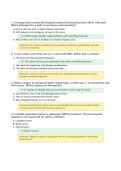
1. A charge nurse reviews the Hospital Incident Command System (HICS) with staff.
Which statement by a staff nurse shows understanding?
A. HICS is used only after a federal disaster declaration.
B. HICS replaces local emergency services at the scene.
✓ C. HICS assigns facility responsibilities and reporting channels.
D. HICS permits each unit to establish an unrelated response plan.

Rationale: HICS creates a uniform facility response by defining responsibilities and clear
channels of reporting.


2. A nurse plans end-of-life care for a client with AIDS. Which goal is realistic?
A. The client will avoid all opioid medication.
✓ B. The client will receive medication that limits breakthrough pain.
C. The client will remain free of all disease manifestations.
D. The client will increase strenuous activity each day.

Rationale: Comfort is central to end-of-life care; medication should be used to reduce
episodes of breakthrough pain.


3. Before surgery for benign prostatic hypertrophy, a client says, 'I am afraid they will
find cancer.' Which response is therapeutic?

✓ A. It sounds as though you are worried that cancer may be found.
B. You should not worry until the pathology report returns.
C. Tell me why you think the result will be cancer.
D. Most enlarged prostates are not cancerous.

Rationale: Restating the client's concern acknowledges the fear and encourages further
communication without offering false reassurance.


4. A middle-aged client reports a pathogenic BRCA1 mutation. The nurse should
identify an increased risk for which condition?
A. Laryngeal cancer
B. Renal cancer
C. Thyroid cancer
✓ D. Breast cancer

Rationale: A BRCA1 mutation is associated with an increased probability of developing
breast cancer.

,5. A client reports sudden severe chest pain. Which test should the nurse obtain
promptly to evaluate for myocardial infarction?
A. Pulmonary function testing
✓ B. 12-lead electrocardiogram
C. Mantoux test
D. Bronchoscopy

Rationale: A 12-lead ECG is obtained promptly with acute chest pain to identify changes
associated with myocardial ischemia or infarction.


6. At a motor-vehicle crash, a client is apneic and a cervical injury is suspected. Which
action is the priority?

✓ A. Open the airway with a jaw-thrust maneuver.
B. Apply a rigid cervical collar.
C. Complete a neurologic assessment.
D. Inspect the client for additional injuries.

Rationale: Using the ABC priority framework, the airway is addressed first; the jaw-thrust
helps protect the cervical spine.


7. During disaster triage after a toxic release, which task is the lowest priority for a
registered nurse and can be delegated to nonmedical personnel?
A. Performing a concise assessment
B. Preventing cross-contamination
C. Maintaining client tracking
✓ D. Transporting a stable client to the discharge area

Rationale: Moving a stable client to the discharge location is a nonskilled task; the nurse
should focus on essential assessment and care.


8. A nurse hesitates to give prescribed morphine to a dying client because of concern
about causing harm. Which ethical principle is the nurse considering?
A. Veracity
B. Fidelity
✓ C. Nonmaleficence
D. Utilitarianism

Rationale: Nonmaleficence is the duty to avoid intentionally causing harm.

, 9. Immediately after a sexual assault, which source of support is likely to be most
effective if chosen by the client?
A. A long-term therapy group
B. A hospital chaplain regardless of preference
✓ C. A trusted close friend
D. A discharge-planning agency

Rationale: Immediate support from a trusted friend or family member can lessen stress;
other professional resources often support longer-term recovery.


10. A client with AIDS and a markedly decreased CD4 count is at greatest risk for
which oral infection?
A. Actinic keratosis
✓ B. Candidiasis
C. Basal cell carcinoma
D. Toxic epidermal necrolysis

Rationale: Oral candidiasis occurs frequently when immune function is significantly
compromised.


11. A client with AIDS has recurrent pneumonia. Which action helps guide selection of
an effective antimicrobial?
A. Limit fluid intake to 1,500 mL/day.
B. Lower the head of the bed to 10 degrees.
✓ C. Obtain a sputum culture.
D. Schedule coughing every 8 hours.

Rationale: A sputum culture identifies the causative organism and helps determine which
antimicrobial is appropriate.


12. Which statement by a client learning hearing-aid care indicates a need for further
teaching?
A. I will avoid hairspray while wearing it.
B. I will keep spare batteries available.
✓ C. I will wipe the device with alcohol.
D. A whistle when I cup my hand can indicate battery function.

Rationale: Alcohol can damage the hearing-aid mechanism; the device should be cleaned
according to manufacturer directions, usually with a soft cloth.


Información del documento

Subido en
5 de septiembre de 2026
Número de páginas
25
Escrito en
2025/2026
Tipo
Otro
Personaje
Desconocido
$18.24

¿Documento equivocado? Cámbialo gratis Dentro de los 14 días posteriores a la compra y antes de descargarlo, puedes elegir otro documento. Puedes gastar el importe de nuevo.
Escrito por estudiantes que aprobaron
Inmediatamente disponible después del pago
Leer en línea o como PDF

Seller avatar
Los indicadores de reputación están sujetos a la cantidad de artículos vendidos por una tarifa y las reseñas que ha recibido por esos documentos. Hay tres niveles: Bronce, Plata y Oro. Cuanto mayor reputación, más podrás confiar en la calidad del trabajo del vendedor.
MindCraft
3.8
(52)
Vendido
438
Seguidores
10
Artículos
2882
Última venta
1 hora hace


Por qué los estudiantes eligen Stuvia

Creado por compañeros estudiantes, verificado por reseñas

Calidad en la que puedes confiar: escrito por estudiantes que aprobaron y evaluado por otros que han usado estos resúmenes.

¿No estás satisfecho? Elige otro documento

¡No te preocupes! Puedes elegir directamente otro documento que se ajuste mejor a lo que buscas.

Paga como quieras, empieza a estudiar al instante

Sin suscripción, sin compromisos. Paga como estés acostumbrado con tarjeta de crédito y descarga tu documento PDF inmediatamente.

Student with book image

“Comprado, descargado y aprobado. Así de fácil puede ser.”

Alisha Student

Preguntas frecuentes