

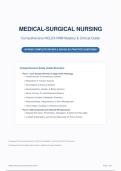
MEDICAL-SURGICAL NURSING
Comprehensive NCLEX-RN® Mastery & Clinical Guide
50-PAGE COMPLETE REVIEW & 200 NCLEX PRACTICE QUESTIONS
Comprehensive Study Guide Structure
• Part 1: Core System Reviews & High-Yield Pathology
◦ Cardiovascular & Hematologic Systems
◦ Respiratory & Thoracic Nursing
◦ Neurological & Sensory Systems
◦ Gastrointestinal, Hepatic, & Biliary Systems
◦ Renal, Urinary, & Fluid/Electrolyte Balance
◦ Endocrine System & Metabolic Disorders
◦ Musculoskeletal, Integumentary, & Burn Management
◦ Immunology, Oncology, & Infectious Diseases
• Part 2: 200 Comprehensive NCLEX-RN Questions
◦ Detailed Scenarios, Prioritization, Delegation, & Select-All-That-Apply
◦ In-depth Explanations and Clinical Rationales for Every Answer
Designed for Nursing Students, NCLEX Candidates, and Clinical RN Practitioners
© Advanced Nursing Education Series | Medical-Surgical Mastery
Medical-Surgical Nursing Review Guide Page 1 of 61
,Master Guide Overview
Medical-Surgical nursing forms the structural backbone of acute adult nursing practice. A rigorous mastery of
physiological mechanisms, pathophysiological alterations, pharmacological interventions, and nursing prioritization is
required to deliver safe, evidence-based care and succeed on the NCLEX-RN examination.
CLINICAL PRIORITIZATION FRAMEWORK (ABCDE & MASLOW)
When evaluating clinical management and NCLEX-style questions, always prioritize interventions based on:
1. Airway: Patency, obstruction, cervical spine protection.
2. Breathing: Spontaneous ventilation, oxygenation, work of breathing.
3. Circulation: Perfusion, blood pressure, cardiac output, hemorrhage control.
4. Disability: Neurological status, GCS, pupillary response.
5. Exposure/Environment: Hypothermia, trauma assessment, rash/burn inspection.
Systematic Review Index
System / Domain Key Clinical Focus Areas NCLEX High-Yield Topics
Cardiovascular CAD, MI, Heart Failure, Dysrhythmias, Shock, ECG interpretation, Nitroglycerin, Digoxin,
Hypertension Hemodynamics
Respiratory COPD, Asthma, Pneumonia, PE, ARDS, Chest ABG analysis, Suctioning, Oxygen delivery
Tubes systems, Ventilation
Neurological Stroke, TBI, Spinal Cord Injury, Seizures, ICP GCS, Mannitol, Autonomic Dysreflexia, Cranial
Management Nerves
Gastrointestinal GERD, PUD, Cirrhosis, Hepatitis, Pancreatitis, NG Tube care, TPN management, Stoma care,
Bowel Obstruction Paracentesis
Renal & Fluids AKI, CKD, Dialysis, Electrolyte Imbalances (K, Na, Hyperkalemia protocols, AV Fistula care, Fluid
Ca, Mg) balance
Endocrine Diabetes (DKA/HHS), Thyroid Disorders, Adrenal Insulin sliding scales, Levothyroxine, Steroid taper
(Addison's/Cushing's)
Musculoskeletal & Fractures, Traction, Compartment Syndrome, 6 Ps of Ischemia, Parkland Formula, Wound
Derm Burns, Pressure Injuries staging
Oncology & Immune Chemotherapy, Neutropenia, Sepsis, Anaphylaxis, Neutropenic precautions, Blood transfusion
Autoimmune reactions, Infection control
Medical-Surgical Nursing Review Guide Page 2 of 61
, SECTION 1: HIGH-YIELD SYSTEM REVIEWS
1. Cardiovascular Nursing Core Review
Coronary Artery Disease (CAD) & Myocardial Infarction (MI): MI occurs when ischemia causes irreversible cellular
necrosis. STEMI involves full-thickness transmural ischemia (ST elevation in 2 consecutive leads), whereas NSTEMI
involves partial-thickness subendocardial ischemia (elevated Troponin I/T without ST elevation).
• Immediate MI Interventions (MONA / BOMA): Oxygen (if SpO2 < 90%), Nitroglycerin SL (0.4 mg q5min x 3 doses;
absolute contraindication with phosphodiesterase-5 inhibitors), Aspirin (162-325 mg chewed), Morphine IV for
refractory pain, Beta-blockers within 24h.
• Cardiac Markers: Troponin I (<0.03 ng/mL normal, rises 2-4h, peaks 12-24h, stays elevated 7-10 days); Creatine
Kinase-MB (CK-MB rises 3-6h, peaks 12-24h, returns to normal in 48-72h).
• Heart Failure (HF): Left-sided HF leads to pulmonary congestion (dyspnea, orthopnea, crackles, cough with pink
frothy sputum). Right-sided HF leads to systemic venous congestion (JVD, peripheral edema, hepatomegaly, ascites).
• Medications: ACE inhibitors ("-pril") lower mortality by preventing ventricular remodeling; monitor K+ and dry cough.
Furosemide (Loop diuretic) causes hypokalemia, ototoxicity. Digoxin increases inotropy and decreases chronotropy;
therapeutic level 0.5-2.0 ng/mL (toxicity signs: nausea, visual halos, bradycardia).
2. Respiratory Nursing Core Review
Arterial Blood Gas (ABG) Interpretation: Normal values: pH 7.35-7.45, PaCO2 35-45 mmHg, HCO3 22-26 mEq/L,
PaO2 80-100 mmHg.
• Respiratory Acidosis: pH < 7.35, PaCO2 > 45 (Hypoventilation, COPD, Opioid overdose).
• Respiratory Alkalosis: pH > 7.45, PaCO2 < 35 (Hyperventilation, Anxiety, Early Pulmonary Embolism).
• Metabolic Acidosis: pH < 7.35, HCO3 < 22 (DKA, Renal failure, Diarrhea, Severe Shock).
• Metabolic Alkalosis: pH > 7.45, HCO3 > 26 (Severe vomiting, Nasogastric suctioning, Excess antacids).
Chest Tube Management: Water seal chamber must fluctuate (tidaling) with respiration; continuous bubbling indicates
an air leak. Collection chamber monitored hourly. Suction control chamber typically set at -20 cmH2O. If chest tube
dislodges from patient: cover insertion site with sterile occlusive dressing taped on 3 sides to prevent tension
pneumothorax. If tubing disconnects from unit: submerge distal end in 2-4 cm of sterile saline.
3. Neurological Nursing Core Review
Increased Intracranial Pressure (ICP): Normal ICP is 5-15 mmHg. Sustained ICP > 20 mmHg requires intervention.
• Cushing's Triad (Late sign of impending herniation): 1. Severe Hypertension with widening pulse pressure; 2.
Bradycardia; 3. Irregular, shallow respirations (Cheyne-Stokes).
• Interventions for High ICP: Elevate HOB 30 degrees, maintain neck in neutral alignment, avoid hyperflexion/hip
flexion, administer Mannitol (osmotic diuretic) or Hypertonic Saline (3%), hyperventilate temporarily if ordered, prevent
shivering/coughing, avoid cluster care to prevent ICP spikes.
• Stroke Management: Ischemic stroke (87%): Ischemic window for IV tPA (Alteplase) is within 3 to 4.5 hours of
symptom onset. Exclusions: Active hemorrhage, BP > 185/110 mmHg, recent surgery, INR > 1.7. Hemorrhagic stroke:
Maintain strict BP control, avoid anticoagulants/thrombolytics, prepare for surgical clipping/coiling.
4. Gastrointestinal & Hepatic Nursing Core Review
Hepatic Cirrhosis & Portal Hypertension: Complications include Ascites, Esophageal Varices, Hepatic
Encephalopathy, and Jaundice.
• Hepatic Encephalopathy: Caused by accumulation of toxic ammonia levels in blood crossing BBB. Manifestations:
Asterixis (flapping tremor), confusion, fetor hepaticus. Treatment: Lactulose (promotes ammonia excretion via stool,
aim for 2-3 soft stools/day) and Neomycin/Rifaximin (reduces ammonia-producing gut bacteria).
Medical-Surgical Nursing Review Guide Page 3 of 61
, • Esophageal Varices: Medical emergency if bleeding occurs. Priorities: Airway protection, IV access, Octreotide
infusion, Vasopressin, endoscopic band ligation, or Blakemore tube tamponade.
• Acute Pancreatitis: Autodigestion of pancreas by digestive enzymes. Presentation: Severe epigastric pain radiating
to back, relieved by leaning forward. Elevated Serum Amylase and Lipase (Lipase is most specific). Sign: Grey
Turner's sign (flank ecchymosis), Cullen's sign (periumbilical ecchymosis). Interventions: NPO, IV fluid resuscitation,
pain control (Hydromorphone/Morphine), enteral nutrition via NJ tube if prolonged.
5. Renal, Fluid & Electrolyte Nursing Core Review
Normal
Electrolyte Hyper- State Manifestations Hypo- State Manifestations
Range
Potassium 3.5 - 5.0 Peaked T waves, QRS widening, muscle U waves, flattened T waves, cardiac irritability,
(K+) mEq/L weakness, dysrhythmias. Tx: Calcium gluconate, muscle cramps, paralytic ileus. Tx: Oral/IV K+
Insulin+D50, Kayexalate. (Never IV Push!).
Sodium (Na+) 135 - 145 Thirst, dry mucous membranes, agitation, Confusion, lethargy, cerebral edema, seizures,
mEq/L hallucinations, seizures. Tx: Hypotonic fluids coma. Tx: Hypertonic 3% NaCl (slowly to avoid
slowly. CPM).
Calcium 8.5 - 10.5 Bone pain, renal calculi, muscle weakness, Trousseau's sign (carpopedal spasm),
(Ca2+) mg/dL constipation ("Bones, stones, groans"). Chvostek's sign (facial twitch), tetany, QT
prolongation.
Magnesium 1.5 - 2.5 Loss of DTRs, respiratory depression, Hyperreflexia, Torsades de Pointes, tremors,
(Mg2+) mEq/L bradycardia, hypotension. Tx: Calcium gluconate seizures, tetany (mimics hypocalcemia).
antidote.
6. Endocrine System Core Review
Diabetic Ketoacidosis (DKA) vs. Hyperglycemic Hyperosmolar State (HHS):
• DKA: Type 1 DM, rapid onset, BG > 250 mg/dL, positive serum/urine ketones, Metabolic Acidosis (pH < 7.30, HCO3 <
18), Kussmaul respirations, fruity breath odor. Treatment: 0.9% Normal Saline fluid replacement, regular IV insulin drip
(0.1 units/kg/hr), monitor K+ closely (add K+ to IV fluids when K+ drops below 5.0 mEq/L to prevent hypokalemia),
add Dextrose 5% when BG drops to 200-250 mg/dL to prevent cerebral edema.
• HHS: Type 2 DM, gradual onset, BG > 600 mg/dL, negative/trace ketones, normal pH (>7.30), severe dehydration and
hyperosmolality. Treatment: Massive IV fluid rehydration prior to or concurrent with low-dose insulin infusion.
7. Musculoskeletal & Burns Core Review
Compartment Syndrome: Increased tissue pressure within a confined fascial space compromising circulation.
Emergency requiring immediate decompression (Fasciotomy).
• 6 Ps: Pain (out of proportion to injury, unrelieved by opioids - earliest sign), Paresthesia, Pallor, Pressure, Paralysis,
Pulselessness (late sign). Nursing Priority: Elevate limb NO HIGHER than heart level, remove restrictive dressings/
casts, notify surgeon immediately. Do NOT apply ice or heat.
Burn Injury Management & Parkland Formula:
• Rule of Nines: Head (9%), Entire Arm (9% each = 18% total), Anterior Trunk (18%), Posterior Trunk (18%), Entire
Leg (18% each = 36% total), Perineum (1%).
• Parkland Formula: Total 24-hour Lactated Ringer's volume = 4 mL x Body Weight (kg) x % Total Body Surface
Area (%TBSA) burned. Give 1/2 of total calculated volume over the first 8 hours (from time of burn injury), and
remaining 1/2 over the next 16 hours. Target urine output: 0.5 to 1.0 mL/kg/hr (30-50 mL/hr).
Medical-Surgical Nursing Review Guide Page 4 of 61
Comprehensive NCLEX-RN® Mastery & Clinical Guide
50-PAGE COMPLETE REVIEW & 200 NCLEX PRACTICE QUESTIONS
Comprehensive Study Guide Structure
• Part 1: Core System Reviews & High-Yield Pathology
◦ Cardiovascular & Hematologic Systems
◦ Respiratory & Thoracic Nursing
◦ Neurological & Sensory Systems
◦ Gastrointestinal, Hepatic, & Biliary Systems
◦ Renal, Urinary, & Fluid/Electrolyte Balance
◦ Endocrine System & Metabolic Disorders
◦ Musculoskeletal, Integumentary, & Burn Management
◦ Immunology, Oncology, & Infectious Diseases
• Part 2: 200 Comprehensive NCLEX-RN Questions
◦ Detailed Scenarios, Prioritization, Delegation, & Select-All-That-Apply
◦ In-depth Explanations and Clinical Rationales for Every Answer
Designed for Nursing Students, NCLEX Candidates, and Clinical RN Practitioners
© Advanced Nursing Education Series | Medical-Surgical Mastery
Medical-Surgical Nursing Review Guide Page 1 of 61
,Master Guide Overview
Medical-Surgical nursing forms the structural backbone of acute adult nursing practice. A rigorous mastery of
physiological mechanisms, pathophysiological alterations, pharmacological interventions, and nursing prioritization is
required to deliver safe, evidence-based care and succeed on the NCLEX-RN examination.
CLINICAL PRIORITIZATION FRAMEWORK (ABCDE & MASLOW)
When evaluating clinical management and NCLEX-style questions, always prioritize interventions based on:
1. Airway: Patency, obstruction, cervical spine protection.
2. Breathing: Spontaneous ventilation, oxygenation, work of breathing.
3. Circulation: Perfusion, blood pressure, cardiac output, hemorrhage control.
4. Disability: Neurological status, GCS, pupillary response.
5. Exposure/Environment: Hypothermia, trauma assessment, rash/burn inspection.
Systematic Review Index
System / Domain Key Clinical Focus Areas NCLEX High-Yield Topics
Cardiovascular CAD, MI, Heart Failure, Dysrhythmias, Shock, ECG interpretation, Nitroglycerin, Digoxin,
Hypertension Hemodynamics
Respiratory COPD, Asthma, Pneumonia, PE, ARDS, Chest ABG analysis, Suctioning, Oxygen delivery
Tubes systems, Ventilation
Neurological Stroke, TBI, Spinal Cord Injury, Seizures, ICP GCS, Mannitol, Autonomic Dysreflexia, Cranial
Management Nerves
Gastrointestinal GERD, PUD, Cirrhosis, Hepatitis, Pancreatitis, NG Tube care, TPN management, Stoma care,
Bowel Obstruction Paracentesis
Renal & Fluids AKI, CKD, Dialysis, Electrolyte Imbalances (K, Na, Hyperkalemia protocols, AV Fistula care, Fluid
Ca, Mg) balance
Endocrine Diabetes (DKA/HHS), Thyroid Disorders, Adrenal Insulin sliding scales, Levothyroxine, Steroid taper
(Addison's/Cushing's)
Musculoskeletal & Fractures, Traction, Compartment Syndrome, 6 Ps of Ischemia, Parkland Formula, Wound
Derm Burns, Pressure Injuries staging
Oncology & Immune Chemotherapy, Neutropenia, Sepsis, Anaphylaxis, Neutropenic precautions, Blood transfusion
Autoimmune reactions, Infection control
Medical-Surgical Nursing Review Guide Page 2 of 61
, SECTION 1: HIGH-YIELD SYSTEM REVIEWS
1. Cardiovascular Nursing Core Review
Coronary Artery Disease (CAD) & Myocardial Infarction (MI): MI occurs when ischemia causes irreversible cellular
necrosis. STEMI involves full-thickness transmural ischemia (ST elevation in 2 consecutive leads), whereas NSTEMI
involves partial-thickness subendocardial ischemia (elevated Troponin I/T without ST elevation).
• Immediate MI Interventions (MONA / BOMA): Oxygen (if SpO2 < 90%), Nitroglycerin SL (0.4 mg q5min x 3 doses;
absolute contraindication with phosphodiesterase-5 inhibitors), Aspirin (162-325 mg chewed), Morphine IV for
refractory pain, Beta-blockers within 24h.
• Cardiac Markers: Troponin I (<0.03 ng/mL normal, rises 2-4h, peaks 12-24h, stays elevated 7-10 days); Creatine
Kinase-MB (CK-MB rises 3-6h, peaks 12-24h, returns to normal in 48-72h).
• Heart Failure (HF): Left-sided HF leads to pulmonary congestion (dyspnea, orthopnea, crackles, cough with pink
frothy sputum). Right-sided HF leads to systemic venous congestion (JVD, peripheral edema, hepatomegaly, ascites).
• Medications: ACE inhibitors ("-pril") lower mortality by preventing ventricular remodeling; monitor K+ and dry cough.
Furosemide (Loop diuretic) causes hypokalemia, ototoxicity. Digoxin increases inotropy and decreases chronotropy;
therapeutic level 0.5-2.0 ng/mL (toxicity signs: nausea, visual halos, bradycardia).
2. Respiratory Nursing Core Review
Arterial Blood Gas (ABG) Interpretation: Normal values: pH 7.35-7.45, PaCO2 35-45 mmHg, HCO3 22-26 mEq/L,
PaO2 80-100 mmHg.
• Respiratory Acidosis: pH < 7.35, PaCO2 > 45 (Hypoventilation, COPD, Opioid overdose).
• Respiratory Alkalosis: pH > 7.45, PaCO2 < 35 (Hyperventilation, Anxiety, Early Pulmonary Embolism).
• Metabolic Acidosis: pH < 7.35, HCO3 < 22 (DKA, Renal failure, Diarrhea, Severe Shock).
• Metabolic Alkalosis: pH > 7.45, HCO3 > 26 (Severe vomiting, Nasogastric suctioning, Excess antacids).
Chest Tube Management: Water seal chamber must fluctuate (tidaling) with respiration; continuous bubbling indicates
an air leak. Collection chamber monitored hourly. Suction control chamber typically set at -20 cmH2O. If chest tube
dislodges from patient: cover insertion site with sterile occlusive dressing taped on 3 sides to prevent tension
pneumothorax. If tubing disconnects from unit: submerge distal end in 2-4 cm of sterile saline.
3. Neurological Nursing Core Review
Increased Intracranial Pressure (ICP): Normal ICP is 5-15 mmHg. Sustained ICP > 20 mmHg requires intervention.
• Cushing's Triad (Late sign of impending herniation): 1. Severe Hypertension with widening pulse pressure; 2.
Bradycardia; 3. Irregular, shallow respirations (Cheyne-Stokes).
• Interventions for High ICP: Elevate HOB 30 degrees, maintain neck in neutral alignment, avoid hyperflexion/hip
flexion, administer Mannitol (osmotic diuretic) or Hypertonic Saline (3%), hyperventilate temporarily if ordered, prevent
shivering/coughing, avoid cluster care to prevent ICP spikes.
• Stroke Management: Ischemic stroke (87%): Ischemic window for IV tPA (Alteplase) is within 3 to 4.5 hours of
symptom onset. Exclusions: Active hemorrhage, BP > 185/110 mmHg, recent surgery, INR > 1.7. Hemorrhagic stroke:
Maintain strict BP control, avoid anticoagulants/thrombolytics, prepare for surgical clipping/coiling.
4. Gastrointestinal & Hepatic Nursing Core Review
Hepatic Cirrhosis & Portal Hypertension: Complications include Ascites, Esophageal Varices, Hepatic
Encephalopathy, and Jaundice.
• Hepatic Encephalopathy: Caused by accumulation of toxic ammonia levels in blood crossing BBB. Manifestations:
Asterixis (flapping tremor), confusion, fetor hepaticus. Treatment: Lactulose (promotes ammonia excretion via stool,
aim for 2-3 soft stools/day) and Neomycin/Rifaximin (reduces ammonia-producing gut bacteria).
Medical-Surgical Nursing Review Guide Page 3 of 61
, • Esophageal Varices: Medical emergency if bleeding occurs. Priorities: Airway protection, IV access, Octreotide
infusion, Vasopressin, endoscopic band ligation, or Blakemore tube tamponade.
• Acute Pancreatitis: Autodigestion of pancreas by digestive enzymes. Presentation: Severe epigastric pain radiating
to back, relieved by leaning forward. Elevated Serum Amylase and Lipase (Lipase is most specific). Sign: Grey
Turner's sign (flank ecchymosis), Cullen's sign (periumbilical ecchymosis). Interventions: NPO, IV fluid resuscitation,
pain control (Hydromorphone/Morphine), enteral nutrition via NJ tube if prolonged.
5. Renal, Fluid & Electrolyte Nursing Core Review
Normal
Electrolyte Hyper- State Manifestations Hypo- State Manifestations
Range
Potassium 3.5 - 5.0 Peaked T waves, QRS widening, muscle U waves, flattened T waves, cardiac irritability,
(K+) mEq/L weakness, dysrhythmias. Tx: Calcium gluconate, muscle cramps, paralytic ileus. Tx: Oral/IV K+
Insulin+D50, Kayexalate. (Never IV Push!).
Sodium (Na+) 135 - 145 Thirst, dry mucous membranes, agitation, Confusion, lethargy, cerebral edema, seizures,
mEq/L hallucinations, seizures. Tx: Hypotonic fluids coma. Tx: Hypertonic 3% NaCl (slowly to avoid
slowly. CPM).
Calcium 8.5 - 10.5 Bone pain, renal calculi, muscle weakness, Trousseau's sign (carpopedal spasm),
(Ca2+) mg/dL constipation ("Bones, stones, groans"). Chvostek's sign (facial twitch), tetany, QT
prolongation.
Magnesium 1.5 - 2.5 Loss of DTRs, respiratory depression, Hyperreflexia, Torsades de Pointes, tremors,
(Mg2+) mEq/L bradycardia, hypotension. Tx: Calcium gluconate seizures, tetany (mimics hypocalcemia).
antidote.
6. Endocrine System Core Review
Diabetic Ketoacidosis (DKA) vs. Hyperglycemic Hyperosmolar State (HHS):
• DKA: Type 1 DM, rapid onset, BG > 250 mg/dL, positive serum/urine ketones, Metabolic Acidosis (pH < 7.30, HCO3 <
18), Kussmaul respirations, fruity breath odor. Treatment: 0.9% Normal Saline fluid replacement, regular IV insulin drip
(0.1 units/kg/hr), monitor K+ closely (add K+ to IV fluids when K+ drops below 5.0 mEq/L to prevent hypokalemia),
add Dextrose 5% when BG drops to 200-250 mg/dL to prevent cerebral edema.
• HHS: Type 2 DM, gradual onset, BG > 600 mg/dL, negative/trace ketones, normal pH (>7.30), severe dehydration and
hyperosmolality. Treatment: Massive IV fluid rehydration prior to or concurrent with low-dose insulin infusion.
7. Musculoskeletal & Burns Core Review
Compartment Syndrome: Increased tissue pressure within a confined fascial space compromising circulation.
Emergency requiring immediate decompression (Fasciotomy).
• 6 Ps: Pain (out of proportion to injury, unrelieved by opioids - earliest sign), Paresthesia, Pallor, Pressure, Paralysis,
Pulselessness (late sign). Nursing Priority: Elevate limb NO HIGHER than heart level, remove restrictive dressings/
casts, notify surgeon immediately. Do NOT apply ice or heat.
Burn Injury Management & Parkland Formula:
• Rule of Nines: Head (9%), Entire Arm (9% each = 18% total), Anterior Trunk (18%), Posterior Trunk (18%), Entire
Leg (18% each = 36% total), Perineum (1%).
• Parkland Formula: Total 24-hour Lactated Ringer's volume = 4 mL x Body Weight (kg) x % Total Body Surface
Area (%TBSA) burned. Give 1/2 of total calculated volume over the first 8 hours (from time of burn injury), and
remaining 1/2 over the next 16 hours. Target urine output: 0.5 to 1.0 mL/kg/hr (30-50 mL/hr).
Medical-Surgical Nursing Review Guide Page 4 of 61

