

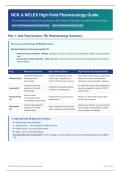
NCK & NCLEX High-Yield Pharmacology Guide
100 Comprehensive Multiple Choice Questions with Answers, Rationales, and High-Yield Exam Pearls
Part 1: Anti-Tuberculosis (TB) Drugs (Q1–50) Part 2: Antimalarial Drugs (Q51–100)
Part 1: Anti-Tuberculosis (TB) Pharmacology Summary
First-Line Anti-TB Drugs (RIPE Mnemonic)
Standard Regimen for Drug-Susceptible TB:
• Intensive Phase (2 Months - 2RHZE): Rifampicin, Isoniazid, Pyrazinamide, Ethambutol. Rapidly reduces bacterial
load.
• Continuation Phase (4 Months - 4RH): Rifampicin, Isoniazid. Eliminates remaining intracellular/dormant bacilli to
prevent relapse.
Drug Mechanism of Action Major Adverse Effects High-Yield Nursing Responsibilities
Inhibits DNA-dependent Orange-red body fluids (urine, Warn patient about benign orange fluids;
Rifampicin (R) RNA polymerase sweat, tears), hepatotoxicity, advise non-hormonal contraception
(bactericidal). strong CYP450 enzyme inducer. (decreases oral contraceptive efficacy).
Inhibits mycolic acid Co-administer Vitamin B6 (Pyridoxine) to
Peripheral neuropathy (tingling/
Isoniazid (I) synthesis in cell wall prevent neuropathy; monitor ALT/AST;
numbness), hepatotoxicity.
(bactericidal). avoid alcohol.
Active in acidic
Pyrazinamide Hyperuricemia (gout/joint pain), Monitor uric acid levels and joint pain;
environments inside
(P) hepatotoxicity. monitor liver enzymes.
macrophages (bactericidal).
Inhibits arabinogalactan Baseline and periodic visual acuity/color
Ethambutol Optic neuritis (decreased visual
synthesis in cell wall vision testing; instruct patient to report
(E) acuity, red-green color blindness).
(bacteriostatic). vision changes immediately.
⭐ High-Yield Anti-TB Mnemonic & Pearls
• R = Red-orange fluids (Rifampicin)
• I = Injured nerves → Give Pyridoxine/Vit B6 (Isoniazid)
• P = Painful joints / Uric acid (Pyrazinamide)
• E = Eyes / Optic neuritis (Ethambutol)
• Directly Observed Therapy (DOT): Primary strategy to ensure adherence and prevent Multidrug-Resistant TB (MDR-
TB).
NCK & NCLEX High-Yield Pharmacology Guide Page 1 of 20
,Anti-TB Multiple Choice Questions (Q1 – Q50)
Q1. Which four drugs make up the standard first-line intensive phase of TB treatment?
A. Rifampicin, Isoniazid, Pyrazinamide, Ethambutol B. Rifampicin, Ciprofloxacin, Gentamicin, Ethambutol
C. Amoxicillin, Rifampicin, Metronidazole, Isoniazid D. Streptomycin, Ceftriaxone, Rifampicin, Pyrazinamide
✅ Correct Answer: A
Rationale: The first-line intensive phase regimen is remembered by the mnemonic RIPE (Rifampicin, Isoniazid,
Pyrazinamide, Ethambutol).
Q2. Which anti-TB drug commonly causes orange-red discoloration of urine, tears, and sweat?
A. Isoniazid B. Rifampicin
C. Ethambutol D. Pyrazinamide
✅ Correct Answer: B
Rationale: Rifampicin harmlessly turns body fluids (urine, sweat, tears, saliva) an orange-red color.
Q3. A patient taking isoniazid complains of tingling in the hands and feet. What is the nurse's priority action?
A. Stop all medications. B. Notify the prescriber and ensure pyridoxine (vitamin B6)
is prescribed.
C. Encourage more exercise. D. Restrict fluids.
✅ Correct Answer: B
Rationale: Isoniazid inhibits vitamin B6 metabolism leading to peripheral neuropathy. Pyridoxine supplementation prevents
and treats this condition.
Q4. Which vitamin is routinely given with isoniazid to prevent peripheral neuropathy?
A. Vitamin A B. Vitamin B6
C. Vitamin C D. Vitamin D
✅ Correct Answer: B
Rationale: Pyridoxine (Vitamin B6) is routinely prescribed with isoniazid to protect against peripheral nerve damage.
Q5. Which anti-TB drug is associated with optic neuritis?
A. Rifampicin B. Ethambutol
C. Pyrazinamide D. Streptomycin
✅ Correct Answer: B
Rationale: Ethambutol causes optic neuritis, characterized by decreased visual acuity and red-green color blindness.
NCK & NCLEX High-Yield Pharmacology Guide Page 2 of 20
, Q6. Before starting ethambutol, the nurse should assess:
A. Hearing B. Vision
C. Blood glucose D. Lung sounds
✅ Correct Answer: B
Rationale: A baseline visual assessment (acuity and color discrimination) is essential before initiating ethambutol therapy.
Q7. Which anti-TB drug commonly causes hepatotoxicity?
A. Rifampicin B. Isoniazid
C. Pyrazinamide D. All of the above
✅ Correct Answer: D
Rationale: Rifampicin, Isoniazid, and Pyrazinamide are all potentially hepatotoxic drugs requiring liver function monitoring.
Q8. Which symptom should be reported immediately by a patient taking TB medication?
A. Orange urine B. Yellow eyes
C. Mild hunger D. Increased appetite
✅ Correct Answer: B
Rationale: Yellow eyes/skin (jaundice) indicates potential severe drug-induced liver injury (hepatotoxicity) and requires
urgent medical evaluation.
Q9. Which anti-TB drug may cause hyperuricemia?
A. Pyrazinamide B. Ethambutol
C. Rifampicin D. Isoniazid
✅ Correct Answer: A
Rationale: Pyrazinamide inhibits uric acid excretion, causing hyperuricemia and potential gouty arthralgia.
Q10. Which patient is at highest risk of isoniazid-induced neuropathy?
A. Patient with diabetes B. Healthy teenager
C. Child with malaria D. Healthy adult
✅ Correct Answer: A
Rationale: Pre-existing conditions that cause neuropathy (such as diabetes, alcoholism, or malnutrition) increase
susceptibility to isoniazid-induced peripheral neuropathy.
Q11. Which anti-TB drug decreases the effectiveness of oral contraceptives?
A. Rifampicin B. Ethambutol
C. Pyrazinamide D. Isoniazid
✅ Correct Answer: A
Rationale: Rifampicin is a potent CYP450 liver enzyme inducer that accelerates the metabolism of estrogen/progesterone,
decreasing contraceptive efficacy.
NCK & NCLEX High-Yield Pharmacology Guide Page 3 of 20
100 Comprehensive Multiple Choice Questions with Answers, Rationales, and High-Yield Exam Pearls
Part 1: Anti-Tuberculosis (TB) Drugs (Q1–50) Part 2: Antimalarial Drugs (Q51–100)
Part 1: Anti-Tuberculosis (TB) Pharmacology Summary
First-Line Anti-TB Drugs (RIPE Mnemonic)
Standard Regimen for Drug-Susceptible TB:
• Intensive Phase (2 Months - 2RHZE): Rifampicin, Isoniazid, Pyrazinamide, Ethambutol. Rapidly reduces bacterial
load.
• Continuation Phase (4 Months - 4RH): Rifampicin, Isoniazid. Eliminates remaining intracellular/dormant bacilli to
prevent relapse.
Drug Mechanism of Action Major Adverse Effects High-Yield Nursing Responsibilities
Inhibits DNA-dependent Orange-red body fluids (urine, Warn patient about benign orange fluids;
Rifampicin (R) RNA polymerase sweat, tears), hepatotoxicity, advise non-hormonal contraception
(bactericidal). strong CYP450 enzyme inducer. (decreases oral contraceptive efficacy).
Inhibits mycolic acid Co-administer Vitamin B6 (Pyridoxine) to
Peripheral neuropathy (tingling/
Isoniazid (I) synthesis in cell wall prevent neuropathy; monitor ALT/AST;
numbness), hepatotoxicity.
(bactericidal). avoid alcohol.
Active in acidic
Pyrazinamide Hyperuricemia (gout/joint pain), Monitor uric acid levels and joint pain;
environments inside
(P) hepatotoxicity. monitor liver enzymes.
macrophages (bactericidal).
Inhibits arabinogalactan Baseline and periodic visual acuity/color
Ethambutol Optic neuritis (decreased visual
synthesis in cell wall vision testing; instruct patient to report
(E) acuity, red-green color blindness).
(bacteriostatic). vision changes immediately.
⭐ High-Yield Anti-TB Mnemonic & Pearls
• R = Red-orange fluids (Rifampicin)
• I = Injured nerves → Give Pyridoxine/Vit B6 (Isoniazid)
• P = Painful joints / Uric acid (Pyrazinamide)
• E = Eyes / Optic neuritis (Ethambutol)
• Directly Observed Therapy (DOT): Primary strategy to ensure adherence and prevent Multidrug-Resistant TB (MDR-
TB).
NCK & NCLEX High-Yield Pharmacology Guide Page 1 of 20
,Anti-TB Multiple Choice Questions (Q1 – Q50)
Q1. Which four drugs make up the standard first-line intensive phase of TB treatment?
A. Rifampicin, Isoniazid, Pyrazinamide, Ethambutol B. Rifampicin, Ciprofloxacin, Gentamicin, Ethambutol
C. Amoxicillin, Rifampicin, Metronidazole, Isoniazid D. Streptomycin, Ceftriaxone, Rifampicin, Pyrazinamide
✅ Correct Answer: A
Rationale: The first-line intensive phase regimen is remembered by the mnemonic RIPE (Rifampicin, Isoniazid,
Pyrazinamide, Ethambutol).
Q2. Which anti-TB drug commonly causes orange-red discoloration of urine, tears, and sweat?
A. Isoniazid B. Rifampicin
C. Ethambutol D. Pyrazinamide
✅ Correct Answer: B
Rationale: Rifampicin harmlessly turns body fluids (urine, sweat, tears, saliva) an orange-red color.
Q3. A patient taking isoniazid complains of tingling in the hands and feet. What is the nurse's priority action?
A. Stop all medications. B. Notify the prescriber and ensure pyridoxine (vitamin B6)
is prescribed.
C. Encourage more exercise. D. Restrict fluids.
✅ Correct Answer: B
Rationale: Isoniazid inhibits vitamin B6 metabolism leading to peripheral neuropathy. Pyridoxine supplementation prevents
and treats this condition.
Q4. Which vitamin is routinely given with isoniazid to prevent peripheral neuropathy?
A. Vitamin A B. Vitamin B6
C. Vitamin C D. Vitamin D
✅ Correct Answer: B
Rationale: Pyridoxine (Vitamin B6) is routinely prescribed with isoniazid to protect against peripheral nerve damage.
Q5. Which anti-TB drug is associated with optic neuritis?
A. Rifampicin B. Ethambutol
C. Pyrazinamide D. Streptomycin
✅ Correct Answer: B
Rationale: Ethambutol causes optic neuritis, characterized by decreased visual acuity and red-green color blindness.
NCK & NCLEX High-Yield Pharmacology Guide Page 2 of 20
, Q6. Before starting ethambutol, the nurse should assess:
A. Hearing B. Vision
C. Blood glucose D. Lung sounds
✅ Correct Answer: B
Rationale: A baseline visual assessment (acuity and color discrimination) is essential before initiating ethambutol therapy.
Q7. Which anti-TB drug commonly causes hepatotoxicity?
A. Rifampicin B. Isoniazid
C. Pyrazinamide D. All of the above
✅ Correct Answer: D
Rationale: Rifampicin, Isoniazid, and Pyrazinamide are all potentially hepatotoxic drugs requiring liver function monitoring.
Q8. Which symptom should be reported immediately by a patient taking TB medication?
A. Orange urine B. Yellow eyes
C. Mild hunger D. Increased appetite
✅ Correct Answer: B
Rationale: Yellow eyes/skin (jaundice) indicates potential severe drug-induced liver injury (hepatotoxicity) and requires
urgent medical evaluation.
Q9. Which anti-TB drug may cause hyperuricemia?
A. Pyrazinamide B. Ethambutol
C. Rifampicin D. Isoniazid
✅ Correct Answer: A
Rationale: Pyrazinamide inhibits uric acid excretion, causing hyperuricemia and potential gouty arthralgia.
Q10. Which patient is at highest risk of isoniazid-induced neuropathy?
A. Patient with diabetes B. Healthy teenager
C. Child with malaria D. Healthy adult
✅ Correct Answer: A
Rationale: Pre-existing conditions that cause neuropathy (such as diabetes, alcoholism, or malnutrition) increase
susceptibility to isoniazid-induced peripheral neuropathy.
Q11. Which anti-TB drug decreases the effectiveness of oral contraceptives?
A. Rifampicin B. Ethambutol
C. Pyrazinamide D. Isoniazid
✅ Correct Answer: A
Rationale: Rifampicin is a potent CYP450 liver enzyme inducer that accelerates the metabolism of estrogen/progesterone,
decreasing contraceptive efficacy.
NCK & NCLEX High-Yield Pharmacology Guide Page 3 of 20


