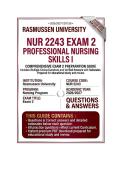
,NUR 2243 Exam 2 Professional Nursing Skills I Questions and
Answers | 2026/2027 | Rasmussen University
Q1. Which finding most directly indicates that a client may be
experiencing orthostatic hypotension?
A) Heart rate decreases when standing
B) Blood pressure drops after moving from lying to standing
C) Respiratory rate increases while lying flat
D) Oxygen saturation increases after ambulation
Correct Answer: B) Blood pressure drops after moving from lying to standing
Rationale: Orthostatic hypotension is characterized by a decrease in blood
pressure associated with a change in position, especially when moving to
standing.
Q2. When obtaining an oral temperature, which action helps
improve the accuracy of the measurement?
A) Allowing the client to drink cold water immediately beforehand
B) Placing the thermometer against the teeth
C) Asking the client to avoid eating, drinking, or smoking immediately before
the measurement
D) Taking the measurement while the client is talking
Correct Answer: C) Asking the client to avoid eating, drinking, or smoking
immediately before the measurement
Rationale: Recent food, liquids, or smoking can alter oral temperature
readings. Allowing an appropriate interval before measurement improves
accuracy.
Q3. Which assessment finding should the nurse recognize as
requiring the most immediate follow-up?
A) Respiratory rate of 18/min
B) Pulse of 76/min
C) Temperature of 37.1°C (98.8°F)
D) New onset of difficulty breathing
Correct Answer: D) New onset of difficulty breathing
Rationale: New respiratory difficulty may indicate impaired oxygenation or
an acute change in condition and therefore takes priority over normal
assessment findings.
,Q4. A client is at risk for falls because of generalized weakness.
Which intervention is most appropriate?
A) Keep the bed in the lowest position and ensure the call light is within
reach
B) Encourage the client to walk independently to increase strength
C) Place frequently used items across the room
D) Keep all four side rails raised at all times
Correct Answer: A) Keep the bed in the lowest position and ensure the call
light is within reach
Rationale: Fall prevention focuses on reducing hazards, keeping essential
items accessible, and promoting safe assistance rather than encouraging
unsafe independence.
Q5. Which position generally provides the best support for a client
who is having difficulty breathing while awake and able to maintain
the position independently?
A) Prone
B) Supine
C) High-Fowler's
D) Trendelenburg
Correct Answer: C) High-Fowler's
Rationale: High-Fowler's positioning promotes lung expansion and can
reduce the work of breathing by allowing the chest to expand more freely.
Q6. Before measuring a client's blood pressure, which action is most
important for obtaining a reliable reading?
A) Place the cuff over the client's clothing
B) Support the arm at approximately heart level
C) Ask the client to hold their breath
D) Position the client with the legs crossed
Correct Answer: B) Support the arm at approximately heart level
Rationale: The arm should be supported at heart level because arm position
affects the measured blood pressure.
Q7. Which observation is part of assessing a client's gait?
, A) Skin temperature
B) Bowel sounds
C) Symmetry and stability during walking
D) Peripheral oxygen saturation
Correct Answer: C) Symmetry and stability during walking
Rationale: Gait assessment evaluates how safely and effectively the client
moves, including balance, stability, symmetry, and coordination.
Q8. A client becomes dizzy when getting out of bed. What should
the nurse do first?
A) Encourage the client to continue walking
B) Assist the client back to a safe sitting or lying position
C) Obtain a full health history
D) Ask the client to drink a large amount of water
Correct Answer: B) Assist the client back to a safe sitting or lying position
Rationale: Preventing injury is the immediate priority when a client
becomes dizzy. The nurse should stabilize the client before continuing the
assessment.
Q9. Which finding represents objective data?
A) "My pain is severe."
B) "I feel weak today."
C) Blood pressure of 148/88 mm Hg
D) "I feel nauseated."
Correct Answer: C) Blood pressure of 148/88 mm Hg
Rationale: Objective data are measurable or observable findings obtained
through assessment, whereas statements reported by the client are
subjective data.
Q10. When assisting a weak client from a bed to a chair, which
action is most appropriate?
A) Pull the client upward by the arms
B) Keep the chair as far from the bed as possible
C) Lock the chair wheels before the transfer
D) Ask the client to stand without assistance first
Correct Answer: C) Lock the chair wheels before the transfer
Answers | 2026/2027 | Rasmussen University
Q1. Which finding most directly indicates that a client may be
experiencing orthostatic hypotension?
A) Heart rate decreases when standing
B) Blood pressure drops after moving from lying to standing
C) Respiratory rate increases while lying flat
D) Oxygen saturation increases after ambulation
Correct Answer: B) Blood pressure drops after moving from lying to standing
Rationale: Orthostatic hypotension is characterized by a decrease in blood
pressure associated with a change in position, especially when moving to
standing.
Q2. When obtaining an oral temperature, which action helps
improve the accuracy of the measurement?
A) Allowing the client to drink cold water immediately beforehand
B) Placing the thermometer against the teeth
C) Asking the client to avoid eating, drinking, or smoking immediately before
the measurement
D) Taking the measurement while the client is talking
Correct Answer: C) Asking the client to avoid eating, drinking, or smoking
immediately before the measurement
Rationale: Recent food, liquids, or smoking can alter oral temperature
readings. Allowing an appropriate interval before measurement improves
accuracy.
Q3. Which assessment finding should the nurse recognize as
requiring the most immediate follow-up?
A) Respiratory rate of 18/min
B) Pulse of 76/min
C) Temperature of 37.1°C (98.8°F)
D) New onset of difficulty breathing
Correct Answer: D) New onset of difficulty breathing
Rationale: New respiratory difficulty may indicate impaired oxygenation or
an acute change in condition and therefore takes priority over normal
assessment findings.
,Q4. A client is at risk for falls because of generalized weakness.
Which intervention is most appropriate?
A) Keep the bed in the lowest position and ensure the call light is within
reach
B) Encourage the client to walk independently to increase strength
C) Place frequently used items across the room
D) Keep all four side rails raised at all times
Correct Answer: A) Keep the bed in the lowest position and ensure the call
light is within reach
Rationale: Fall prevention focuses on reducing hazards, keeping essential
items accessible, and promoting safe assistance rather than encouraging
unsafe independence.
Q5. Which position generally provides the best support for a client
who is having difficulty breathing while awake and able to maintain
the position independently?
A) Prone
B) Supine
C) High-Fowler's
D) Trendelenburg
Correct Answer: C) High-Fowler's
Rationale: High-Fowler's positioning promotes lung expansion and can
reduce the work of breathing by allowing the chest to expand more freely.
Q6. Before measuring a client's blood pressure, which action is most
important for obtaining a reliable reading?
A) Place the cuff over the client's clothing
B) Support the arm at approximately heart level
C) Ask the client to hold their breath
D) Position the client with the legs crossed
Correct Answer: B) Support the arm at approximately heart level
Rationale: The arm should be supported at heart level because arm position
affects the measured blood pressure.
Q7. Which observation is part of assessing a client's gait?
, A) Skin temperature
B) Bowel sounds
C) Symmetry and stability during walking
D) Peripheral oxygen saturation
Correct Answer: C) Symmetry and stability during walking
Rationale: Gait assessment evaluates how safely and effectively the client
moves, including balance, stability, symmetry, and coordination.
Q8. A client becomes dizzy when getting out of bed. What should
the nurse do first?
A) Encourage the client to continue walking
B) Assist the client back to a safe sitting or lying position
C) Obtain a full health history
D) Ask the client to drink a large amount of water
Correct Answer: B) Assist the client back to a safe sitting or lying position
Rationale: Preventing injury is the immediate priority when a client
becomes dizzy. The nurse should stabilize the client before continuing the
assessment.
Q9. Which finding represents objective data?
A) "My pain is severe."
B) "I feel weak today."
C) Blood pressure of 148/88 mm Hg
D) "I feel nauseated."
Correct Answer: C) Blood pressure of 148/88 mm Hg
Rationale: Objective data are measurable or observable findings obtained
through assessment, whereas statements reported by the client are
subjective data.
Q10. When assisting a weak client from a bed to a chair, which
action is most appropriate?
A) Pull the client upward by the arms
B) Keep the chair as far from the bed as possible
C) Lock the chair wheels before the transfer
D) Ask the client to stand without assistance first
Correct Answer: C) Lock the chair wheels before the transfer