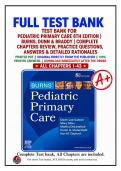
,Test bank for Burns' Pediatric Primary Care, 8th Edition ALL chapters
1-43 by Dawn Lee Garzon, Mary Dirks, Martha Driessnack, Karen G.
Duderstadt & Nan M. Gaylord | Complete Chapter-by-Chapter | All
chapters| Latest update
Table of Contents
1.Pediatric Primary Care ..................................................................................................................................................... 3
2. Global and National Influences on Child Health Status ......................................................................................................... 38
3. Environmental Influences on Pediatric Health ................................................................................................................. 90
4. Justice, Equity, Inclusion, and Diversity ..................................................................................................................................... 153
5. Pediatric and Family Assessment ......................................................................................................................................... 233
6. Behavioral and Mental Health Promotion ...................................................................................................................... 296
7. Sexuality and Gender Identity ................................................................................................................................................... 383
8. Developmental Principles and Theories .............................................................................................................................. 460
9. Developmental Management of Newborns and Neonates ............................................................................................ 523
10. Developmental Management of Infants ................................................................................................................................. 595
11. Developmental Management of Early Childhood .............................................................................................................. 666
12. Developmental Management of Middle Childhood ..................................................................................................... 697
13. Developmental Management of Adolescents ......................................................................................................................... 732
14. Nutrition ............................................................................................................................................................................ 768
15. Breastfeeding................................................................................................................................................................ 816
16. Sleep ....................................................................................................................................................................................... 853
17. Elimination ......................................................................................................................................................................... 886
18. Physical Activity and Sports .......................................................................................................................................... 932
19. Immunizations ........................................................................................................................................................................ 963
20. Dental and Oral Health ...................................................................................................................................................... 992
21. Pediatric Injury Prevention .............................................................................................................................................. 1022
22. Child Maltreatment .................................................................................................................................................... 1042
23. Prescribing Traditional and Complementary Therapies ........................................................................................................ 1061
24. Pediatric Pain and Fever Management ............................................................................................................................ 1079
25. Pediatric Injuries and Toxic Exposures ........................................................................................................................ 1099
26. Pediatric Palliative Care ......................................................................................................................................................... 1125
27. Congenital and Inherited Disorders ................................................................................................................................. 1147
28. Neonatal Disorders ..................................................................................................................................................... 1170
29. Neurodivergence and Behavioral and Mental Health Disorders ........................................................................................... 1193
30. Eye and Vision Disorders ....................................................................................................................................................... 1213
, 31. Ear and Hearing Disorders ............................................................................................................................................... 1232
32. Respiratory Disorders ................................................................................................................................................. 1248
33. Cardiovascular Disorders ............................................................................................................................................ 1263
34. Gastrointestinal Disorders ..................................................................................................................................................... 1282
35. Infectious Diseases .......................................................................................................................................................... 1303
36. Inflammatory Disorders .............................................................................................................................................. 1318
37. Dermatologic Disorders ........................................................................................................................................................ 1340
38. Hematologic Disorders..................................................................................................................................................... 1361
39. Endocrine and Metabolic Disorders ........................................................................................................................... 1380
40. Musculoskeletal Disorders .................................................................................................................................................... 1411
41. Neurologic Disorders ....................................................................................................................................................... 1444
42. Genitourinary Disorders ............................................................................................................................................. 1461
43. Gynecology and Reproductive Health ................................................................................................................................... 1490
Burns' Pediatric Primary Care, 8th Edition-CHAPTER 1: Pediatric Primary Care
1.Pediatric Primary Care
1. A primary care pediatric nurse practitioner is preparing anticipatory guidance for parents of a 6-month-old
infant. Which topic is the highest priority to address at this visit?
a. Toilet training readiness
b. Introduction of solid foods and choking hazards
c. Stranger anxiety and separation issues
d. School readiness and literacy promotion
ANS: B
EXPERT RATIONALE: At 6 months of age, the introduction of solid foods is a key developmental milestone
and safety priority. Parents need education on appropriate first foods, signs of readiness, and choking
prevention. While stranger anxiety may begin around this age, feeding safety is the immediate priority.
Toilet training is not appropriate until 18–24 months at earliest, and school readiness is a preschool-age
concern.
DIF: Cognitive Level: Apply
TOP: Pediatric Primary Care / Anticipatory Guidance / Infant Nutrition
MSC: NCLEX: Health Promotion and Maintenance
BOOK ID: 13348413834
2. The medical home model of pediatric primary care emphasizes which of the following as a core
component?
a. 24-hour emergency services available on-site