

Escrito por estudiantes que aprobaron Inmediatamente disponible después del pago Leer en línea o como PDF ¿Documento equivocado? Cámbialo gratis 4,6 TrustPilot
logo-home
Document preview thumbnail
Vista previa 4 fuera de 40 páginas
Examen

Galen NUR 265 (NUR265) Advanced Concepts of Medical-Surgical Nursing – Exam 4 Review | Questions & Answers | Latest 2026–2027.

Document preview thumbnail
Vista previa 4 fuera de 40 páginas

Complete Galen College of Nursing NUR 265 (NUR265) Advanced Concepts of Medical-Surgical Nursing – Exam 4 Review featuring organized questions and answers for focused exam preparation. Designed to support review of key advanced medical-surgical nursing concepts and important Exam 4 material. Latest updated for 2026–2027. 1. A nurse is assessing a client with systemic lupus erythematosus (SLE). Which finding should the nurse recognize as the major sign of an exacerbation? A. Bradycardia B. Fever C. Constipation D. Increased appetite 2. Which assessment finding is most characteristic of the malar rash associated with SLE? A. Dark lesions involving the palms B. Vesicles over the trunk C. A red, flat or raised rash over the cheeks that spares the nasolabial folds D. Large fluid-filled blisters on the extremities 3. Which complication is identified in the study material as the leading cause of death associated with SLE? A. Lupus nephritis B. Alopecia C. Polyarthritis D. Oral ulcers 4. A client with SLE is prescribed long-term glucocorticoid therapy. Which statement demonstrates correct understanding? A. “I should take the medication immediately before sleep.” B. “I should avoid calcium while taking this medication.” C. “I should take it only when my rash becomes worse.” D. “I should take the medication in the morning before breakfast.” 5. Which diagnostic test is described as the most sensitive for SLE but not specific for the disease? A. Serum potassium B. Serum amylase C. ANA D. PT/INR 6. A nurse teaches a client with SLE about protecting the skin. Which statement indicates correct understanding? A. “I should use drying powder regularly.” B. “Fluorescent lighting cannot affect my disease.” C. “I should deliberately increase my sun exposure.” D. “I should wear protective clothing and use SPF 30 or greater.” 7. Which medication used for SLE requires frequent eye examinations? A. Doxycycline B. Epinephrine C. Hydroxychloroquine D. Acetazolamide 8. A client with systemic sclerosis has esophageal involvement. Which nursing intervention is appropriate? A. Place the client flat immediately after eating. B. Keep the head of the bed elevated about 60 degrees during meals and for at least an hour afterward. C. Encourage large meals three times daily. D. Encourage unrestricted caffeine intake. 9. Which manifestation is identified as the first symptom of diffuse cutaneous systemic sclerosis? A. Hand and forearm edema B. Severe diarrhea C. Hematuria D. Visual changes 10. In CREST syndrome, the letter “E” represents which disorder? A. Edema B. Erythema C. Esophageal dysmotility D. Endocarditis 11. Which manifestation of CREST syndrome is generally the first to develop? A. Calcinosis B. Raynaud’s phenomenon C. Telangiectasia D. Sclerodactyly 12. A nurse is caring for a client with systemic sclerosis and Raynaud’s phenomenon. Which intervention should be questioned? A. Encouraging gloves during cold weather B. Applying ice packs to painful fingers C. Avoiding cigarettes D. Reducing caffeine intake 13. Which medication is listed for reducing renal complications associated with systemic sclerosis? A. Acetazolamide B. Allopurinol C. Epinephrine D. ACE inhibitor 14. Which assessment finding is the most common manifestation of fibromyalgia according to the study guide? A. Fatigue B. Hematuria C. Jaundice D. Bradycardia 15. Which exercise recommendation is appropriate for a client with fibromyalgia? A. Avoid all exercise. B. Perform only high-intensity exercise. C. Participate in low-intensity activities such as stretching, walking, swimming, or biking. D. Remain on bed rest during periods of pain. 16. Which medication is specifically identified as FDA-approved for fibromyalgia pain? A. Pregabalin B. Epinephrine C. Ciprofloxacin D. Allopurinol 17. A client taking duloxetine for fibromyalgia requires which teaching? A. Increase alcohol intake to improve sleep. B. Stop the medication whenever pain improves. C. Take aspirin with every dose. D. Avoid alcohol because the drug may cause drowsiness and sleepiness. 18. Which finding is characteristic of early Lyme disease? A. Painless vaginal bleeding B. A red rash that clears in the center C. Purple lesions of the oral mucosa D. Jaundice and clay-colored stools 19. Which medication is identified as the most common antibiotic treatment for Lyme disease? A. Allopurinol B. Prednisone C. Doxycycline D. Acetazolamide 20. Which teaching should the nurse provide to reduce the risk of Lyme disease? A. Wear dark clothing in wooded areas. B. Burn an attached tick immediately. C. Avoid insect repellent. D. Wear light-colored protective clothing and use DEET. 21. A client develops wheezing, angioedema, and hypotension shortly after an IV medication begins. What should the nurse do first? A. Document the reaction. B. Immediately discontinue the IV medication, change the tubing, and hang normal saline. C. Obtain dietary history. D. Encourage oral fluids. 22. Which medication is the priority drug associated with treatment of anaphylaxis? A. Gabapentin B. Hydroxychloroquine C. Epinephrine D. Allopurinol 23. A client develops swelling around the eyes, shortness of breath, dizziness, and anxiety after an immunization. Which action should the nurse perform first? A. Perform a respiratory assessment. B. Assess bowel sounds. C. Obtain a dietary recall. D. Apply a heating pad. 24. Which finding is consistent with anaphylaxis? A. Hypertension and dry skin B. Bradycardia with constipation C. Localized alopecia D. Widespread hives and hypoxia 25. Which client has an increased risk of latex allergy? A. A client with spina bifida B. A client with osteoarthritis C. A client with uncomplicated hypertension D. A client with a simple fracture 26. Which normal CD4+ T-cell range is listed in the study guide? A. 50–100/mm³ B. 200–400/mm³ C. 500–1600/mm³ D. 2,000–4,000/mm³ 27. According to the study material, a client infected with HIV meets AIDS criteria when the CD4+ count falls below: A. 500/mm³ B. 200/mm³ C. 1,000/mm³ D. 1,600/mm³ 28. Which statement accurately describes antiretroviral therapy according to the uploaded material? A. It inhibits viral replication but does not kill HIV. B. It permanently destroys HIV after several weeks. C. It is discontinued when CD4 counts improve. D. It is used only when opportunistic infections occur. 29. Which statement by a client receiving cART indicates correct understanding? A. “I can stop treatment once my viral load falls.” B. “I only need medication when I feel sick.” C. “Missing doses has no effect on resistance.” D. “I need to take at least 90% of my doses correctly.” 30. Why can missed antiretroviral doses contribute to drug resistance? A. They increase serum calcium. B. They increase viral replication when drug concentrations fall. C. They cause kidney transplantation rejection. D. They increase bile production. 31. Which opportunistic illness requires airborne precautions in an HIV-positive client according to the source? A. Candidiasis B. Kaposi’s sarcoma C. Tuberculosis D. Pneumocystis jiroveci pneumonia 32. Which malignancy is identified as the most common AIDS-related malignancy? A. Kaposi’s sarcoma B. Pancreatic cancer C. Prostate cancer D. Bone cancer 33. Which appearance is characteristic of Kaposi’s sarcoma? A. Yellow fluid-filled blisters B. Bright-red stool C. White plaques limited to the tongue D. Small purplish-brown raised lesions of the skin or mucous membranes 34. Which opportunistic infection associated with AIDS is linked to visual disturbances? A. Pneumocystis jiroveci pneumonia B. CMV C. Candidiasis D. Histoplasmosis 35. Which manifestation is associated with primary HIV infection? A. Fever, fatigue, lymphadenopathy, and rash B. Isolated hypertension without symptoms C. Clay-colored stools only D. Severe unilateral edema only 36. During primary HIV infection, antibodies may not be detected for approximately: A. 1–2 days B. 24 hours C. 4–12 weeks D. 2 years 37. Which test is listed as confirmation after a positive HIV enzyme immunoassay? A. Western blot B. CT scan C. Colonoscopy D. Serum calcium 38. A client receiving antiretroviral therapy develops fever, chills, and worsening symptoms of a previously existing opportunistic infection. Which complication should the nurse suspect? A. Tumor lysis syndrome B. DIC C. Hypercalcemia D. Immune reconstruction inflammatory syndrome (IRIS) 39. Which treatment is identified for IRIS? A. Long-term fluid restriction B. Short-term corticosteroids C. Immediate kidney transplantation D. Radiation therapy 40. Which food should an immunosuppressed or neutropenic client avoid according to the source? A. Thoroughly cooked food B. Packaged food C. Fresh raw fruits and vegetables D. Prescribed nutritional supplements 41. Which client statement about infection prevention requires additional teaching? A. “I will clean my toothbrush weekly.” B. “I will take my temperature daily.” C. “I will avoid gardening and houseplants.” D. “I will change my cat’s litter box every day without gloves.” 42. Which diet is recommended in the uploaded HIV teaching material? A. High calories and protein with 2–3 L of water B. Low protein and fluid restriction C. Raw-food diet D. High-fat diet 43. Which item should a client with HIV avoid sharing? A. Clothing B. Dinner table C. Razor or toothbrush D. Telephone 44. Which medication is listed for neuropathic pain in clients with HIV? A. Acetazolamide B. Gabapentin C. Epinephrine D. Allopurinol 45. Which manifestation is associated with HIV wasting syndrome in the study guide? A. Impaired absorption in the small intestine B. Increased bile drainage C. Increased platelet production D. Increased bone density 46. Hyperacute graft rejection most commonly occurs: A. Within 48 hours after transplantation B. After 10 years C. Only after one year D. Between five and ten years 47. What is the cause of hyperacute graft rejection according to the guide? A. Excessive protein intake B. Dehydration C. Preexisting antibodies D. Lack of sunlight 48. Which procedure helps prevent hyperacute rejection? A. Fluid restriction B. Histocompatibility testing and crossmatching C. Avoiding calcium D. Applying ice packs 49. Acute graft rejection generally occurs: A. Only within the first hour B. Only after 20 years C. Before transplantation D. Within the first three months after transplantation 50. How is acute or chronic transplant rejection definitively diagnosed according to the study guide? A. Organ biopsy B. Urinalysis alone C. Chest x-ray alone D. Skin testing 51. Which treatment is associated with acute graft rejection? A. Discontinue all immunosuppressants. B. Restrict oxygen. C. Increase immunosuppression, including high-dose steroids. D. Begin radiation therapy. 52. Which problem is the leading cause of morbidity and mortality following organ transplantation according to the study guide? A. Alopecia B. Infection C. Constipation D. Seasonal allergies 53. During the first month following a transplant, which type of infection is particularly common? A. Nosocomial infection B. Lyme disease only C. Malaria D. Food intolerance 54. Opportunistic infections following transplantation occur most often during which period? A. First 12 hours B. After 20 years only C. Before surgery D. Approximately 1–6 months after transplant 55. Which site is identified as the most common site of infection after transplantation? A. Skin B. Lungs C. Eyes D. Bone 56. Which manifestations may be the only early clues of infection in an immunosuppressed transplant recipient? A. Low-grade fever, mental-status changes, and vague discomfort B. Profuse sweating and severe hypertension in every case C. Peau d’orange D. Clay-colored stool only 57. How long is immunosuppressive medication management required following transplant? A. One week B. One month C. Lifelong D. Only while hospitalized 58. Which latent infections may reactivate during immunosuppression? A. Lyme disease and anthrax only B. TB and herpes C. Osteoarthritis and fibromyalgia D. Melanoma and prostate cancer 59. Which finding indicates adequate early heart graft function? A. Persistent hypotension B. New atrial fibrillation C. Increasing mediastinal drainage D. Normal sinus rhythm with a ventricular rate of approximately 90–100 beats/min 60. Which finding suggests heart transplant rejection? A. Hypotension B. Increased activity tolerance C. Stable weight D. Increasing ejection fraction 61. Why are atropine and carotid sinus pressure not used to manage the transplanted heart in the source? A. They increase bilirubin. B. They cause thrombocytopenia. C. The transplanted heart is denervated and does not respond normally to vagal stimulation. D. They cause SLE. 62. Which finding indicates adequate early liver graft function? A. Increasing AST and ALT B. Decreasing AST and ALT C. Increasing jaundice D. Increasing PT/INR 63. Which laboratory finding suggests liver transplant rejection? A. Decreased bilirubin B. Decreased PT C. Reduced liver enzymes D. Rising bilirubin and AST/ALT levels 64. Which finding after liver transplantation should be immediately reported because it may indicate peritonitis? A. Increasing abdominal pain, distention, and rigidity B. Increased appetite C. Clear breath sounds D. Decreasing liver enzymes 65. Which finding suggests adequate early kidney graft function? A. Increasing BUN B. Rising potassium C. High urine output with decreasing BUN and creatinine D. Anuria 66. Which kidney transplant finding requires immediate notification of the surgeon? A. Stable glucose B. Hypotension C. Normal potassium D. Decreasing creatinine 67. Which assessment finding is associated with acute kidney transplant rejection? A. Increased blood pressure B. Decreasing creatinine C. Increased urine output D. Absence of graft tenderness 68. What is the treatment identified for hyperacute kidney rejection? A. Increase oral fluids only. B. Administer acetazolamide. C. Restrict dietary protein. D. Immediate removal of the transplanted kidney 69. Which is the first listed indication of chronic pancreatic transplant rejection? A. Hypercalcemia B. Proteinuria C. Increased bile output D. Decreased blood glucose 70. Which finding may indicate pancreatic blood-vessel thrombosis following pancreas transplantation? A. Increased urine amylase B. Decreased blood glucose C. Sudden decrease in urine amylase D. Increased bile output 71. During carcinogenesis, at which stage does DNA damage first occur? A. Progression B. Metastasis C. Initiation D. Remission 72. Which stage of carcinogenesis involves cancer cells spreading to nearby tissues or through the bloodstream? A. Progression B. Initiation C. Promotion D. Remission 73. Which finding is characteristic of breast cancer? A. Clay-colored stool B. Peau d’orange C. Red bull’s-eye rash D. Dark urine with jaundice 74. Which client in the study material represents a particularly high breast-cancer risk? A. Young adult male with a sprained ankle B. Woman with no family history and no listed risk factors C. Client with seasonal allergies D. Older Jewish woman with a BRCA1 mutation and first childbirth after age 30 75. Which symptom is consistent with lung cancer? A. Recurrent bronchitis B. Bull’s-eye rash C. Painless postmenopausal bleeding D. Raynaud’s phenomenon 76. What is the primary risk factor emphasized for lung cancer? A. Tobacco smoking or secondhand smoke B. Low calcium intake C. Fibromyalgia D. Pregnancy 77. Which finding can represent a late emergency complication of lung cancer? A. Mild rhinitis B. Bull’s-eye rash C. Alopecia D. Superior vena cava syndrome 78. According to the uploaded material, which is the leading risk factor for prostate cancer? A. Caffeine intake B. Age, particularly over 65 C. Lyme disease D. Latex exposure 79. Which finding may occur with prostate cancer? A. Stony-hard prostate on rectal examination B. Malar rash C. Papular hives D. Peau d’orange 80. Which postoperative teaching is appropriate following prostatectomy? A. Lift more than 50 lb immediately. B. Use rectal suppositories daily. C. Avoid straining during bowel movements and use a stool softener. D. Begin vigorous exercise immediately. 81. What is the classic symptom of invasive cervical cancer in the uploaded material? A. Severe hypertension B. Painless vaginal bleeding C. Bradycardia D. Bull’s-eye rash 82. Which infection is a major cervical-cancer risk factor? A. Influenza B. Lyme disease C. Candida of the skin D. HPV 83. According to the source, Pap testing begins at what age? A. 21 B. 30 C. 40 D. 50 84. Which finding is described as the earliest sign of oral carcinoma? A. White nasal drainage B. Blue fingers C. Mucosal erythroplasia D. Petechiae 85. What are the two most important risk factors for head and neck cancers according to the material? A. Exercise and sunlight B. Alcohol and tobacco use C. Calcium and vitamin intake D. High water intake and age under 20 86. What is the priority for a postoperative client with extensive oral cancer surgery and thick secretions? A. Airway management and secretion removal B. Encouraging vigorous exercise C. Restricting oxygen D. Applying ice to the fingers 87. Which oral-care instruction is appropriate for a client with head and neck cancer? A. Use alcohol mouthwash frequently. B. Use firm-bristle toothbrushes. C. Avoid saline rinses. D. Use a soft-bristled toothbrush and rinse with warm saline or bicarbonate solution. 88. Which factor is identified as the most common cause of melanoma? A. Excess protein B. UV exposure C. High water intake D. Low sodium 89. Which findings are the most common signs of colorectal cancer? A. Rectal bleeding, anemia, and changes in stool consistency or shape B. JVD and muffled heart sounds C. Severe bradycardia and hypothermia D. Angioedema and wheezing 90. According to the study material, when should routine colonoscopy screening begin for an average-risk individual? A. Age 21 B. Age 30 C. Age 40 D. Age 50 91. Which dietary change is recommended for colorectal-cancer risk reduction? A. Increase red meat. B. Increase refined carbohydrates. C. Increase vegetables such as broccoli, cabbage, cauliflower, and sprouts. D. Reduce fiber intake. 92. Which manifestation is strongly associated with primary bone cancer? A. Painless rhinorrhea B. Pain C. Diarrhea only D. Facial edema on awakening 93. Which laboratory value may be increased with bone cancer? A. Serum alkaline phosphatase B. Serum sodium only C. CD4 count D. INR only 94. Which malignancies are identified as bone-seeking cancers? A. Cervical and skin only B. Oral and uterine only C. Ovarian and pancreatic only D. Prostate, breast, kidney, thyroid, and lung 95. What is characteristic of early liver cancer? A. Severe symptoms always appear immediately. B. It may have no symptoms. C. It always begins with hematuria. D. It produces a bull’s-eye rash. 96. Which finding is associated with pancreatic cancer? A. Jaundice with clay-colored stools and dark urine B. Malar rash C. Purple skin lesions D. Hot, dry skin with temperature over 104°F 97. What is identified as the greatest risk factor for bladder cancer? A. Lyme disease B. BRCA1 C. Tobacco use D. Low-fat diet 98. What is the main symptom of endometrial cancer in the source? A. Persistent cough B. Postmenopausal bleeding C. Raynaud’s phenomenon D. Hemoptysis 99. Why is ovarian cancer frequently diagnosed late? A. It always causes immediate severe bleeding. B. It can be diagnosed by routine Pap testing. C. It always produces a visible skin lesion. D. Early manifestations may consist of vague abdominal and gastrointestinal symptoms. 100. Which test is specifically stated to be of no use for diagnosing ovarian cancer? A. Pap smear B. Biopsy C. Imaging D. Laboratory assessment 101. Which route of chemotherapy has the same systemic toxic effects as IV chemotherapy according to the source? A. Topical therapy only B. Radiation only C. Intramuscular therapy only D. Oral chemotherapy 102. Chemotherapy-induced bone-marrow suppression can result in: A. Hyperactivity and polycythemia only B. Neutropenia, anemia, and thrombocytopenia C. Increased platelet production D. Elevated CD4 counts 103. Which intervention is appropriate for a neutropenic client? A. Keep fresh flowers in the room. B. Encourage raw foods. C. Provide a private room and meticulous handwashing. D. Allow visitors with recent infections. 104. What is the priority concern when a neutropenic client develops fever? A. Infection and sepsis B. Osteoarthritis C. Fibromyalgia D. Hair loss 105. Which action is appropriate for a thrombocytopenic client receiving chemotherapy? A. Use IM injections whenever possible. B. Encourage aspirin use. C. Use a water pick daily. D. Use an electric razor and soft toothbrush. 106. Which platelet-related intervention should the nurse avoid? A. Checking for petechiae B. Administering IM injections routinely C. Providing a safe environment D. Applying ice after trauma 107. A client receiving chemotherapy develops oral mucositis. Which oral-care intervention is appropriate? A. Oral care 4–6 times daily using a soft toothbrush and alcohol-free mouthwash B. Use alcohol mouthwash every hour. C. Avoid all oral care. D. Use a hard-bristled brush. 108. When should an antiemetic generally be administered in relation to chemotherapy according to the study guide? A. Several days afterward only B. Only if severe vomiting develops C. Before chemotherapy D. Only at bedtime 109. The period following chemotherapy when blood counts are at their lowest is called: A. Promotion B. Nadir C. Seroconversion D. Remission 110. During nadir, which dietary item should be avoided? A. Prescribed cooked food B. High-protein cooked meals C. Adequate fluids D. Raw or uncooked foods 111. A client receiving chemotherapy has a platelet count of 50,000. What should the nurse do? A. Report the finding to the provider. B. Encourage contact sports. C. Administer aspirin. D. Schedule dental work. 112. Which statement about external-beam radiation is correct according to the source? A. The client remains radioactive afterward. B. All body fluids are radioactive. C. The radiation originates from a machine outside the body. D. The client requires a lead container for urine. 113. Which statement correctly describes sealed-source brachytherapy? A. The client is radioactive for a limited period while the source is in place. B. The client is never radioactive. C. All urine is permanently radioactive. D. Visitors may remain indefinitely at the bedside. 114. How long should visitors remain with a client receiving sealed brachytherapy according to the source? A. Four hours daily B. Two hours daily C. Unlimited time D. About 30 minutes per day while remaining approximately 6 feet away 115. A sealed brachytherapy implant becomes dislodged. Which action is appropriate? A. Pick it up with a bare hand. B. Use long-handled forceps and place it in the special lead container. C. Throw it into regular trash. D. Flush it down the toilet. 116. Which nursing intervention is appropriate for skin exposed to external radiation? A. Cleanse gently with the hand and pat the skin dry. B. Scrub the area with a washcloth. C. Remove all treatment markings. D. Apply any lotion the client prefers. 117. Which clothing should be avoided over an irradiated area? A. Soft loose clothing B. Lightweight garments C. Belts, buckles, straps, or tight clothing that rubs D. Clothing prescribed by the radiation department 118. Which condition is considered the most common oncologic enemy/emergency in the source? A. Fibromyalgia B. Sepsis C. Lyme disease D. Allergic rhinitis 119. What should be obtained before antibiotics when sepsis is suspected? A. Blood cultures B. Mammogram C. Skin biopsy D. Colonoscopy 120. A septic client remains hypotensive despite fluid therapy. Which intervention is anticipated? A. Stop all fluids and treatment. B. Begin an exercise program. C. Give oral calcium. D. Vasopressor therapy to maintain adequate MAP 121. Which finding is characteristic of disseminated intravascular coagulation (DIC)? A. Increased clotting-factor reserve B. Bleeding from IV sites, gums, or other non-intact areas C. Increased platelet count D. Lack of any bleeding tendency 122. Which cancers are identified as commonly associated with DIC? A. Leukemia and adenocarcinomas such as lung, pancreas, stomach, and prostate B. Only skin cancer C. Only cervical cancer D. Only benign tumors 123. Hypercalcemia in a cancer client is defined in the source as serum calcium greater than: A. 5 mg/dL B. 8 mg/dL C. 11 mg/dL D. 20 mg/dL 124. Which finding suggests severe hypercalcemia? A. Hyperactive deep tendon reflexes B. Increased muscle strength C. Increased bowel motility D. Severe muscle weakness with loss of deep tendon reflexes 125. Which medications are listed for hypercalcemia management? A. Acetazolamide and doxycycline B. Calcitonin and related fluid/diuretic therapy C. Epinephrine and diphenhydramine only D. Hydroxychloroquine only 126. When does tumor lysis syndrome typically begin according to the guide? A. Approximately 1–2 days after cancer treatment begins B. Before cancer develops C. Ten years after treatment D. Only after surgery 127. Which electrolyte abnormality is associated with tumor lysis syndrome? A. Hypokalemia B. Hypernatremia only C. Low phosphorus D. Hyperkalemia 128. What is a major intervention for preventing and managing tumor lysis syndrome? A. Severe fluid restriction B. Aggressive hydration C. Elimination of all carbohydrates D. Avoiding renal monitoring 129. Which drug is listed for reducing uric acid in tumor lysis syndrome? A. Allopurinol B. Epinephrine C. Pregabalin D. Acetazolamide 130. What is often the first complaint of a cancer client developing spinal cord compression? A. Rhinorrhea B. Alopecia C. New-onset back pain D. Diarrhea 131. Which treatment is expected for spinal cord compression? A. Oral antihistamines B. High-dose corticosteroids C. Topical cortisone only D. Fluid restriction alone 132. Which is an early manifestation of superior vena cava syndrome? A. Facial and periorbital edema B. Bull’s-eye rash C. Clay-colored stool D. Painful vaginal bleeding 133. Superior vena cava syndrome primarily results in: A. Increased renal filtration B. Increased bile production C. Increased venous return D. Reduced venous return to the heart 134. Which assessment combination is consistent with cardiac tamponade? A. Flat neck veins and loud heart sounds B. JVD with distant or muffled heart sounds C. Increased urine output and hypertension only D. Bull’s-eye rash and fever 135. What procedure removes fluid from the pericardial sac in cardiac tamponade? A. Pericardiocentesis B. Colposcopy C. Colonoscopy D. Bronchoscopy 136. Which statement correctly describes palliative care? A. It is available only in the final six months of life. B. It always requires curative therapy to stop. C. It may be provided at any stage of serious illness while curative treatment continues. D. It is limited to cancer patients. 137. Which client meets the source’s basic hospice criterion? A. A client who wants unlimited curative treatment and has no prognosis. B. A client expected to live 20 years. C. A client with a minor sprain. D. A client with a prognosis of six months or less who foregoes curative treatment 138. A dying client has loud, wet respirations or a “death rattle.” Which intervention is appropriate? A. Reposition the client to the side and use a towel for secretions. B. Force oral fluids. C. Immediately begin chest compressions in every circumstance. D. Place the client prone. 139. An unconscious client arrives in the emergency department requiring immediate lifesaving treatment. Which type of consent applies? A. Written research consent B. Implied emergency consent C. No treatment is allowed D. Consent must always wait for a family member 140. Which client should receive an emergent triage classification? A. Client with an uncomplicated cold B. Client with a simple nondisplaced fracture C. Client with crushing chest pain, shortness of breath, and diaphoresis D. Client with a minor skin rash 141. Which condition is classified as urgent rather than emergent in the source? A. Severe abdominal pain B. Cardiac arrest C. Active arterial hemorrhage D. Acute respiratory distress with cyanosis 142. What is the purpose of the primary survey in an emergency? A. Obtain a complete family history first. B. Determine long-term discharge needs. C. Evaluate insurance status. D. Identify immediate or potential threats to life, limb, or vision. 143. During the primary assessment of a trauma patient, how should the cervical spine be protected? A. Hyperextend the neck. B. Maintain neutral in-line alignment and use a jaw-thrust when establishing the airway. C. Flex the neck toward the chest. D. Rotate the neck to assess mobility. 144. A trauma client's Glasgow Coma Scale score is below 8. Which action should the nurse anticipate? A. Prepare for intubation and ventilation. B. Encourage oral fluids. C. Begin discharge teaching. D. Allow unrestricted ambulation. 145. A client has severe external hemorrhage. Which action takes priority according to the source? A. Obtain a dietary history. B. Begin range-of-motion exercises. C. Stop or decrease the bleeding using firm direct pressure. D. Administer oral fluids before controlling bleeding. 146. If direct pressure fails to control severe extremity bleeding, which intervention may be used? A. Warm compress B. Tourniquet C. Massage D. Exercise 147. A radial pulse can generally be palpated when systolic blood pressure is at least approximately: A. 80 mmHg B. 40 mmHg C. 120 mmHg D. 160 mmHg 148. Which manifestation is associated with mild hypothermia? A. No shivering with profound coma B. Severe cardiac dysrhythmias only C. Gangrene D. Shivering, dysarthria, mental slowing, and diuresis 149. Which intervention should be avoided when treating frostbite? A. Elevating the affected area B. Applying dry heat or massaging the frostbitten area C. Assessing for compartment syndrome D. Rapid warming in an appropriate water bath 150. A client arrives with a core temperature above 104°F, hot dry skin, confusion, hypotension, and tachycardia. Which intervention is the priority? A. Give aspirin immediately. B. Provide food and fluids orally. C. Begin rapid cooling with cooling blankets, ice packs, or wetting and fanning. D. Cover with warm blankets.

Vista previa del contenido

Galen: NUR 265 (NUR265) Advanced Concepts of Medical-Surgical Nursing:
Exam 4 Review Questions & Answers_ Latest 2026-2027.

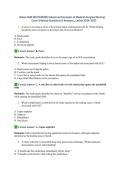
1. A nurse is assessing a client with systemic lupus erythematosus (SLE). Which finding
should the nurse recognize as the major sign of an exacerbation?

A. Bradycardia
B. Fever
C. Constipation
D. Increased appetite

Correct Answer: B. Fever

Rationale: The study guide identifies fever as the major sign of an SLE exacerbation.

2. Which assessment finding is most characteristic of the malar rash associated with SLE?

A. Dark lesions involving the palms
B. Vesicles over the trunk
C. A red, flat or raised rash over the cheeks that spares the nasolabial folds
D. Large fluid-filled blisters on the extremities

Correct Answer: C. A red, flat or raised rash over the cheeks that spares the nasolabial
folds

Rationale: The study guide describes the malar or “butterfly” rash as occurring over the cheeks
while sparing the nasolabial folds.

3. Which complication is identified in the study material as the leading cause of death
associated with SLE?

A. Lupus nephritis
B. Alopecia
C. Polyarthritis
D. Oral ulcers

Correct Answer: A. Lupus nephritis

Rationale: SLE is described as having significant renal involvement, with lupus nephritis
identified as the leading cause of death.

4. A client with SLE is prescribed long-term glucocorticoid therapy. Which statement
demonstrates correct understanding?

A. “I should take the medication immediately before sleep.”
B. “I should avoid calcium while taking this medication.”

,C. “I should take it only when my rash becomes worse.”
D. “I should take the medication in the morning before breakfast.”

Correct Answer: D. “I should take the medication in the morning before breakfast.”

Rationale: The guide specifically instructs clients receiving glucocorticoids to take them in the
morning before breakfast.

5. Which diagnostic test is described as the most sensitive for SLE but not specific for the
disease?

A. Serum potassium
B. Serum amylase
C. ANA
D. PT/INR

Correct Answer: C. ANA

Rationale: ANA is identified as the most sensitive test, although antinuclear antibodies are not
specific to SLE.

6. A nurse teaches a client with SLE about protecting the skin. Which statement indicates
correct understanding?

A. “I should use drying powder regularly.”
B. “Fluorescent lighting cannot affect my disease.”
C. “I should deliberately increase my sun exposure.”
D. “I should wear protective clothing and use SPF 30 or greater.”

Correct Answer: D. “I should wear protective clothing and use SPF 30 or greater.”

Rationale: Limiting ultraviolet exposure, wearing long sleeves and a large-brimmed hat, and
using SPF 30+ are recommended.

7. Which medication used for SLE requires frequent eye examinations?

A. Doxycycline
B. Epinephrine
C. Hydroxychloroquine
D. Acetazolamide

Correct Answer: C. Hydroxychloroquine

Rationale: The guide instructs clients taking hydroxychloroquine to have an eye examination
before treatment and approximately every six months.

, 8. A client with systemic sclerosis has esophageal involvement. Which nursing intervention
is appropriate?

A. Place the client flat immediately after eating.
B. Keep the head of the bed elevated about 60 degrees during meals and for at least an hour
afterward.
C. Encourage large meals three times daily.
D. Encourage unrestricted caffeine intake.

Correct Answer: B. Keep the head of the bed elevated about 60 degrees during meals
and for at least an hour afterward.

Rationale: Elevating the HOB during and after meals is recommended because systemic
sclerosis commonly causes esophageal dysmotility and GERD.

9. Which manifestation is identified as the first symptom of diffuse cutaneous systemic
sclerosis?

A. Hand and forearm edema
B. Severe diarrhea
C. Hematuria
D. Visual changes

Correct Answer: A. Hand and forearm edema

Rationale: The guide identifies edema of the hands and forearms, with or without bilateral
carpal tunnel syndrome, as an early manifestation.

10. In CREST syndrome, the letter “E” represents which disorder?

A. Edema
B. Erythema
C. Esophageal dysmotility
D. Endocarditis

Correct Answer: C. Esophageal dysmotility

Rationale: CREST includes calcinosis, Raynaud’s phenomenon, esophageal dysmotility,
sclerodactyly, and telangiectasia.

11. Which manifestation of CREST syndrome is generally the first to develop?

A. Calcinosis
B. Raynaud’s phenomenon
C. Telangiectasia
D. Sclerodactyly

, Correct Answer: B. Raynaud’s phenomenon

Rationale: The uploaded study guide specifically identifies Raynaud’s phenomenon as the first
CREST symptom.

12. A nurse is caring for a client with systemic sclerosis and Raynaud’s phenomenon. Which
intervention should be questioned?

A. Encouraging gloves during cold weather
B. Applying ice packs to painful fingers
C. Avoiding cigarettes
D. Reducing caffeine intake

Correct Answer: B. Applying ice packs to painful fingers

Rationale: Cold exposure causes vasoconstriction in Raynaud’s phenomenon and should be
avoided.

13. Which medication is listed for reducing renal complications associated with systemic
sclerosis?

A. Acetazolamide
B. Allopurinol
C. Epinephrine
D. ACE inhibitor

Correct Answer: D. ACE inhibitor

Rationale: ACE inhibitors and blood pressure control are identified as measures for reducing
renal complications.

14. Which assessment finding is the most common manifestation of fibromyalgia according
to the study guide?

A. Fatigue
B. Hematuria
C. Jaundice
D. Bradycardia

Correct Answer: A. Fatigue

Rationale: Fatigue is specifically identified as the most common manifestation of fibromyalgia.

15. Which exercise recommendation is appropriate for a client with fibromyalgia?

Información del documento

Subido en
27 de agosto de 2026
Número de páginas
40
Escrito en
2025/2026
Tipo
Examen
Contiene
Preguntas y respuestas
$22.74

¿Documento equivocado? Cámbialo gratis Dentro de los 14 días posteriores a la compra y antes de descargarlo, puedes elegir otro documento. Puedes gastar el importe de nuevo.
Escrito por estudiantes que aprobaron
Inmediatamente disponible después del pago
Leer en línea o como PDF

Seller avatar
Los indicadores de reputación están sujetos a la cantidad de artículos vendidos por una tarifa y las reseñas que ha recibido por esos documentos. Hay tres niveles: Bronce, Plata y Oro. Cuanto mayor reputación, más podrás confiar en la calidad del trabajo del vendedor.
MindCraft
3.8
(50)
Vendido
393
Seguidores
10
Artículos
2841
Última venta
1 día hace


Por qué los estudiantes eligen Stuvia

Creado por compañeros estudiantes, verificado por reseñas

Calidad en la que puedes confiar: escrito por estudiantes que aprobaron y evaluado por otros que han usado estos resúmenes.

¿No estás satisfecho? Elige otro documento

¡No te preocupes! Puedes elegir directamente otro documento que se ajuste mejor a lo que buscas.

Paga como quieras, empieza a estudiar al instante

Sin suscripción, sin compromisos. Paga como estés acostumbrado con tarjeta de crédito y descarga tu documento PDF inmediatamente.

Student with book image

“Comprado, descargado y aprobado. Así de fácil puede ser.”

Alisha Student

Preguntas frecuentes
