

CRW2601 ASSIGNMENT 1 2026
DUE 27 AUGUST 2026
QUESTION
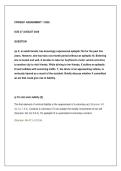
(a) X, an adult female, has knowingly experienced epileptic fits for the past five
years. However, she has had a six-month period without an epileptic fit. Believing
she is healed and well, X decides to take her boyfriend’s motor vehicle and drive
to another city to visit friends. While driving to her friends, X suffers an epileptic
fit and collides with oncoming traffic. Y, the driver of an approaching vehicle, is
seriously injured as a result of the accident. Briefly discuss whether X committed
an act that could give rise to liability.
a) X's Act and Liability [3]
The first element of criminal liability is the requirement of a voluntary act (Snyman: 43-
44; LU 1.5.2). Conduct is voluntary if X can subject her bodily movements to her will
(Snyman: 46; LU 3.3.4). X's epileptic fit is automatism involuntary conduct
(Snyman: 46-47; LU 3.3.4).
DUE 27 AUGUST 2026
QUESTION
(a) X, an adult female, has knowingly experienced epileptic fits for the past five
years. However, she has had a six-month period without an epileptic fit. Believing
she is healed and well, X decides to take her boyfriend’s motor vehicle and drive
to another city to visit friends. While driving to her friends, X suffers an epileptic
fit and collides with oncoming traffic. Y, the driver of an approaching vehicle, is
seriously injured as a result of the accident. Briefly discuss whether X committed
an act that could give rise to liability.
a) X's Act and Liability [3]
The first element of criminal liability is the requirement of a voluntary act (Snyman: 43-
44; LU 1.5.2). Conduct is voluntary if X can subject her bodily movements to her will
(Snyman: 46; LU 3.3.4). X's epileptic fit is automatism involuntary conduct
(Snyman: 46-47; LU 3.3.4).

